Top 6 Best Courier Services in San Francisco in 2026
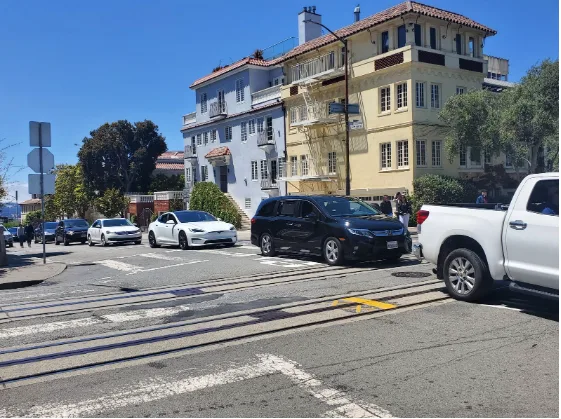
Seven miles by seven miles, and it still takes an hour to cross. San Francisco drivers lost 49 hours to peak-period congestion in 2025, the third-worst figure in the United States (INRIX 2025 Global Traffic Scorecard, via KRON4). For a business that moves its own goods around the city, those hours land on payroll.
What you’ll get out of this:
- The six courier services worth shortlisting in San Francisco in 2026, ranked by the job each does best
- What each one charges, including the ones that publish no rate at all
- The three local cost lines that decide whether you outsource or buy a van: tolls, wages, and citations
- A decision tree that routes your shipment to one provider, plus the mistake most Bay Area buyers make first
Why is San Francisco a harder courier market than its size suggests?
Three cost lines move against you here, and none appear on a courier’s quote.
The first is the labor floor. From July 1, 2026, anyone working at least two hours a week in San Francisco must be paid US$19.61 an hour or more (San Francisco Minimum Wage Ordinance, via McGuireWoods). Add payroll taxes, commercial auto insurance, and the van, and a driver who runs four hours a day is one of the priciest assets on a small P&L. The same arithmetic is squeezing every other line on it, which is the wider story behind [INTERNAL-LINK: what a rising cost base does to small-business margins → Big News Network’s small-business or US economy coverage].
The second is the bridge. Tolls at the region’s seven state-owned bridges rose 50 cents on January 1, 2026, taking a two-axle vehicle to US$8.50, the first of five annual increases scheduled through 2030 (Metropolitan Transportation Commission). A daily East Bay run now carries a five-year cost curve you can already read, which is the backdrop to [INTERNAL-LINK: how Bay Area commuting costs are changing in 2026 → Big News Network’s San Francisco or California transport coverage].
The third is the curb. A yellow zone application through the SFMTA is free to file but slow to land (SFMTA). Until one does, a driver in Valencia or in the Financial District chooses between a citation and a long carry.
A pricing problem sits on top of all three. Couriers and local delivery is a US$241.3 billion US industry (IBISWorld, 2026), and most of that revenue is billed per package. A roaster dropping six bags at six cafés inside three miles buys six parcels when it should be buying one route.
What are the best courier services in San Francisco in 2026?
| # | Service | Best for | Pricing |
| 1 | Metrobi | Local business delivery across the metro: one stop or fifteen, recurring or one-off, to a dock or a doorstep | ~US$10–US$15 per stop on multi-stop routes; US$20–US$35 per catering drop |
| 2 | Western Messenger Service | Court filings and same-hour rush documents downtown | Quote per job, not published |
| 3 | MedSpeed | Health-system specimen and pharmacy transport under chain of custody | Contract per health system |
| 4 | AMS Relocation (AMS Bekins) | White-glove furniture, art, and antique placement | Per-job survey and quote |
| 5 | Saia LTL Freight | Palletized LTL freight moving out of the Bay Area | Published LTL tariff, quoted per shipment |
| 6 | Expeditors International | International air and ocean freight with customs clearance | Quote per lane |
1. Metrobi: Best courier service in San Francisco for local business delivery
Best for: Any business moving its own goods around the Bay Area: a single drop or a fifteen-stop run, a standing weekly route or a one-time job, delivered to a restaurant’s back door or a customer’s apartment.
Metrobi is a local delivery platform running in major US metros, and San Francisco is one of them. Its courier service in San Francisco covers the city and roughly 30 miles of surrounding Bay Area, out to Oakland, Berkeley, San Mateo, Palo Alto, and Fremont. Bakeries, coffee roasters, caterers, florists, beverage brands, meal-prep kitchens, seafood suppliers, laundries, and wholesalers all book on it: the job is posted ahead with a price attached, and drivers take it.
What separates it from a generic dispatch network is driver continuity. Drivers who handle your product well go on a preferred list and get first call on your jobs; drivers you would rather not see again can be blocked. For a florist whose Tuesday run has fourteen addresses and three service elevators, the same person each week beats raw speed.
Recipients get their own view. The receiver platform shows live driver location, sends notifications on dispatch and completion, and files photo proof or a signed invoice against each stop, which settles the “we never got it” argument before it becomes a credit note. Orders arrive from Shopify, WooCommerce, Zapiet, and QuickBooks, with Zapier and an open API behind them.
Key features:
- Same-day, next-hour, overnight, early-morning, scheduled, and recurring bookings, to a business or to a customer’s home
- Preferred and banned driver lists, so the people who know your building keep your jobs
- Receiver tracking page, status notifications, and photo proof of delivery on every stop
- Multi-stop route optimization that Metrobi cites at up to 30 percent lower fuel cost, across SUVs, minivans, and cargo vans
- Shopify, WooCommerce, Zapiet, QuickBooks, Zapier, Chrome extension, and open API integrations, plus a dedicated operations manager on the Support plan
Pricing:
- Roughly US$10–US$15 per stop on wholesale delivery routes of four to five accounts
- US$20–US$35 for a catering delivery, depending on distance and vehicle size, with no contract and no surge pricing
First-party performance data: a 4.97/5 average driver rating from the businesses booking the work, a 93 percent on-time score measured as arrival within 15 minutes of the requested time, a 99.3 percent reliability score, and a 76-second average support response. Software Advice named Metrobi the best customer support in the courier and logistics industry, and it holds 4.9/5 on Capterra and G2. Freshroll, Bun Mee, Hodo Foods, Zeecooks, and Les Lunes run it in San Francisco.
Limitation: this is a local platform. Regulated chain-of-custody freight, oversized white-glove placement, long-haul, and cross-border shipments belong with the specialists below.
Choose Metrobi if your goods move inside the Bay Area and you want the same drivers, a per-stop price, and proof of delivery on every drop, whether that is one package this week or a route every morning.
2. Western Messenger Service: Best legal courier for filings against a court deadline
Best for: Law firms and filing agents who need a document into a courthouse or a counterparty’s hands inside the hour.
Western Messenger has run bike and vehicle messengers for San Francisco businesses since 1979, covering the city, the East Bay, the Peninsula, Marin, and the South Bay. Alongside same-day work it runs scheduled document routes and a “Double Hot” tier for downtown deliveries inside an hour.
Key features:
- Court filings, process service support, and financial and medical document handling
- Bike messengers for Financial District addresses where a van cannot stop
Pricing:
- No published rate card; jobs are quoted by phone or through an online request
Choose Western Messenger if a filing deadline is the constraint and the package is paper.
3. MedSpeed: Best healthcare courier for specimens under chain of custody
Best for: Hospitals, reference labs, and pharmacy networks moving specimens and medications between their own sites.
Founded in 2000, MedSpeed builds centralized transport programs for health systems rather than selling one-off pickups. Its portal carries timestamped chain-of-custody records and live tracking, backed by a 24/7 control center: the documentation standard regulated healthcare freight is held to.
Key features:
- Intra-system specimen, pharmacy, and supply transport with chain-of-custody records
- ISO-certified operating program, 24/7 control center, and interfacility routes run as one network
Pricing:
- Contracted per health system; no public rate card
Choose MedSpeed if the shipment is regulated, temperature-sensitive, or has to survive an audit.
4. AMS Relocation: Best white-glove courier for furniture, art, and antiques
Best for: Designers, galleries, and homeowners placing high-value or fragile pieces that need two people and a plan.
AMS Relocation has been family-owned in the Bay Area since 1949 and now trades as AMS Bekins, serving nine counties from San Francisco to Sonoma. Its white-glove tier covers crating, in-room placement, unpacking, and debris removal, with a reported claims rate under 1 percent across more than 250,000 customers.
Key features:
- Crating, in-room placement, assembly, and packaging removal
- Climate-controlled storage for pieces waiting on a site to be ready
Pricing:
- Quoted after a survey; no published per-item rate
Choose AMS Relocation if the item is bulky or irreplaceable and someone has to carry it up three flights and unwrap it.
5. Saia LTL Freight: Best freight carrier for palletized shipments leaving the region
Best for: Manufacturers and distributors shipping pallets out of the Bay Area on a bill of lading.
Saia has hauled freight since 1924 and runs about 218 terminals nationwide, with Bay Area operations out of San Leandro. This is LTL freight, not courier work: pallets, a tariff, and transit measured in days.
Key features:
- Nationwide LTL coverage with published transit times and expedited lanes
- Liftgate, inside delivery, and residential freight accessorials
Pricing:
- Published LTL tariff with per-shipment quoting and negotiated discounts
Choose Saia if the shipment is on a pallet and headed out of the region.
6. Expeditors International: Best forwarder for international and cross-border shipments
Best for: Importers and exporters moving air or ocean freight through SFO and Oakland with customs clearance attached.
Expeditors is a Fortune 500 forwarder with more than 250 locations worldwide and a San Francisco branch in Brisbane. It consolidates air and ocean freight, clears customs, insures cargo, and handles project shipments: the paperwork layer between a supplier abroad and a warehouse here.
Key features:
- Air and ocean consolidation with vendor management
- Licensed customs brokerage, duty classification, and cargo insurance
Pricing:
- Quoted per lane and per mode; nothing published
Choose Expeditors if the shipment crosses a border and the customs entry matters more than the transit time.
How do you select the right courier service in San Francisco?
Start with what the shipment is. The category settles the provider faster than any sales call.
What are you moving?
│
├─ Regulated: specimens, pharmacy, chain-of-custody ──────► MedSpeed
│
├─ Crossing a national border ────────────────────────────► Expeditors International
│
├─ On a pallet, leaving the Bay Area ─────────────────────► Saia LTL Freight
│
├─ Oversized, fragile, needs in-room placement ───────────► AMS Relocation
│
├─ A legal filing against a same-day court deadline ──────► Western Messenger
│
└─ Your own product, moving inside the metro
│
├─ One stop this week ────────────────────────────────► Metrobi
├─ A route of 4–15 stops ─────────────────────────────► Metrobi
├─ A standing weekly or daily run ────────────────────► Metrobi
└─ A home delivery for a customer who ordered online ─► Metrobi
The mistake most buyers make: shopping on headline price per delivery instead of cost per stop. A network quoting US$9 a package looks cheaper than a US$12 stop until you count that the price is per box, the fuel surcharge floats, and a residential or oversize accessorial can beat the base rate. Six drops on one route is one job; six parcels is six.
What should you do next?
- Sort last month’s deliveries into the six buckets above. Most businesses find 80 percent of their volume sits in one bucket while a generalist bills for all of it. This step alone captures most of the savings.
- Pull your cost per stop. Divide last month’s total delivery spend, surcharges, tolls, citations and driver hours included, by stops completed. That number is the one a quote has to beat.
- Quote your main bucket per route, not per package. Ask for a price per stop on a route built from your own addresses.
- Pilot one lane for 30 days. Move your densest run to the shortlisted provider and track on-time arrival, damage, and cost per stop against your baseline.
- Apply for a yellow zone at your address if loading is the bottleneck. The SFMTA application is free, and the queue is slow enough that filing now beats filing after the next citation.
FAQs
What does a courier charge for a single delivery in San Francisco?
Local one-off deliveries in the city generally land between US$15 and US$50, driven by distance, vehicle size, and how soon you need it. Below that you are usually buying a small parcel on a network schedule, not a dedicated pickup. Above it, an accessorial is doing the work: stairs, oversize, or a guaranteed window.
Is it cheaper to hire a driver than to use a courier service?
It depends almost entirely on utilization. At the San Francisco wage floor of US$19.61 an hour from July 2026, plus payroll taxes, commercial auto insurance, parking, and the vehicle, an in-house driver has to be busy most of the day to beat a per-stop rate. Two or three hours of delivery a day almost never clears that bar.
What happens if a delivery fails because nobody is there to receive it?
Policies differ, so ask before you book. Where the platform sends receiver notifications and captures photo proof, the recipient is warned ahead and the driver documents the attempt, which turns a dispute into a reschedule. On parcel networks a failed attempt usually triggers a re-delivery fee or a return, billed as a second shipment.
Can one courier handle both wholesale drops and home deliveries?
Yes, and it pays to ask, because splitting them across two providers doubles the admin. Platforms built for business delivery run both off one booking flow: a case of product to a café’s loading dock and a customer’s online order to an apartment are the same job with different addresses.