How a Burst Pipe Turns Into a Mold Problem in Less Than 48 Hours
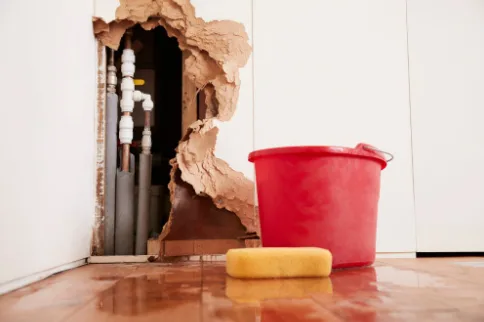
| A burst pipe feels like a plumbing problem. Give it two days, and it can turn into a mold problem that’s slower, messier, and more expensive to fix.
Think of every burst pipe as a 48-hour race. Here’s what happens inside your house hour by hour, and where you can still win. Why 48 hours is the number to watchThe EPA’s water damage and mold guidance sets 24 to 48 hours as the window for drying out materials after clean-water damage. The EPA is careful here, and you should be too. Mold won’t always appear after 48 hours, and it can still start on materials that were dried in time. The hour-by-hour timeline below leans on the burst pipe and mold specialists at FloodSERV, a McAlester-based restoration team serving homes across southeastern Oklahoma. Hour 0: the pipe lets goPlenty of bursts start with a freeze. Water expands as it turns to ice, putting pressure on the pipe until something splits. The split often stays quiet until the ice thaws. That’s why the first warm afternoon after a hard freeze is when the phone at FloodSERV in McAlester, Oklahoma, starts ringing. The Red Cross says the pipes most likely to freeze are outdoor hose bibs, sprinkler lines, and pipes in crawl spaces, attics, garages, kitchen cabinets, and poorly insulated exterior walls. Consumer Reports notes that most frozen pipes happen once temperatures fall below 20°F, though they can freeze above that. Hours 1 to 12, the hidden water keeps movingWater doesn’t stay where it lands. It runs under baseboards, into wall cavities, and down into the subfloor and carpet pad. Drywall wicks water upward, so a wet floor often means wet drywall above the baseboard even when the paint looks fine. In a home over a crawl space, a lot of it ends up underneath, soaking insulation and floor joists where nobody looks. Hours 12 to 24, the air turns against youEven after the pipe is fixed, all that water starts evaporating. Humidity climbs, and every porous surface in the room pulls some of it back in. The EPA recommends keeping indoor humidity below 60 percent, ideally between 30 and 50. A closed-up room after a burst pipe can sit well above that. If a musty smell shows up, take it as a sign the drying isn’t keeping pace. Hours 24 to 48: the window starts closingThis is the stretch the EPA guidance is built around. Wet materials dried within it usually avoid mold, and materials still wet past it are where trouble tends to start. Carpet pad, drywall, and insulation are the slow ones. Hard surfaces can look dry while the cavity behind them is still soaked. We’ve found this is where a lot of homeowners lose the race. A fan and a few towels make the room look finished while the wall stays wet inside. Where mold shows up firstThe EPA lists the back side of drywall, the underside of carpet and pad, and the inside of walls around leaking pipes as common spots for hidden mold. Those are exactly the places a burst pipe soaks first. You can’t see them, so a smell or a faint stain is usually the first clue. What to do in the first 48 hours
If the burst was small, caught within minutes, and only hit tile or vinyl, you may be able to dry it yourself. Once water reaches carpet, drywall, or a crawl space, the clock is too tight to guess. A burst pipe stays a plumbing problem for about a day. After that, it’s a 48-hour race against mold, and you win it by getting the hidden water out first. |