Beyond the Harbor: How Labuan Bajo Connects Design, Hospitality, and Komodo Adventure
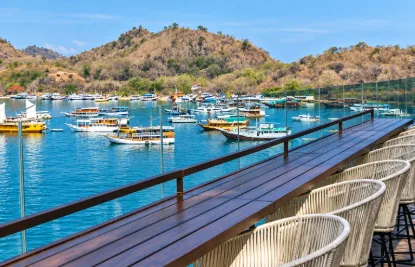
For many travelers, Labuan Bajo first appears on a map as a departure point for Komodo National Park. Boats leave from this town on western Flores for island walks, snorkeling excursions, and journeys through the surrounding waters. Look beyond the departure schedule, however, and a more layered destination comes into view.
Labuan Bajo is a waterfront gateway where everyday local life meets international tourism. Fishing boats and liveaboards share the waterfront, while hotels, restaurants, and guesthouses occupy streets and hills overlooking the bay. For visitors, the experience is shaped by how these places connect: where they sleep, how they reach the harbor, and what kind of vessel carries them offshore.
Understanding those connections can turn a brief stop into a more thoughtful part of an Indonesian holiday.
A Town Shaped by the Water
The coastline and surrounding hills influence how travelers experience Labuan Bajo. The harbor supports boat departures and local livelihoods, while elevated accommodation offers a different perspective on the bay.
Neither a waterfront location nor a hillside stay is automatically the better choice. Their value depends on the traveler’s schedule and priorities.
Someone joining an early departure may prefer straightforward access to the meeting point. Another visitor may choose elevated accommodation for the views, accepting that trips into town require transport. Room photographs alone rarely explain these differences. Road access, walking conditions, pickup arrangements, and transfer times deserve attention before booking.
Travelers can use Komodo Insider as a starting point for exploring the destination, then confirm current availability, facilities, and booking arrangements with the relevant business.
The broader connection matters. A hotel’s location influences departure logistics. A restaurant becomes part of the itinerary when a traveler stays before or after sailing. A boat’s layout affects comfort throughout an overnight journey. These choices work best when considered together.
The Liveaboard as Floating Hospitality
Among the harbor’s recognizable sights are wooden liveaboards often marketed as phinisi boats. Many contemporary vessels draw on Indonesian maritime traditions while incorporating cabins, dining spaces, and facilities for overnight guests.
From a design perspective, a liveaboard faces an unusual challenge. Sleeping accommodation, bathrooms, food preparation, storage, crew areas, and shared spaces must fit within a vessel that operates in changing marine conditions.
Layout therefore matters as much as appearance. Shaded decks can make daytime sailing more comfortable. Cabin ventilation influences rest. The position of stairs and walkways affects how easily guests move around, while storage helps keep compact spaces usable.
Decorative finishes may create an attractive first impression, but they do not answer every practical question. Travelers should ask about the exact cabin offered, bed configuration, bathroom arrangement, air-conditioning availability, and space for relaxing between excursions.
Labels such as standard, deluxe, and luxury are not universal measurements. Comparing specific facilities provides a clearer picture than comparing category names alone. Safety equipment and operating procedures also require direct confirmation with the operator; attractive design does not establish either.
Where the Town Meets the National Park
Labuan Bajo connects visitors with the islands and waters of Komodo National Park. Different travel interests create different demands on the town’s hospitality and transport services.
A visitor taking a day trip may need an early pickup and accommodation for the evening return. Someone spending several nights aboard a liveaboard needs to consider cabin comfort and luggage arrangements. A diving traveler will have different questions from a family interested mainly in sightseeing and swimming.
The town provides the transition between these experiences. It is where travelers prepare, meet operators, buy supplies, and return after time at sea. Allowing some time on land makes that transition easier and creates opportunities to experience local businesses beyond the departure point.
It also helps visitors recognize Labuan Bajo as a place where people live and work, rather than simply a waiting area for an offshore itinerary.
How Location and Design Change a Visit
The relationship between land and sea becomes clearer when each space is considered by its practical role.
| SpaceRole in the journeyWhat to check | ||
| Harbor and departure points | Boarding, transfers, and boat logistics | Exact meeting point, pickup time, and luggage arrangements |
| Hillside accommodation | A stay with elevated views | Road access, walking conditions, and transport requirements |
| Central hotels and guesthouses | Access to dining and town services | Noise, room facilities, and distance from the meeting point |
| Restaurants and cafés | Meals and downtime before or after sailing | Opening hours, dietary options, and accessibility |
| Overnight boats | Transport and accommodation at sea | Cabin details, bathrooms, shared spaces, safety, and inclusions |
This perspective also changes how travelers assess value. A less expensive room may involve additional transport costs. A lower boat fare may exclude services included in another quotation. A busy itinerary may feature many destinations but allow limited time at each stop.
Travelers can explore options through komodo island tour on Komodo Insider, then confirm the itinerary, exact vessel, and full inclusions with the relevant operator.
The useful comparison is the overall experience and total cost, rather than one advertised price in isolation.
Making Time for Labuan Bajo
A fuller experience does not require a long stay. A few deliberate choices can make the town a meaningful part of the journey.
Arriving before the day of departure gives travelers time to settle in and reconfirm boarding arrangements. It also creates some flexibility around separate transport bookings.
Choosing accommodation according to travel rhythm can improve the stay. Visitors who want easy access to restaurants may prefer a central location, while those planning more time at their accommodation may place greater value on views and outdoor space. A Labuan Bajo travel guide can help visitors explore accommodation, dining, and transport considerations before deciding how to spend their time on land.
Watching the waterfront at different times offers another perspective. Departures, deliveries, and returning boats reveal the harbor’s working role beyond its appearance in travel photographs.
Meals provide a simple way to spend time in town. Exploring local Indonesian food alongside other dining options can make the stay feel less like a transfer between airport and boat.
Finally, leaving room after an overnight journey allows time to rest and reorganize before continuing elsewhere. Travelers should confirm expected return times with their operator rather than assuming that every boat schedule fits a tightly timed onward connection.
Hospitality That Respects the Setting
The relationship between tourism, design, and local life also raises questions about how a destination grows.
Hotels, restaurants, and boat operations can support local employment and suppliers. Their daily decisions about water, energy, waste, and maintenance influence the places in which they operate.
Travelers can make more informed choices by asking practical questions. Who operates the vessel? What is included in the quotation? How are itinerary changes handled? What guidance applies during wildlife encounters and marine activities?
Clear answers help establish realistic expectations. They also shift attention from promotional imagery toward the people and systems that make the journey possible.
Respecting instructions from guides and park staff, handling waste carefully, and choosing businesses that communicate their services clearly are useful parts of that approach.
A Gateway Worth Experiencing
Labuan Bajo’s connection with Komodo is central to its appeal, but it does not explain the whole destination. The town is also a working waterfront, a hospitality base, and a place where maritime traditions meet contemporary travel.
Looking at those relationships changes the planning process. Choosing islands remains important, but so does choosing accommodation that fits the schedule, a vessel that suits the group, and enough time to move comfortably between them.
For travelers interested in coastal places, design, and island journeys, Labuan Bajo deserves attention before the boat departs and after it returns. The harbor opens the route to Komodo; the town gives that adventure its starting point and context.