What Makes Truck Accident Claims More Complicated Than Regular Car Accidents in Buffalo?
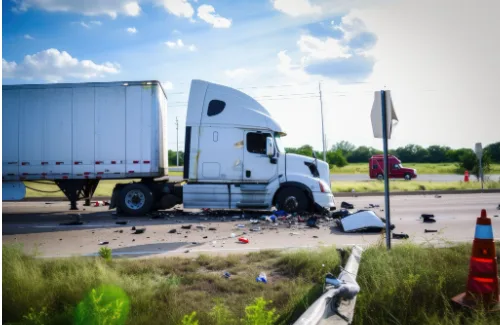
Buffalo sits on one of the busiest freight corridors in the Northeast, with trucks streaming along the Thruway and across the Peace Bridge every hour of the day. When one of those trucks hits a passenger car, the crash looks like a larger version of an ordinary accident. The claim that follows behaves nothing like one. Different defendants, different rules, and a different kind of evidence turn a familiar process into something far more demanding.
More Parties Can Owe You Money
A typical car crash involves one careless driver, one insurance policy, and one adjuster working the file. A truck crash can involve the driver, the trucking company, the separate owner of the trailer, a maintenance contractor, and the business that loaded the cargo. Figuring out who owes what is usually the first job of a Buffalo truck accident attorney, because suing the wrong party wastes months you cannot get back.
New York law widens the circle on purpose. Under Vehicle and Traffic Law § 388, the owner of a vehicle is responsible for harm caused by anyone driving it with permission, and that liability is joint and several. A trucking company also answers for its employee’s driving so that a single crash can put several companies on the hook at once.
Federal Rules Create Evidence Car Cases Never Have
Commercial trucks operate under a thick federal rulebook that ordinary drivers never touch. The hours-of-service limits in 49 CFR Part 395 cap how long a trucker can drive before resting, and electronic logging devices record every mile. When those records show a driver pushed past the limits, the violation itself becomes powerful proof of carelessness that no witness statement can match.
The same federal code requires driver qualification files, drug and alcohol testing, and documented inspections and repairs. None of that paperwork exists in a car-versus-car case. Carriers may keep some of these records for only a short time, which is why the fight over evidence in a truck case starts within days of the crash, long before any lawsuit gets filed.
The Money and the Defense Are Both Bigger
An 80,000-pound vehicle does damage a sedan never could, so the injuries and the medical bills run higher from the start. Federal law responds by requiring far more coverage, with many interstate carriers needing at least $750,000 in liability protection under 49 CFR § 387.9. Those large policies also buy large defenses, and carriers often send their own investigators to a crash scene before the road even reopens, gathering facts while the injured person is still in the emergency room.
- Higher policy limits – interstate carriers must carry far more coverage
- Rapid defense teams – carrier investigators can reach the scene first
- Harsher injuries – heavier vehicles cause longer, costlier recoveries
- Multiple insurers – several policies may stack across the liable parties
New York Law Still Sets the Ground Rules
For all the federal rules involved, the claim itself still runs on New York law. Your own no-fault coverage pays the first medical bills, and pain and suffering requires an injury that meets the serious injury threshold in Insurance Law § 5102(d). Truck crash injuries usually clear that bar, but clearing it still takes solid medical proof, never assumptions or rough estimates.
Blame gets divided under CPLR § 1411, so any percentage of fault the carrier pins on you cuts your recovery by that share. The lawsuit deadline comes from CPLR § 214(5), which gives most victims three years from the crash. Carriers know both rules well and shape their defense around them from day one.
How a Lawyer Levels the Field
The carrier’s team starts working the moment the crash happens, so the injured person needs someone working just as fast. An attorney’s first letters demand that the company preserve logs, data, and the truck itself before anything can be altered or lost. From there, the case becomes a careful reading of records that the trucking company would rather no one studied, from dispatch schedules to repair invoices.
- Sends preservation letters – stops logs and data from disappearing
- Identifies every defendant – driver, carrier, owner, and cargo handlers
- Reads the records – finds violations hidden in logs and inspections
- Counters blame-shifting – pushes back on fault pinned on you
Why the Paper Trail Decides These Cases
A car accident case is usually won with photos, witnesses, and testimony about one bad moment. A truck accident case is won with documents that existed long before the crash: logs, inspection reports, hiring files, and the data a truck records about itself. Those records reward the side that moves first and punish the side that waits. Whatever offer eventually lands on the table, have someone who reads these files for a living look at it before you sign.