What Makes an Outdoor Kitchen in Jacksonville Functional and Easy to Use?
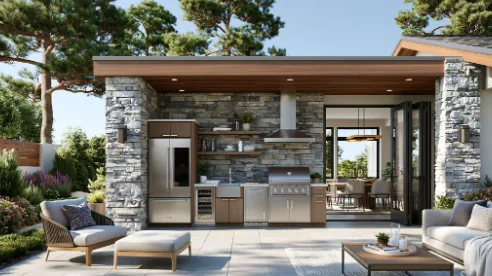
An outdoor kitchen sounds simple until you actually try to cook a full meal in one. A grill alone does not make an outdoor kitchen functional. The layout, the materials, and the little details you plan for upfront decide whether you end up with a space you use every week or one that sits unused after the first summer. In a place like Jacksonville, where heat, humidity, and salt air are part of daily life, these choices matter even more than they would somewhere else.
Start With A Layout That Makes Sense
Before you think about appliances or countertops, think about how you actually move while you cook. A good outdoor kitchen places your grill, prep space, and storage close enough together that you are not walking back and forth across the yard mid-meal. Many homeowners who hire outdoor kitchen contractors in Jacksonville start with this same question, since a poorly planned layout is one of the most common reasons an outdoor kitchen ends up feeling more like a hassle than a convenience. Think of it as a small, simplified version of the same flow you already use in your indoor kitchen.
Once the basic layout is set, think about the small details that make cooking easier, like counter space next to the grill for plates and tools, or a spot for trash and recycling that does not require a trip back inside. These small additions do not cost much, but they make a real difference every time you cook.
Choose Materials That Can Handle Florida Weather
Jacksonville’s humidity, heat, and salt air are harder on outdoor materials than most people expect, especially if you live near the coast. Cheaper metals and finishes can rust or discolor within a year or two once they are exposed to this kind of climate. This is why many outdoor kitchens use higher-grade stainless steel, since marine-grade stainless steel resists corrosion far better in salty, humid air than standard grades used in typical indoor appliances.
The same thinking applies to countertops, cabinetry, and flooring. Natural stone, concrete, and weather-rated tile tend to hold up far better outdoors than wood or basic laminate, which can warp or crack under constant sun and moisture. Spending a bit more on the right materials upfront usually costs less over time than replacing damaged ones every few years.
Plan For Shade And Shelter
Florida sun is intense for most of the year, and an outdoor kitchen without any shade becomes hard to use during the hottest months. A covered structure, pergola, or even a well-placed patio roof keeps the space usable for more hours of the day and protects your appliances from direct sun and heavy rain. Without some kind of cover, you may find yourself avoiding your outdoor kitchen exactly when you would want to use it most.
Shelter also protects your investment. Appliances left fully exposed to sun and rain tend to wear out faster, and electrical components are more likely to have problems over time. Even a simple roof extension can extend the life of your outdoor kitchen significantly, which makes it a practical addition rather than just a design choice.
Get The Utilities Right From The Start
An outdoor kitchen depends on proper access to power, water, and sometimes gas, and retrofitting these later is far more expensive than planning for them from the beginning. Decide early whether you want a built-in grill connected to a gas line, a sink with running water, or outlets for small appliances like blenders or warming drawers. Each of these choices affects how the space gets built, so it is worth deciding before construction starts rather than trying to add them afterward.
It also helps to think about lighting, since many people use their outdoor kitchen in the evening when it is cooler outside. Task lighting near the grill and prep area, along with softer ambient lighting for the rest of the space, makes the kitchen usable well after the sun goes down. Planning utilities and lighting together from day one avoids costly rework later.
Wrapping Up What Makes an Outdoor Kitchen Work
A functional outdoor kitchen in Jacksonville comes down to a few key decisions made early: a layout that matches how you actually cook, materials built to handle heat and humidity, shelter that keeps the space usable year-round, and utilities planned out before construction begins. When these pieces come together, you end up with an outdoor kitchen you actually use, not one that just looks nice from the patio door.