Choosing an Electrolytic Tinplate Supplier by Manufacturing Requirements
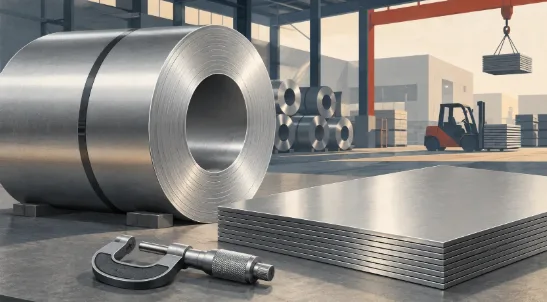
| ytic tinplate supplier should be evaluated against the manufacturing job the steel must perform. Thickness, mechanical properties, tin coating, surface condition, and delivery format act together. A competitive price per ton means little if the material creates extra scrap, unstable welding, or difficulties feeding the next production stage.
For a canmaker, the most useful purchasing specification connects each material requirement to an operation: cutting, coating, printing, forming, welding, or end making. That connection helps purchasing and production compare equivalent offers. It also explains why two batches carrying the broad description food-grade tinplate may behave differently on the same line. Define the component before choosing the materialElectrolytic tinplate, often abbreviated ETP, is thin steel with tin deposited on its surfaces. The steel provides the structural foundation; the metallic coating and subsequent surface treatments help determine how the material interacts with processing and its intended application. Nippon Steel’s technical catalog classifies tinplate through several variables, including temper, coating mass, annealing, and surface finish. [1] Begin by identifying whether the order is for welded can bodies, drawn components, or can ends. These are different manufacturing tasks. Material that forms a satisfactory cylindrical body is not automatically suitable for a deeply drawn part. Existing tooling, forming severity, welding practice, and the final package design should guide the material choice. When comparing an electrolytic tinplate supplier, describe the intended component and conversion route before asking for a general grade recommendation. This gives the discussion a technical starting point. It also prevents a familiar commercial label from being mistaken for a complete specification. Read thickness together with tolerance and yieldNominal thickness is the target value, while tolerance defines the permitted variation under the agreed specification. Both matter. A canmaker should establish the measurement method and the material condition being measured, rather than comparing quotations that use the same nominal value but different tolerance expectations. Thickness affects how much steel enters each component. It also interacts with forming behavior, stiffness, and seam construction. Reducing gauge can improve material yield, but the package and process must still perform acceptably. It is not a change that purchasing can assess solely through the increase in sheets per ton. Consider a simplified purchasing example, not a production recommendation. Assume a flat steel blank measures 0.30 meters by 0.20 meters and has a thickness of 0.20 millimeters. Using an assumed steel density of 7,850 kilograms per cubic meter, its steel mass is 0.30 × 0.20 × 0.00020 × 7,850, or 0.0942 kilograms. At 0.19 millimeters, the calculated mass becomes 0.08949 kilograms, a reduction of 5 percent. That calculation excludes tin, lacquer, trimming, rejects, and process losses. It explains the attraction of downgauging but proves nothing about equivalent performance. A meaningful commercial comparison adds trial yield, accepted output, and any tooling or process changes to the raw-material calculation. Treat temper as a process requirementTemper describes the material’s mechanical condition within a defined specification system. It should not be read as a simple quality ranking in which a higher number is always preferable. A stronger material may support a particular design while demanding different forming conditions. More strength does not automatically mean better results for every component. Single-reduced and double-reduced tinplate also deserve separate attention. The latter receives additional cold reduction after annealing and can provide higher strength at lower thickness, with forming implications that must be considered. ArcelorMittal’s packaging steel catalog distinguishes these material families and links grade descriptions to mechanical properties and application areas. [2] Record the designation system, relevant properties, and intended application together. Avoid assuming that a short temper label from one quotation directly matches a grade expressed under another system. If a substitution is proposed, compare the underlying properties and conversion performance before accepting the label as equivalent. Specify tin coating on each sideTin coating mass is commonly expressed in grams per square meter. The critical purchasing question is whether a quoted value refers to one face, both faces, or a designation defined by a particular standard. Tinplate can carry equal coating masses on both surfaces or a different mass on each face. [1] For a deliberately simple example, an order stating 2.8/2.8 g/m² means 2.8 grams on each face of one square meter of sheet, or 5.6 grams in total. An order stating 5.6/2.8 g/m² means different masses on the two faces, totaling 8.4 grams. State the intended inside and outside orientation explicitly whenever the coating is differential. More tin is not a universal substitute for an appropriate organic coating or a suitable food-package combination. The required protection and processing behavior depend on the intended use. A purchasing team should preserve the coating arrangement established for the application rather than increase or reduce it based on a general slogan about corrosion resistance.
Include surface condition in the technical comparisonBright, stone, and matte finishes describe different surface appearances and textures. The choice can affect the intended decorative result and must be considered alongside the coating and printing process. A surface that looks attractive in a sample is not automatically the best match for the decorator’s established production conditions. Surface treatment and protective oil also belong in the agreed material description. Their relevance is practical: the incoming metal must work with the coating and conversion steps that follow. If a surface treatment changes, the plant needs a controlled comparison of the resulting performance rather than an assumption that the difference will disappear beneath the lacquer. Use a retained material sample and the plant’s normal evaluation methods to compare proposed changes. Keep the test focused on the intended operation, such as coating adhesion or forming behavior. This is more informative than collecting unrelated certificates that do not describe the component being manufactured. Make the delivery format fit the factoryCoil and sheet orders create different handling requirements. For coils, specify width, internal diameter, permitted outside diameter, mass limits, and winding orientation as applicable. For sheets, establish length, width, squareness, flatness, and stacking arrangements against the actual feeding equipment. A technically suitable steel can still disrupt production if the delivered format does not fit the plant. Cutting layout affects usable output as well. Compare how a quoted sheet size fits the approved blank arrangement, including necessary trimming and processing allowances. Do not assume that a larger sheet always provides better yield. The relevant figure is accepted components from the purchased material under the planned conversion route. Transport protection should reflect the journey and receiving conditions. Thyssenkrupp describes different packaging arrangements to protect packaging steel against transit damage and environmental exposure. [3] For the buyer, the useful follow-through is a clear unloading and storage plan that preserves the condition of the material after delivery. Make quoted quantities comparableA purchase expressed in tons and a production plan expressed in sheets need a common basis. Confirm whether the commercial quantity refers to actual weighed mass or another agreed calculation, and how packaging is treated. Then connect the delivered dimensions to the approved blank layout. This prevents an apparently attractive unit price from hiding a mismatch in the amount of useful material received. Keep routine process scrap separate from material rejected for a defect. They have different causes and different commercial implications. A layout that produces excessive trimming calls for a dimensional or cutting review; damage found at receiving calls for a different investigation. Combining both under a single waste percentage makes it harder to choose the right improvement. The order should also describe how partial coils, mixed bundles, or planned split deliveries will be identified and handled if they are allowed. These details make supply easier to schedule without changing the material’s technical requirements. Compare supply on accepted outputA practical supply agreement distinguishes material lead time from the time needed for slitting, cutting, printing, or coating. It should also define how lots remain identifiable through these stages. This helps the canmaker connect a production observation to the relevant material, instead of tracing a problem only to a shipment date. The product range presented under S.H PACKING metal packaging includes raw materials, printing and coating, and finished packaging. That range can support a discussion about the stage at which a canmaker wants to receive the material. The commercial comparison should identify which operations are included so that offers describe the same delivered product. Frequently asked questionsIs the lowest price per ton the best purchasing result?Not necessarily. Compare price alongside usable yield, accepted production, conversion requirements, and inventory needs. A lower raw-material price can lose its advantage if the delivery format creates additional trimming or if a proposed material requires an expensive process change. Can two tinplate orders use the same thickness but behave differently?Yes. Mechanical properties, surface condition, coating arrangement, and dimensional variation can differ even when nominal thickness matches. The comparison needs the complete application specification. Thickness is an important input, but it is not a full description of how the steel will convert. Does a familiar temper designation guarantee equivalence?No. Confirm the designation system and the properties behind it. A commercial shorthand can omit information needed for a useful comparison. Proposed alternatives should be evaluated against the component and process rather than accepted because their labels appear similar. When should a canmaker choose sheets instead of coils?Choose the format that fits the plant’s equipment and division of work. Sheets may suit a buyer outsourcing cutting or feeding a sheet process, while coils may suit an established internal cutting route. The decision depends on total conversion requirements and handling capability. What should remain unchanged during a comparison trial?Keep the component design and other controlled production conditions consistent where possible. Record any intentional change. Otherwise, a difference attributed to the steel might actually arise from coating, tooling, or machine settings, making the result difficult to use in a purchasing decision. Turn the quotation into a manufacturing comparisonSend a component-specific brief that connects material properties, delivery format, and planned conversion. Compare quotations against that common basis, then evaluate meaningful substitutions through a defined trial. The goal is a repeatable supply of material that produces acceptable cans efficiently. References[1] Nippon Steel Corporation. Electrolytic Tinplate. Technical catalog C003en. [2] ArcelorMittal. Steel for Packaging — Product Catalogue. [3] thyssenkrupp Steel. Packaging Steel and Tinplate from Andernach. |
||||||||||||||||||