Rehabilitation After Traumatic Brain Injury: What Families Face Once the Emergency Is Over
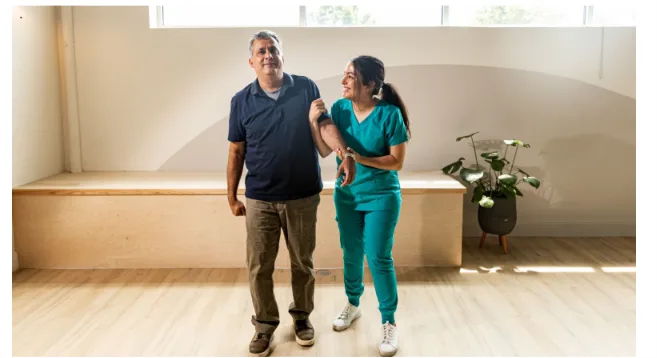
The days after a serious head injury are dominated by intensive care, monitors and difficult conversations with doctors. Yet for many families, the hardest questions only arrive once a loved one is medically stable: what comes next, how long recovery may take, and where the right support can be found. Rehabilitation after traumatic brain injury is the part of the journey that shapes daily life for months or years, and it deserves as much attention as the emergency itself.
A global injury with long-lasting consequences
Traumatic brain injury (TBI) is far more common than many people assume. A Global Burden of Disease analysis estimated around 27 million new cases worldwide in 2016, with some 55 million people living with the effects of a brain injury in the same year. Falls and road injuries were the main causes in most regions (GBD 2016 Traumatic Brain Injury and Spinal Cord Injury Collaborators, 2019).
The consequences are not limited to severe cases. A Lancet Neurology Commission reported that around half of adults admitted to hospital with a so-called mild TBI had not returned to their previous level of health six months after the injury. The same experts pointed to uneven access to rehabilitation and called for better treatment of long-term problems such as fatigue and changes in thinking and behaviour (Maas et al., 2022).
The less visible effects of a brain injury
A broken leg is easy to see. The effects of a brain injury often are not. Alongside problems with movement, balance or speech, many patients experience difficulties with concentration, memory, planning or controlling emotions. Some tire after a short conversation; others react to situations in ways their families no longer recognise.
These changes can be harder for relatives to understand than physical limitations, and they are one reason why rehabilitation after traumatic brain injury involves a whole team rather than a single specialist. Neurologists, physiotherapists, occupational therapists, speech and language therapists, neuropsychologists and nursing staff each work on a different part of recovery, and their goals are coordinated around the individual patient.
How TBI rehabilitation in Germany is structured, from the patient’s side
Germany organises neurological rehabilitation along a phase model, usually labelled A to E. Each phase reflects a patient’s current condition rather than the original diagnosis, which helps families understand where their relative stands and what the next stage may involve.
- Phase A: in acute treatment, often in intensive care. The focus is medical stabilisation.
- Phase B: stable, but severely affected, sometimes with reduced consciousness. Early rehabilitation is combined with intensive medical and nursing care.
- Phase C: showing first signs of regained motor or cognitive abilities, but still needs a lot of help. Therapy works on movement, communication and basic everyday skills.
- Phase D: largely independent in daily activities. The aim is independence at home and, where possible, a return to work.
- Phase E: back in everyday life. Follow-up support keeps progress going.
For international patients, this structure has a practical advantage: a patient can be admitted at the phase that matches their condition and continue through the following phases with the same team. Kliniken Schmieder, a group of neurological rehabilitation hospitals in Baden-Württemberg, covers phases A to D/E. Families can read how the group approaches neurological rehabilitation after a TBI and send an enquiry to its International Office, whose staff speak English, Russian and Arabic.
Questions to settle before travelling for treatment
Families considering rehabilitation abroad usually find the process easier when a few points are clarified early:
- Is the patient medically stable and no longer dependent on ventilation?
- Are recent medical reports, imaging results and a medication list available, ideally in English?
- Who will accompany the patient, and how will relatives be involved in therapy?
- What are the patient’s own goals: walking again, communicating, managing daily tasks, returning to work?
Clear answers allow the receiving hospital to assess the right starting phase and help the family plan a stay that may last several weeks or months.
Involving the family
Relatives are not only visitors during rehabilitation. They often become partners in it, learning how to support exercises, communicate with a person whose speech or memory has changed, and recognise early signs of overload. Good rehabilitation programmes make room for this, explaining progress and setbacks openly and preparing the family for life after discharge.
Conclusion
Rehabilitation after traumatic brain injury is a long process that unfolds in stages, and much of it concerns effects that are not immediately visible. A structured approach, an experienced interdisciplinary team and close involvement of the family can make that process easier to navigate, at home or abroad. Every brain injury is different, so please discuss your own situation and the rehabilitation options that may be right for you with your doctor.
Sources
- GBD 2016 Traumatic Brain Injury and Spinal Cord Injury Collaborators. Global, regional, and national burden of traumatic brain injury and spinal cord injury, 1990–2016: a systematic analysis for the Global Burden of Disease Study 2016. The Lancet Neurology, 2019.
- Maas AIR, Menon DK, Manley GT, et al. Traumatic brain injury: progress and challenges in prevention, clinical care, and research. The Lancet Neurology, 2022.