Things to Know About Contact Temperature Sensors When Selecting for Malaysian Industries
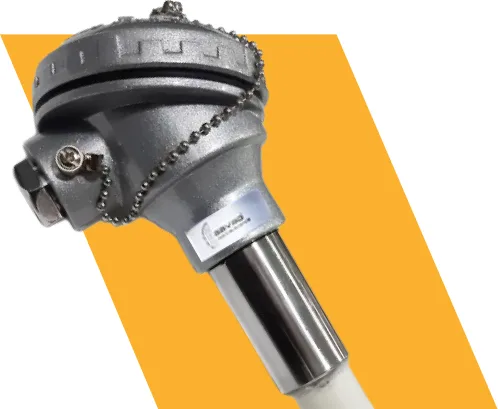
A temperature reading is only useful when the sensor can reliably measure the actual process condition. In Malaysian industries, that can be challenging. Manufacturing plants, palm oil facilities, chemical units, food-processing plants, refineries, and power facilities may expose sensors to heat, moisture, vibration, corrosive chemicals, and frequent process changes.
This is where contact temperature sensors come in.
Picking one isn’t as simple as opening a catalog and choosing whatever model has the highest temperature rating printed on the box. You’ve got to match the probe design, sheath material, mounting style, and response speed to your actual operating conditions.
What Are Contact Temperature Sensors and How Do They Work?
What Are Contact Temperature Sensors?
Contact temperature sensors are basic. If the probe isn’t physically touching whatever you’re trying to measure, you aren’t getting a real reading.
Depending on your plant setup, you might shove the element into a thermowell, dip it straight into the process flow, clamp it to the outside of a pipe, or just bolt it flat against a hot motor housing.
Most plants stick to two standard setups: RTDs and thermocouples.
RTDs read temperature by watching electrical resistance shift up or down in a predictable pattern. Thermocouples are different. They use two joined metals that bring out a tiny voltage when things warm up.
Standards matter here if you want to pass your next audit without headaches. IEC 60751:2022 sets the rules for industrial platinum RTDs, and IEC 60584-1:2013 lays out the exact tolerances for standard thermocouple types so your control system doesn’t get bad data.
How Do They Work?
How these work is pretty simple.
You stick the sensor against your equipment or drop it right into the fluid path, and thermal energy bleeds over into the probe. The sensor takes that heat change and turns it into an electrical signal your PLC, DCS, or digital controller can actually read without guessing.
With an RTD, heat shifts the internal resistance. Simple math, really. The panel reads that shift and takes out a clean degree reading on your display.
Thermocouples do their own thing. Two different metal wires welded together create a tiny voltage when things warm up, and the control room scales that millivolt signal based on whether you’re running a Type K, J, or something else.
Where you mount the probe matters just as much as buying good hardware. If your tech doesn’t seat the probe deep enough inside the thermowell, or if heat bleeds off through a heavy metal fitting on a cold morning, your reading will be total garbage even if the transmitter is brand new.
Types of Contact Temperature Sensors
No single sensor works for every job across Malaysia’s industrial plants. Pick the right tool depending on what you’re actually measuring.
1. RTD Sensors
When accuracy matters, and your process can’t afford drift, RTDs are the usual go-to. Most plants run on platinum Pt100 sensors because they just stay stable over time. You’ll see them compliant with IEC 60751 standards across food production, storage tanks, HVAC loops, and standard manufacturing lines.
2. Thermocouples
If things get hot fast or the environment beats up your gear, thermocouples take the abuse better. Type K handles most daily factory duties. But when temperatures swing to extremes or chemicals enter the picture, engineers swap over to types J, T, and N or the noble metal types like R, S, and B—all following IEC 60584-1 specs.
3. Surface Contact Sensors
Ever tried to install a thermowell into an active pipe and realised you can’t shut the line down? That’s where surface sensors save the day. You just clamp or mount them onto the outside of ducts, motor housings, or process piping. No drilling holes, no risk of leaks, and no headache with pressure containment.
4. Mineral-Insulated Sensors
Mineral-insulated constructions use a compact sensing assembly that can provide good mechanical strength and flexibility. They’re useful where vibration, limited installation space, or demanding process conditions make conventional probes difficult to install.
5. Thermowell-Mounted Sensors
A sensor installed inside a thermowell can be protected from direct process exposure. This arrangement is particularly useful where the sensor may need replacement without removing the primary process connection, subject to the plant’s design and safety requirements.
What to Consider When Selecting a Contact Temperature Sensor for Malaysian Industries?
Start With the Process, Not the Sensor Catalogue
A practical selection exercise should begin with five questions: What temperature needs to be measured? Where will the sensor be installed? What will it be exposed to? How quickly must it respond? And how will the signal be used?
For Malaysian plants, environmental conditions deserve particular attention. High humidity, water exposure, chemical vapours and outdoor installation can influence the choice of sheath, cable, connector, and enclosure.
Check the Temperature Range
Don’t select a sensor merely because its maximum rating looks impressive. A sensor should operate comfortably within the actual process range. For example, a sensor monitoring a process normally running around 250°C should also account for startup, shutdown, and abnormal operating conditions.
Consider Chemical and Mechanical Exposure
A probe exposed to corrosive chemicals may require a suitable sheath or protective arrangement. In areas with vibration or mechanical movement, the sensor construction and mounting method become equally important.
Look at Accuracy and Response Time
A slow sensor may be acceptable for a large storage tank but unsuitable for a rapidly changing heating process. Similarly, an extremely fast sensor isn’t automatically better if the process itself changes slowly.
Check Installation and Maintenance
Think about access before installation. Can the sensor be removed safely? Is calibration practical? Will moisture enter the connection? Can the probe withstand repeated thermal cycling?
One useful field-selection lesson is simple: the sensor’s weakest installation detail can become the measurement system’s biggest problem. A technically excellent sensing element won’t compensate for poor mounting or unsuitable protection.
For safety-related workplace heat exposure, Malaysia’s Department of Occupational Safety and Health also recommends systematic hazard identification and heat-stress assessment. Its guidance refers to WBGT as a widely accepted index for assessing industrial heat stress.
Final Words
Choosing a contact temperature sensor for a Malaysian industrial plant is an application decision, not just a purchasing decision. Tempsens builds temperature monitoring hardware for process plants that can’t afford unexpected downtime or bad batch quality. They design equipment that holds up under tough conditions, so your team can keep production running smoothly. Its range of temperature sensing solutions can be considered when plants need application-specific temperature measurement for demanding industrial environments. The better approach is to start with the process conditions, then select the sensor around them.
FAQs
1. What’s a contact temperature sensor?
It’s a probe or sensor that touches the liquid, pipe, or equipment directly to read the temp. If it isn’t making direct physical contact, it won’t read right.
2. Are RTDs or thermocouples better?
Neither is flat-out better across the board. RTDs work best when you need steady, pinpoint accuracy on tighter temperature bands, while thermocouples hold up way better under brutal, wide-ranging heat and heavy plant abuse.
3. Which contact sensor works best for extreme heat?
Thermocouples are usually your best bet for high-temp jobs. Just check your sheath metal, atmosphere, and standard types like IEC 60584-1 specs first so you don’t burn out the tip in a week.
4. Why does installation mess up temperature accuracy so often?
Because if your immersion depth is too shallow or the mounting is loose, the sensor ends up measuring ambient air or pipe wall heat instead of the actual process fluid. That leads to false readings, bad batch quality, and constant recalibration headaches for your tech team.
5. What should Malaysian industries check before purchasing?
Check the operating temperature, accuracy, response time, process medium, humidity, corrosion, vibration, mounting arrangement, sensor materials, and maintenance requirements.