Natural Hairline Design in Turkey: Why Planning Matters More Than Graft Count
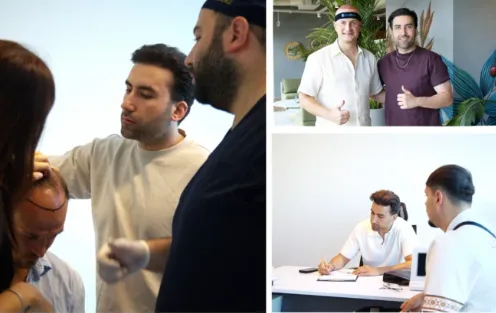
A successful hair transplant is not defined by graft numbers alone. Natural hairline design, donor management and precise implantation often matter far more visually. This has changed how international patients evaluate hair transplant Turkey. Instead of focusing only on how many grafts can be implanted, attention is shifting toward facial proportions, hair direction and long-term planning. Istanbul clinics increasingly use modern techniques such as Sapphire FUE and DHI within personalized treatment plans. Base Médicale reflects this approach by combining current transplantation technologies with individualized hairline design and careful donor-area assessment.
Why Does the Hairline Matter So Much in Hair Transplantation?
The frontal hairline frames the entire face. Even small changes can influence how the forehead, temples and facial proportions appear.
A natural hairline is rarely perfectly straight or completely symmetrical. Real hairlines contain subtle irregularities and gradual transitions.
The first rows also tend to appear softer than the denser hair behind them.
For this reason, transplant planning should not treat the frontal area like a solid border. Follicles need thoughtful positioning.
Hair direction must also change naturally across the forehead and temples.
A technically completed transplant can still appear artificial when these details are ignored.
Modern hair restoration therefore places greater emphasis on design before extraction even begins.
Natural Results Start Before the Procedure
Hair transplantation often appears highly technical from the outside. However, many important decisions happen before the procedure starts.
The first step is understanding the patient’s current pattern of hair loss.
The medical team must then examine the donor area and determine its available capacity.
Age, existing density and possible future hair loss also influence the treatment plan.
These factors determine where the hairline can realistically begin.
They also affect how densely grafts can be distributed across different areas.
Base Médicale uses individualized assessment rather than applying one standard hairline to every patient.
This approach considers facial structure, donor resources and existing hair together.
The final design can therefore reflect the individual rather than a generic template.
Why Graft Count Can Be Misleading
Graft numbers are frequently used when comparing hair transplant procedures.
However, a larger number does not automatically indicate better planning.
A graft may contain one, two, three or more hairs.
This means two procedures using similar graft counts may create different visual density.
Hair thickness also matters.
Thicker strands usually create more visual coverage than very fine hair.
The contrast between the scalp and hair colour can change density perception as well.
Curl pattern provides another variable.
For these reasons, graft count should be viewed as one part of the treatment strategy.
How those grafts are distributed often matters more than the headline number.
The Donor Area Determines What Is Possible
Every hair transplant depends on the donor area.
This region usually includes hair from the back and sides of the scalp.
These follicles can be moved, but their supply remains limited.
Hair transplantation therefore redistributes existing resources rather than creating unlimited new hair.
Aggressive extraction can reduce visible density in the donor region.
It can also limit options if another procedure becomes necessary later.
Responsible planning considers both the current transplant and possible future needs.
This becomes particularly important for younger patients with progressive hair loss.
Base Médicale incorporates donor evaluation into personalized treatment planning.
The objective is to balance coverage with preservation of available follicles.
Hairline Height Should Not Be Chosen in Isolation
A lower hairline may initially seem more attractive.
However, moving the frontal line downward requires additional grafts.
Those grafts cannot then be used elsewhere.
A very low line may therefore create challenges if thinning continues behind the transplanted area.
Age also influences what appears natural.
A hairline suitable for someone in their early twenties may not remain proportionate decades later.
Facial anatomy must also be considered.
Forehead shape, temple recession and existing hair all affect the design.
For these reasons, hairline height should form part of a wider strategy.
The aim should be balance rather than simply creating the lowest possible line.
Small Irregularities Can Make a Hairline Look More Natural
Natural hairlines are not machine-drawn.
They contain variations that prevent the front edge from appearing artificial.
These irregularities must remain controlled.
Random placement alone does not create a natural result.
The first rows usually require careful use of finer follicular units.
Single-hair grafts can help create a softer transition at the front.
Denser follicular units can then be positioned farther behind.
This creates progression between the frontal edge and the deeper recipient area.
Hair direction is equally important.
Poorly angled grafts may remain visible even after strong growth develops.
Natural design therefore combines irregularity with technical control.
Why Hair Angle Changes Across the Scalp
Hair does not emerge from every region at the same angle.
Frontal hairs generally grow forward at relatively low angles.
Temple hair follows a different direction.
The orientation changes again toward the middle of the scalp.
The crown presents an even more complex pattern.
Its follicles often follow a circular or spiral arrangement.
A transplant must respect these regional differences.
Otherwise, newly implanted hair may conflict visually with existing growth.
Precise channel creation and implantation help control these angles.
Modern techniques provide different tools for achieving that control.
However, the treatment plan still determines how those tools are used.
Sapphire FUE and Precise Channel Creation
Sapphire FUE has become a familiar technique in Istanbul hair transplantation.
The extraction stage follows the principles of modern FUE.
Individual follicular units are removed from the donor area.
Fine sapphire blades can then be used when preparing recipient channels.
These channels influence the location, angle and direction of transplanted grafts.
Precision during this stage becomes particularly important near the frontal hairline.
Closely planned channels can support a controlled distribution of follicles.
Base Médicale uses Sapphire FUE within individualized transplantation plans.
The technique becomes most useful when combined with thoughtful hairline design and donor management.
Technology supports the plan rather than replacing it.
How DHI Changes the Implantation Stage
DHI provides another approach to graft placement.
Individual follicular units are first harvested from the donor area.
They are then loaded into an implantation device.
The instrument allows the medical team to place grafts while controlling several implantation parameters.
This can be particularly useful in areas requiring detailed positioning.
DHI may also be considered when existing hair remains within the recipient region.
However, the technique is not automatically preferable for every patient.
The extent of hair loss and required coverage must still be considered.
Donor characteristics remain equally important.
The strongest treatment plan selects technology according to the individual case.
Personalized Planning Becomes More Important With Advanced Hair Loss
Advanced hair loss creates a different challenge from localized recession.
A large bald area may require more follicles than the donor region can safely provide.
Trying to restore every area with equal density may therefore be unrealistic.
Prioritization becomes necessary.
The frontal region often receives more attention because it strongly influences facial appearance.
The mid-scalp may then require a different density strategy.
The crown can consume significant numbers of grafts because of its surface area and growth pattern.
A personalized plan balances these competing demands.
This is one reason standardized graft packages can be misleading.
The same numerical target cannot suit every pattern of hair loss.
Existing Hair Should Influence the Treatment Plan
Not every recipient area is completely bald.
Many patients still have thinning native hair.
This changes how transplantation should be approached.
New grafts must be placed without ignoring the follicles already present.
Existing density also affects how much additional coverage is actually necessary.
A region that appears thin under strong lighting may not require the same graft density as a fully bald area.
The future of those existing hairs must also be considered.
If they continue thinning, the appearance of the transplant may change over time.
Long-term planning therefore matters even when the immediate goal appears straightforward.
Hair Characteristics Change Visual Density
Graft numbers alone cannot predict the final appearance.
Hair calibre has a significant effect.
Thick strands provide greater visual coverage than fine strands.
Curly or wavy hair can also create more apparent volume.
Straight, fine hair may require a different distribution strategy.
Hair-to-scalp colour contrast contributes another factor.
Dark hair against a light scalp can make thinning more visible.
Lower contrast may produce a different impression of density.
These characteristics explain why personalized planning remains essential.
A technically identical graft count can look very different between two patients.
Why International Patients Need Detailed Planning Before Travel
International hair transplant patients face additional logistical considerations.
They may have only a few days available in Istanbul.
The first evaluation therefore often begins remotely.
Clear photographs can help provide an initial understanding of the situation.
The frontal area, temples, top, crown and donor region should all be visible.
This initial review can help identify whether transplantation appears realistic.
The final decisions should still follow an in-person scalp examination.
Base Médicale structures its international patient pathway around this combination of remote preparation and local assessment.
This reduces unnecessary uncertainty before the patient travels.
Communication Can Affect the Planning Process
Hair transplantation includes many highly visual decisions.
Patients may have specific ideas about hairline shape, temple restoration or density.
Explaining these expectations clearly matters.
The medical team must also explain what donor resources can realistically support.
Language barriers can complicate this process.
Base Médicale has developed a particularly strong French-speaking environment.
Its team includes native French-speaking staff.
This can benefit patients arriving from France, Belgium, Switzerland, Canada or other francophone regions.
Clear communication is also valuable after the procedure.
The patient usually returns home long before the transplant reaches later growth stages.
Why Modern Technology Should Support Medical Judgement
Hair transplantation technology continues to develop.
Smaller extraction tools can support more controlled follicular harvesting.
Sapphire blades provide another option for recipient-channel preparation.
DHI implanters offer detailed control during graft placement.
Digital scalp assessment can improve documentation and planning.
These tools can make procedures more precise.
However, no device can independently design an appropriate hairline.
Technology cannot determine how donor resources should be preserved for future loss.
It also cannot replace an individualized understanding of facial proportions.
The best use of technology is therefore supportive.
Modern equipment becomes valuable when guided by a carefully constructed treatment plan.
What Makes a Hair Transplant Look Undetectable?
An undetectable transplant usually depends on several elements working together.
The frontal boundary should not appear excessively straight.
Hair direction needs to reflect natural regional growth.
Graft selection should create a gradual transition at the hairline.
Density should remain consistent with available donor resources.
Existing hair should blend with newly implanted follicles.
The temples must also be considered in relation to the central frontal line.
None of these factors works independently.
A natural appearance comes from coordination between extraction, design and placement.
This is why technical precision and aesthetic planning increasingly receive equal attention.
Hair Transplant Turkey Is Moving Beyond Graft Numbers
The conversation around Hair Transplant Turkey has changed considerably.
Patients increasingly want to understand how their hairline will be designed.
They also ask how donor follicles will be protected and distributed.
Questions about technique remain important, but they are no longer enough.
Sapphire FUE and DHI provide useful modern options.
Their value depends on how they are incorporated into individualized planning.
Base Médicale reflects this shift by combining current technologies with detailed frontal hairline design and personalized treatment strategies.
Its approach also considers donor capacity and the patient’s existing hair.
For international patients, the treatment journey extends beyond Istanbul.
The planning begins before arrival and continues through postoperative follow-up.