EV Charging for Brooklyn Landlords, Condos, and Co-ops: What Installation Really Takes
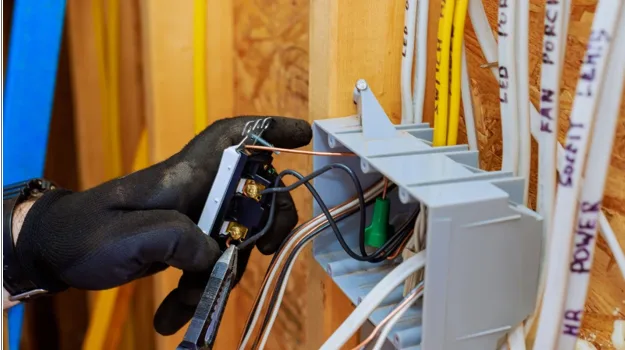
The single-family version of EV charging is a weekend project with a permit. The building version is a different sport entirely – one electrical service, forty tenants, twelve parking spots, three people who already own EVs, a board that meets monthly, and a garage wired in 1962 for exactly two light bulbs and a door opener. Every Brooklyn electrician who’s crossed from houses into multifamily work has learned the same lesson: in a building, the charger is the easy part. The infrastructure, the money, and the governance around it are the actual project.
It’s also no longer optional to think about. Here’s the whole building-side picture.
Why Tenants Are Asking Every Brooklyn Landlord About EV Chargers
The demand curve stopped being theoretical. EVs are a visible fraction of new car registrations in the city now, the curbside public chargers have waiting lines in the neighborhoods that got them, and the apartment-dweller problem – great car, nowhere to plug it – is the single biggest thing holding the rest of the adoption back. Which puts buildings with parking in an unusual position: they’re sitting on the scarcest EV resource in Brooklyn, which is a parking space with a wall near it.
The market is already pricing it. A deeded spot or a rental space with charging attached rents and sells at a premium over the identical spot without it, brokers lead with it in listings, and prospective tenants have started asking about charging the way they ask about laundry. The policy layer is pushing the same direction – the city now requires new parking construction to come built EV-ready, and the electrification pressure on big buildings makes charging one of the few amenity investments that lines up with where the regulations are headed instead of against them. For an owner, the strategic read is simple: the buildings that solve this early set the terms – which spots, what price, whose hardware – while the buildings that wait end up solving it under tenant pressure, one angry board meeting at a time.
The first step costs almost nothing: a load study and site walk by commercial electricians in Brooklyn who do multifamily work, answering the two questions everything else depends on – what spare capacity does the service actually have, and what would make-ready infrastructure cost for this specific garage. Every good outcome starts with those two numbers.
Shared Garages and Parking Lots: Where Electricians Put the Chargers
Building parking comes in a handful of Brooklyn flavors, and each one shapes the install differently.
The indoor garage under the building is the best case: the electrical service is close, mounting walls and columns are everywhere, and the chargers hang near the house panel room with short conduit runs. The detached rear lot or side yard is the workhorse case – pedestal-mounted chargers on concrete bases, trenched conduit from the building, outdoor-rated everything, and lighting added while the trench is open because a dark lot with charging cables is a liability with extra steps. The assigned-versus-unassigned question matters more than people expect: assigned spots mean chargers go to specific stalls and specific users, simple; unassigned parking means shared chargers with etiquette rules, signage, and ideally software that handles the queue, because “whose turn is it” is not a problem you want adjudicated by note-leaving.
The design decision inside all of this is ports versus make-ready. Full EV charger installation in Brooklyn at every spot on day one is rarely the right spend when three tenants have EVs today – the smarter pattern is installing the expensive, disruptive layer once (panel capacity, conduit runs, junction points at every future stall) and hanging actual chargers only where there’s a driver, adding more as demand shows up. Conduit in an open trench costs almost nothing; the same conduit after the concrete is poured costs a jackhammer. Make-ready thinking is the whole game in buildings, and it’s exactly the layer the utility incentive money targets – more on that below.
Load Sharing: Running Multiple EV Charging Stations on One Service
Here’s where the arithmetic gets interesting, and where buildings have an advantage houses don’t. Naively, ten Level 2 chargers at 40 amps each is 400 amps of new load – a number that would end the conversation in most existing buildings. Nobody builds it that way anymore.
Load sharing – the networked chargers dividing a fixed allocation among themselves – changes the math completely. Give a bank of chargers a budget of, say, 100 amps, and the system splits it among whoever’s plugged in: four cars charging get a quarter each, one car late at night gets the whole allocation. Since residential building charging is overwhelmingly an overnight, long-dwell activity – cars sit for ten hours and need four – the throttled rate is nearly invisible to the drivers while the building’s service never sees the theoretical peak. The code explicitly blesses this through listed automatic load management systems, which means the load calculation gets run against the managed maximum, not the nameplate stack – the difference between “impossible without a new Con Ed service” and “fits on what we have.”
The layered version goes further: the management system watches the whole building’s demand and lets the chargers soak up capacity in the overnight valley when the elevators, laundry, and cooking loads are asleep – the same hours the cars want anyway. A competent design pairs the charger count to the building’s measured load profile, pulled from the utility interval data, and sizes the allocation honestly. The failure mode to avoid is the bargain install that skips the management layer, hard-wires four full-rate chargers onto a tired house panel, and introduces the super to a tripping main breaker at midnight. The management software isn’t the upsell. It’s the engineering.
Metering, Billing, and Who Pays for the Electricity
The question that sinks more building charging proposals than any technical issue: who pays for the juice? Electricity through chargers is real money at scale, and “the building eats it” lasts exactly until the first non-EV owner does the math at an annual meeting.
The options ladder, in ascending sophistication. Flat monthly fee per charging user – simple, no hardware, mildly unfair in both directions, fine for a building with two EVs. Dedicated submeter per charger – clean and exact, with the usage read and billed back to the spot holder. Networked chargers with built-in metering and payment – the category most buildings land on, where each session gets measured and billed to the driver’s account automatically at a rate the building sets, the software produces the reports, and nobody’s treasurer is doing arithmetic off a clipboard. The building can set pricing to recover its electricity cost plus a margin toward the infrastructure, which turns the amenity from a cost center into a slow payback machine. One structural choice rides along: chargers on the house meter keep it simple; a separate utility service for a big charging build is its own project with its own economics, usually reserved for the large garages.
Whatever the model, write it down before the first charger energizes – rate, billing method, what happens to a car squatting on a shared charger after it’s full. The buildings that fight about charging are almost never fighting about electricity. They’re fighting about rules nobody set.
Board Approvals, Permits, and Phasing the Installation
In a condo or co-op, the install has a governance layer the electrician can’t wire around. The garage and its walls are common elements, which means board approval, an alteration agreement for any owner-initiated charger, insurance certificates from the contractor, and decisions about ownership – building-owned shared chargers versus owner-paid units at deeded spots – that determine who maintains what for the next fifteen years. The boards that handle this well adopt a charging policy once, in advance, so every subsequent request is an application against known rules instead of a fresh negotiation. The city side is the familiar machinery: licensed electrical work, DOB permits, inspections – multifamily and commercial-scale charging is squarely professional territory, and the permit trail matters doubly in a building where the next board will inherit whatever this one approved.
Then the money, which is friendlier than most boards assume. Con Edison’s make-ready program for multifamily and commercial sites covers a major share of exactly the expensive layer – the service work, panels, conduit, the infrastructure between the grid and the charger – for qualifying projects, and the federal commercial charging credit stacks on top where the location qualifies. The incentive programs reward precisely the phased, make-ready-first design that’s good engineering anyway, which is a rare alignment worth exploiting while it lasts.
So the sane sequence for a Brooklyn building: load study and site walk, a charging policy on paper, make-ready infrastructure built once with incentive money doing the heavy lifting, two or four managed ports live on day one, and empty conduit waiting at every other stall for the demand everyone knows is coming. The tenants get their chargers, the board gets a revenue line instead of a grievance, and the building gets the amenity before the block’s other buildings make it table stakes.
The cars are already here. The buildings are what’s catching up.
Brooklyn Electrician
1368 Fulton St, Brooklyn, NY 11216
(929) 460-9789