Qualified but Not Job-Ready? The Changing Reality for Finance Graduates
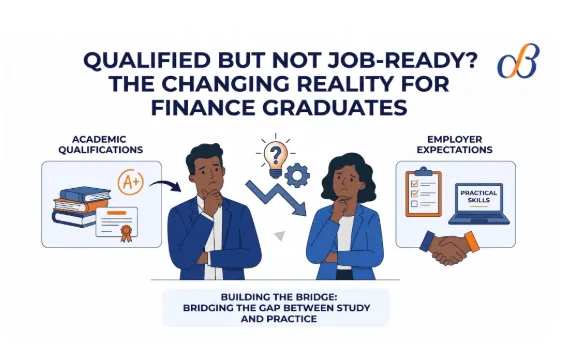
| As artificial intelligence reshapes entry-level finance roles, academic qualifications alone may no longer be enough. For CA, CS and finance graduates, practical application, analytical thinking and the ability to adapt are becoming increasingly important.
For many finance graduates, the transition from education to employment can be unexpectedly difficult. Years spent preparing for professional examinations, earning degrees and acquiring technical knowledge do not always translate into the ability to perform effectively in a workplace. As employers reassess their requirements in an increasingly technology-driven environment, the gap between academic qualifications and job readiness has become harder to ignore. The challenge is not that qualifications have lost their value. Rather, employers increasingly expect graduates to demonstrate what they can do with what they know. For Chartered Accountants (CAs), Company Secretaries (CSs) and finance graduates, understanding accounting principles, financial analysis and corporate finance remains fundamental. But employers also need people who can solve problems, communicate their reasoning, work effectively in teams and use technology to improve the quality of their work. Artificial intelligence (AI) is accelerating this shift. As tools take on more routine tasks, the value of an entry-level professional increasingly lies in the ability to interpret information, question assumptions and apply knowledge to business decisions. AI is changing the nature of entry-level finance workTasks that once required hours of manual effort, such as preparing a preliminary financial model, organising data or drafting a research note, can now be accelerated using AI-enabled tools. This does not eliminate the need for finance professionals. It changes where their contribution becomes most valuable. Tools such as ChatGPT, Claude, Copilot and Perplexity can assist with research, generate initial assumptions and produce preliminary outputs. However, someone still needs to assess whether the assumptions are reasonable, identify missing information and determine whether the results can support a business decision. A financial model may appear technically sound while relying on unrealistic assumptions. A research note may be well written but fail to address the question that matters to a decision-maker. Producing an output is therefore only part of the job; understanding its limitations and implications is equally important. Being job-ready means being able to apply knowledge to solve a problem, use AI effectively and critically evaluate its output. It requires graduates to move beyond following instructions and develop the judgement to decide what needs to be done and why. This also explains why degrees are not becoming irrelevant. A strong academic foundation enables finance professionals to recognise errors, evaluate assumptions and understand the consequences of financial decisions. Without that foundation, graduates risk becoming dependent on tools whose outputs they cannot adequately assess. Beyond Excel: the skills employers cannot teach overnightExcel, financial modelling, data analysis and familiarity with AI tools can strengthen a candidate’s profile. Yet technical proficiency is only one part of workplace readiness. While organisations can train employees to use specific software and follow established processes, developing accountability, receptiveness to feedback and a genuine willingness to learn requires sustained effort. Three qualities are particularly important for young finance professionals:
Communication and teamwork are essential for translating financial analysis into actionable insights. Ultimately, graduates need to learn finance professionals skills that combine subject knowledge, problem-solving and technical skills with the right attitude. While tools such as Excel and financial modelling can be taught, professional judgement, accountability and a willingness to learn develop through consistent practice and experience. Internships: Where Academic Knowledge Meets the WorkplaceA qualification demonstrates academic achievement, but it cannot fully reveal how a candidate will perform in a professional environment. Internships allow recruiters to assess how students apply knowledge, approach assignments, communicate, manage responsibilities and respond to feedback. However, the quality of the experience matters. Internships involving only repetitive or copy-paste tasks offer limited learning, particularly when supervisors provide little guidance. A meaningful internship requires experienced professionals to invest time in mentoring and students to demonstrate curiosity, discipline and ownership. When both sides contribute, an internship becomes an extended evaluation of job readiness, helping employers assess candidates in practice while allowing students to identify their skill gaps. From Impressive Resumes to Proof of WorkQualifications, certificates and interview preparation remain important, but students must also demonstrate that they can apply their knowledge. Building a financial model, analysing a company’s financial statements, preparing an industry research note or solving a business case can provide tangible evidence of their capabilities. Candidates should be able to explain their assumptions, justify their approach and discuss the limitations of their analysis. Such projects develop a deeper understanding of the subject and prepare students for interviews that test application rather than memorised answers. Reading, networking, attending relevant events and engaging with industry professionals can further broaden their understanding of real-world business challenges. The objective is to move beyond listing skills on a resume to demonstrating how those skills can be applied. Bringing Industry into the ClassroomColleges and professional institutions must take greater responsibility for bridging the gap between academic learning and workplace expectations. Instead of leaving employers to teach most practical skills after graduation, institutions should integrate industry exposure into the classroom. Industry experts, live case studies, presentations, collaborative assignments and practical projects can help students understand how financial concepts inform business decisions. Students should not merely know what a financial model is; they should understand why particular assumptions are used, how changes affect the results and what decisions the analysis supports. This requires a shift from memorising and reproducing information to applying knowledge, questioning assumptions and communicating conclusions. More opportunities for participation and individual feedback can help students develop these capabilities before entering the workforce. In such cases, financial certifications like the CFA or FRM can help gain practical experience faster. AI Education Must Keep Pace with the WorkplaceAI tools and their applications are evolving faster than traditional curricula can often accommodate. The challenge is therefore not simply whether AI should become a separate subject, but whether finance education can keep pace with technological change. Students need to learn how AI can support financial tasks, where its limitations lie and how to verify its outputs. For instance, comparing an AI-generated financial analysis with an independent assessment can help students identify inaccurate assumptions and understand the importance of professional judgement. Colleges and professional institutions should review curricula more frequently and incorporate practical demonstrations and guest lectures by industry professionals. The aim is to help students understand how AI is actually used at work and develop the adaptability to learn new tools as they emerge. AI should strengthen critical thinking and the application of knowledge, not replace them. The Final Takeaway: Skills Gap Extends Beyond FinanceThe challenge facing finance graduates reflects a wider labour-market shift. According to the World Economic Forum’s Future of Jobs Report 2025, 63% of employers identify skills gaps as a major barrier to business transformation, while 77% expect to pursue upskilling in response to AI. For graduates, employability increasingly depends on combining academic knowledge with practical capability and a willingness to keep learning. Strong subject knowledge remains essential, particularly in finance, where decisions carry financial and regulatory consequences. However, students must also demonstrate that they can apply concepts, evaluate information and work effectively with others. Preparation should begin well before placement season. Students need to strengthen their fundamentals, develop relevant technical skills, seek meaningful internships and build projects that demonstrate their abilities. They must also learn to accept feedback, recognise gaps in their knowledge and take responsibility for improving their work. As AI takes on more routine tasks, the ability to interpret information, question assumptions and exercise sound judgement will become increasingly important. Ultimately, job readiness is demonstrated not by qualifications alone, but by the ability to solve problems, communicate effectively, take ownership and adapt as the nature of work evolves. |