How Technology Is Changing the Online Gaming Experience
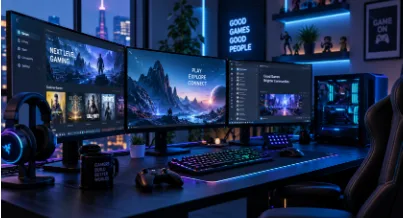
Online gaming looks very different from how it did ten years ago. Games that once needed a powerful PC can now stream to a phone, computer opponents adapt to the way you play, and a match started on the bus can continue on the living room TV.
Behind these changes sits a steady stack of technology: faster networks, smarter software and stronger security. Here is a look at the biggest shifts and what they mean for the people actually holding the controller.
Faster Internet and Cloud Gaming
Connection quality has always shaped online play. A slow or unstable line means lag, rubber-banding and lost matches, no matter how good your hardware is. The spread of fibre broadband and 5G mobile networks has pushed latency down and made connections more consistent, which matters more to gamers than raw download speed.
That improvement is what made cloud gaming practical. Services such as Xbox Cloud Gaming and NVIDIA GeForce Now run games on remote servers and stream the video to your screen. Your device only needs to decode the stream and send back your inputs, so a modest laptop, a smart TV or a phone can run titles that would normally need a high-end graphics card.
Cloud gaming is not perfect yet. Fast shooters and fighting games still expose small delays, and image quality depends on your connection. But for many players, it has removed the upfront cost of hardware as a barrier to getting started.
Artificial Intelligence in Modern Gaming
AI in games used to mean scripted enemies that followed predictable patterns. Modern games use machine learning and more sophisticated decision systems to create opponents that react to your tactics, adjust difficulty on the fly and behave in less mechanical ways.
AI is also doing a lot of work behind the scenes:
- Matchmaking: systems weigh skill, latency and play style to place players in fairer, more balanced lobbies.
- Upscaling: technologies such as NVIDIA DLSS and AMD FSR render games at a lower resolution, then rebuild a sharper image, boosting frame rates without a hardware upgrade.
- Recommendations: game stores and launchers suggest new titles based on what you already play.
- Development: studios use AI tools to test builds, catch bugs and speed up early design work.
Most of this is less visible than a new graphics engine, but players feel it in smoother performance and matches that feel more even.
The Growth of Mobile Gaming
Smartphones have become one of the most popular ways to play. Modern mobile chips handle detailed 3D graphics, high refresh rate displays make motion look smoother, and some flagship phones now support hardware-accelerated ray tracing.
The bigger change is how mobile fits alongside other devices. Games such as Minecraft and Genshin Impact let players on phones, PCs and consoles join the same sessions. Cloud saves and cross-progression mean you can start playing on your commute and pick up exactly where you left off on a bigger screen.
Accessories have closed the gap further. Clip-on controllers turn a phone into something close to a handheld console, which makes demanding genres far more comfortable to play on the go.
Real-Time Data and Interactive Features
Online games now run on live data. Instead of waiting until the end of a match to see how they did, players get instant feedback through damage numbers, ping indicators, kill feeds and post-match breakdowns that show exactly where a game was won or lost. Competitive titles and esports broadcasts go further, overlaying live stats so viewers can follow the strategy, not just the action.
Watching has become interactive too. Streaming platforms let audiences vote in polls, trigger in-game events and chat with players as a match unfolds, turning spectators into participants.
Real-time data is also changing how sports fans interact with digital content. Instead of relying only on final scores, readers can explore statistics such as expected goals (xG), possession and shot quality. Educational resources, including KK8’s football statistics guides, help explain how these numbers are used to understand match performance. The same appetite for deeper numbers shows up in football video games, where live rating updates reflect how real players are performing week to week.
Better Security for Online Players
As players spend more time and money online, gaming accounts have become attractive targets. A stolen account can be resold for its skins, items and linked payment details, so platforms have invested heavily in protection:
- Two-factor authentication is now standard on major platforms, and some games reward players with in-game items for switching it on.
- Passkeys and biometric login reduce reliance on passwords that can be phished or reused.
- Anti-cheat systems watch for modified game files and suspicious behavior to keep matches fair.
- Encryption protects payment details and personal data as they move between your device and the server.
Players still carry part of the responsibility. A unique password, two-factor authentication and a healthy suspicion of “free item” links in chat go a long way toward keeping an account safe.
What the Future Holds for Online Gaming
The next few years are likely to build on these foundations rather than replace them. Cloud infrastructure should keep shrinking the hardware needed to play demanding games, while edge computing moves servers physically closer to players to cut latency even further.
AI will become more visible on screen, with characters that hold more natural conversations and game worlds that respond to player choices in less scripted ways. Cross-platform play is also on track to become a basic expectation rather than a selling point, with progress, friends lists and purchases following players from one device to the next.
For players, the outcome is simple: more ways to play, fewer barriers to getting started and experiences that adapt to them. The technology driving online gaming has moved quickly over the past decade, and the pace of change shows no sign of slowing.