7 Reasons Language Immersion Trips to France Are Winning Over Adult Learners
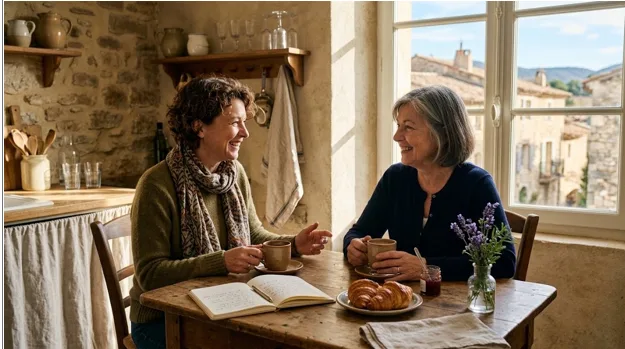
Millions of adults around the world study French. Many start with an app, a night class or a few online lessons, and many reach the same frustrating point: they can read a menu and follow a simple article, but they freeze when a real conversation begins.
That gap between knowing a language and speaking it is driving a growing interest in immersion trips, where learners travel to France and practise French in daily life rather than in a classroom. Travellers from the United States, Australia, Canada and the United Kingdom are increasingly looking at language stays as a way to combine a holiday with real progress.
Here are seven reasons why language immersion in France is attracting more adult learners.
- Adults want to speak, not just study
Most adult learners do not need French for an exam. They want to talk with people, order with confidence, understand a joke at dinner or chat with a neighbour during a holiday. Traditional courses often focus on grammar and written exercises, which are useful but rarely enough to unlock spoken French.
Immersion flips the balance. Learners spend most of their day listening and speaking, which is exactly the skill they want to build. Mistakes become part of the process, and progress is measured in conversations rather than test scores.
- Apps and online lessons hit a plateau
Language apps are a convenient way to start. They help learners build vocabulary and keep a daily habit. But many users find that after a few months, progress slows down. Short exercises do not prepare them for the speed, accents and unpredictability of real conversations.
An immersion stay is often the next step. It gives learners hours of exposure to natural French every day, something that is difficult to reproduce at home. Many learners combine both approaches: apps before and after the trip, and intensive practice during it.
- One-to-one learning is replacing crowded classrooms
Group language schools remain popular, but a growing number of adults prefer private formats. In a group of ten or fifteen students, each person may only speak for a few minutes per lesson. In a one-to-one setting, the learner speaks for most of the session.
Private immersion programs take this further. Learners stay with a native French teacher, often in the teacher’s home, and continue practising during meals, errands and outings. Platforms that organise private French immersion in France, such as Immersion French, connect learners with host teachers across the country, from Provence to Brittany. Each program is adapted to the learner’s level, goals and interests.
- Travellers are discovering regional France
Paris remains a dream destination, but many language travellers now look beyond the capital. Smaller towns and regions offer a slower pace, fewer English speakers and more chances to practise French in everyday situations.
A learner staying near Avignon, in the Loire Valley, on the Atlantic coast or in the hills of Beaujolais will hear French at the bakery, at the market and in the street. These regions also offer local food, wine, history and landscapes that turn a language course into a memorable trip.
- Culture has become part of the curriculum
Language and culture are closely linked. Understanding why French people greet each other with “la bise”, why lunch can last two hours on a Sunday or how to behave at a dinner party is part of speaking the language well.
Immersion programs often include cultural activities: cooking together, visiting a local market, touring a château, tasting regional wines or walking through a historic village. Each activity becomes a lesson in vocabulary and expression, and learners remember words better when they are linked to real experiences.
- Flexible formats suit busy adults
Many adults cannot take a full semester off to study abroad. Immersion programs have adapted with flexible formats. A stay can last one week, two weeks or longer, and learners can choose their dates according to their schedule.
Accommodation options vary too. Some learners prefer a homestay with a private room for full immersion, while others choose independent accommodation nearby and meet their teacher for lessons and activities. This flexibility makes immersion accessible to working professionals, retirees and parents planning a trip around school holidays.
- Confidence lasts long after the trip
The biggest benefit of immersion is often confidence. After a week or two of speaking French from morning to evening, many learners lose their fear of making mistakes. They become more comfortable asking questions, keeping a conversation going and adapting when they do not know a word.
That confidence helps long after the trip, whether learners plan future holidays in France, want to connect with French-speaking family members, prepare for a move or simply enjoy French films and books more fully.
What a typical immersion day looks like
While every program is different, a day in a private immersion stay often follows a similar rhythm:
- Morning: a structured lesson focused on the learner’s goals, such as grammar, pronunciation or professional vocabulary.
- Lunch: a meal with the host, in French, often with dishes from the region.
- Afternoon: an outing or activity, such as a market visit, a museum or a walk, with plenty of conversation.
- Evening: dinner and free conversation, sometimes with family members or friends of the host.
Depending on the program, learners can practise French for 25 to 40 hours a week, far more than in a typical evening class.
How to prepare before you leave
A little preparation helps learners make the most of their stay. A few weeks before departure, it is worth reviewing basic vocabulary, listening to French podcasts or radio every day and practising simple introductions out loud. Learners can also share their goals with their teacher in advance, for example ordering in restaurants, understanding films or preparing for a professional meeting.
On the practical side, travellers from outside the European Union should check passport validity and entry requirements, plan their transport to the host region and pack a notebook to record new words and expressions. Arriving with clear goals and an open mind is the best way to turn the first days of discomfort into rapid progress.
How to choose an immersion program
Before booking, learners should consider a few points:
- Teacher qualifications: look for native speakers with teaching experience.
- Level and goals: check that the program adapts to beginners or advanced learners.
- Location: decide between a city, a small town or the countryside.
- Accommodation: choose between a homestay and independent lodging.
- Reviews: read feedback from previous learners.
- Total cost: compare what is included, such as meals, activities and transport.
Frequently asked questions
Do I need a certain level of French to start an immersion program?
No. Many programs welcome complete beginners as well as advanced learners. The lessons and activities are adapted to each person’s level.
How long should an immersion stay last?
Even one week can make a noticeable difference in confidence. Two weeks or more allow learners to consolidate their progress.
Is immersion suitable for older learners?
Yes. Many participants are retirees or adults in mid-career who want to learn at their own pace in a relaxed setting.
Can I combine immersion with sightseeing?
Yes. Cultural outings and visits are often part of the program, so learners explore the region while practising French.
Conclusion
Language immersion in France answers a need that apps and classrooms often leave unmet: the need to speak. By combining one-to-one teaching, daily conversation, regional culture and flexible formats, immersion trips offer adult learners a practical and enjoyable way to make real progress, and to come home speaking French with confidence.