ENGWE Folding Electric Bikes: Smart and Convenient Options for Urban Commuters
Urban commuting can be challenging when roads are busy, parking spaces are limited, and public transportation does not always fit your schedule. An electric bicycle offers an alternative that combines cycling with motor assistance, helping riders travel around the city with greater flexibility. For people who need convenient storage and easier transportation, a folding electric bike can be an especially practical choice.
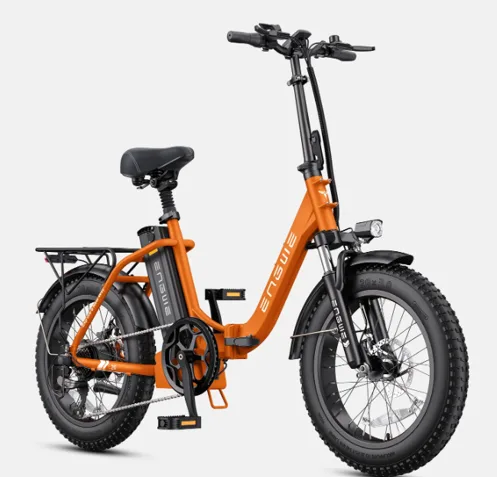
ENGWE folding electric bikes are designed for riders who want a combination of portability, comfort, and everyday performance. Models such as the ENGWE EP-2 3.0 feature a folding frame, fat tires, electric assistance, and commuter-friendly equipment. These features can make them suitable for various urban journeys, although their weight and folded dimensions are important considerations.
Whether you are searching for an electric bike for your daily commute or comparing a folding model with a moped style electric bike, understanding the available features can help you make a more informed decision. This guide explores the benefits of folding electric bikes, highlights important ENGWE features, and explains what urban commuters should consider before purchasing one.
What Makes Folding Electric Bikes Ideal for Urban Commuters?
Folding electric bike combine the benefits of electric assistance with a frame that can be folded for storage or transportation. This design can be useful for people who live in apartments, have limited storage space, or need to combine cycling with other forms of transport.
Convenient Storage in Small Spaces
Traditional bicycles can occupy considerable space in a home, office, or storage area. A folding electric bike can reduce the amount of space needed when it is not being ridden.
This can be helpful for commuters who live in apartments or need to keep their bicycles indoors.
However, folding does not necessarily mean that a bicycle is lightweight. Some folding electric bikes have large batteries, substantial frames, and wide tires, making them heavier than conventional bicycles.
Before buying, check the folded dimensions and make sure you have enough room to store the bike comfortably.
Easier Transportation
A folding frame can make an electric bicycle more convenient to transport in a suitable car or other vehicle.
Some commuters may also find folding useful when planning journeys that combine cycling with public transportation. However, train, bus, and other transit operators may have restrictions concerning folded bicycles, batteries, or peak-hour travel.
Always check the relevant transportation rules before relying on a folding electric bike for a mixed-mode commute.
Flexibility for Everyday Travel
An electric bike can help riders cover short and medium-distance journeys without depending entirely on a car.
Depending on the model, motor assistance can make hills and longer routes more manageable.
Folding capability adds another layer of convenience by providing more storage options when the ride is finished.
For commuters who need both flexibility and electric assistance, this combination can make a folding electric bike worth considering.
Exploring the ENGWE EP-2 3.0 Folding Electric Bike
The ENGWE EP-2 3.0 is one of the moped style electric bike available in the ENGWE range. It combines a foldable frame with fat tires, electric assistance, and equipment designed for everyday riding.
Its design is aimed at riders who want a bicycle that can serve as a commuter while offering flexibility for recreational trips.
Key Features of the ENGWE EP-2 3.0
The US version includes several features that may appeal to urban riders:
- Folding frame: Allows the bicycle to be folded for storage and transportation.
- Motor system: A 750W rated hub motor with advertised peak output of 1500W.
- Torque: Advertised maximum torque of 90Nm.
- Battery: A 48V 15Ah battery with 720Wh capacity.
- Tires: 20 × 4.0-inch tires.
- Front suspension: Designed to help absorb some road impacts.
- Brakes: Tektro hydraulic disc brakes.
- Charging: An 8A charger designed for faster charging than lower-current chargers.
- Advertised range: Up to 65 miles under specified conditions.
- Listed promotional price: $1,499 in the US store.
Specifications, prices, and availability may change. Buyers should check the exact product version available in their market before ordering.
A Practical Frame Design
The EP-2 3.0 uses a folding frame with a step-through design. This combination can make it easier for many riders to mount the bicycle and store it when the ride is finished.
Its adjustable seat and handlebars also help riders find a more suitable riding position.
Although the folding mechanism adds convenience, it is important to follow the manufacturer’s folding and locking instructions carefully. Before each ride, confirm that the frame and stem are securely locked in their riding positions.
Battery Capacity and Range for Daily Commuting
Battery capacity is one of the most important factors to evaluate when choosing an electric bike.
The ENGWE EP-2 3.0 US version has a 48V 15Ah battery with a capacity of 720Wh. This determines how much electrical energy is available to support the motor and other electronic components.
Understanding Advertised Range
The manufacturer advertises a maximum range of up to 65 miles in its lowest pedal-assistance mode.
However, maximum range figures should be treated as estimates rather than guaranteed distances.
Real-world range can vary according to:
- Rider weight and additional cargo.
- Selected assistance level.
- Road surface and elevation.
- Wind and weather conditions.
- Tire pressure.
- Battery age and condition.
- How frequently the rider accelerates or uses high power.
For urban commuters, the most useful question is not simply how far the bicycle can travel under ideal conditions. It is whether the battery can reliably support the complete daily journey, including the return trip.
Planning Your Daily Journey
Suppose your daily commute covers 10 miles in total. A bicycle with sufficient usable battery range may support several commuting days between charges, depending on the conditions and assistance level.
Longer commutes require more careful planning.
It is wise to maintain a battery reserve rather than depending on the maximum advertised range. This provides flexibility when you encounter unexpected detours, strong winds, or other conditions that increase energy consumption.
Fast Charging and Convenience
The EP-2 3.0 US version includes an 8A charger. A higher charging current can reduce charging time when compared with a lower-current charger, subject to the battery’s charging limits.
For busy commuters, this can make charging easier to fit into a daily routine.
Always use the compatible charger supplied or approved by the manufacturer and follow the recommended charging instructions.
Comfort and Control on City Roads
Urban roads can include potholes, uneven pavement, road joints, and rough sections. A comfortable electric bike can help make regular commuting more enjoyable.
The ENGWE EP-2 3.0 combines fat tires with front suspension to address some of these conditions.
Fat Tires for Added Stability
The EP-2 3.0 features 20 × 4.0-inch tires.
Their wider profile provides a larger contact area than many conventional bicycle tires. Depending on the surface and tire pressure, this can contribute to grip and comfort on suitable roads and paths.
Fat tires can be useful when commuting across uneven pavement or exploring compact gravel routes.
However, tire width alone does not guarantee better handling in every situation. Correct pressure, tread condition, braking technique, and riding speed remain important.
Front Suspension for Everyday Comfort
The front suspension is designed to help absorb some of the impacts caused by bumps and uneven surfaces.
This can reduce the amount of vibration transmitted to the rider’s hands and arms.
Although front suspension can improve comfort, it does not eliminate the need to slow down for potholes, curbs, or unexpected obstacles.
Hydraulic Disc Brakes
The EP-2 3.0 uses hydraulic disc brakes to provide braking control.
Good brakes are especially important in cities, where riders may need to respond to traffic lights, pedestrians, vehicles, and sudden changes in road conditions.
Regularly inspect the brake pads and rotors, and arrange maintenance if braking performance changes.
Folding Electric Bike vs. Moped Style Electric Bike
Some shoppers compare folding electric bikes with a moped style electric bike because both categories can feature substantial frames, electric motors, and distinctive designs.
However, they serve somewhat different purposes.
A folding electric bike emphasizes convenient storage and transportation. A moped-inspired model generally focuses more on its styling and riding position, although the specific features depend on the model.
| Feature | Folding Electric Bike | Moped Style Electric Bike |
| Main advantage | Convenient storage and transportation | Motorcycle-inspired styling |
| Frame design | Includes a folding mechanism | Usually designed around a fixed frame |
| Storage | Can be folded to reduce storage space | May require more storage space |
| Portability | Depends on weight and folded dimensions | Depends on weight and frame design |
| Commuting | Useful for riders with limited storage | Can suit riders who prefer its design |
| Tire configuration | Varies by model | Varies by model |
| Best choice | Commuters prioritizing storage flexibility | Riders prioritizing styling and seating preferences |
Neither design is automatically better for every commuter.
If you frequently need to carry or store your bicycle, a folding model may be more practical. If you prefer a moped-inspired appearance and have sufficient storage space, another frame style may be worth comparing.
Remember that a folding electric bike can still be heavy. For example, the EP-2 3.0 weighs approximately 75.4 pounds according to its US specifications, so carrying it up stairs may be difficult.
How to Choose the Right Folding Electric Bike
Choosing a folding electric bike involves balancing convenience, performance, and cost.
The following considerations can help you identify a suitable model.
Check the Folded Dimensions
Do not assume that every folding bicycle fits easily into a small space.
Compare its folded length, width, and height with the storage area available at home, work, or in your vehicle.
If you need to carry the bicycle frequently, also consider its weight and whether you can lift it safely.
Evaluate Battery Range
Calculate your typical daily travel distance and consider how frequently you can recharge the battery.
If your journey includes steep hills or frequent stops, allow extra battery capacity for these conditions.
A bicycle with a high advertised maximum range may still require frequent charging when used at higher assistance levels.
Consider Motor Specifications
Motor ratings help describe a bicycle’s capabilities, but peak power should not be the only deciding factor.
Also consider torque, battery capacity, weight, gearing, and the type of assistance system.
For commuting, smooth and predictable assistance may be more useful than maximum advertised power.
Check local regulations carefully, as motor output and assisted speed can affect where a particular model may legally be ridden.
Review the Braking System
Reliable braking is essential for urban riding.
Compare the brake type, maintenance requirements, and availability of replacement parts. Hydraulic disc brakes can provide strong braking performance when correctly adjusted and maintained.
Regardless of the system, practice stopping safely before riding in heavy traffic.
Think About Weather Protection
Commuters may encounter rain, dust, or changing weather.
Check the manufacturer’s water-resistance guidance for the battery, motor, display, and other electrical components.
Do not assume that a water-resistance rating makes an electric bicycle suitable for every wet-weather condition. Avoid submerging electrical components and follow the manufacturer’s cleaning instructions.
Compare Price and Warranty
The purchase price is only one part of the overall cost of ownership.
Review the warranty, shipping arrangements, return policy, battery coverage, and availability of replacement components.
These details can make a difference if you plan to use the bicycle regularly.
Everyday Uses for Folding Electric Bikes
A folding electric bike can support several types of urban journeys, depending on its specifications and local rules.
Daily Office Commuting
For office workers, a folding bicycle can offer a flexible option for traveling between home and work.
Its foldable frame may make storage easier when office space is limited.
Electric assistance can also help riders manage longer distances or moderate hills.
Shopping and Local Errands
Folding electric bikes can be useful for trips to nearby shops, appointments, and other destinations.
Some models include a rear rack or allow compatible accessories to be fitted, making it possible to carry selected items securely.
Always remain within the manufacturer’s load limit and ensure that cargo does not interfere with steering, braking, or visibility.
Recreational Weekend Rides
A folding electric bike is not limited to commuting.
Depending on its tires, suspension, and other specifications, it may also be suitable for recreational trips along paved routes and certain compact gravel paths.
The EP-2 3.0’s fat tires offer additional versatility for suitable surfaces, although it should not automatically be considered appropriate for demanding mountain-bike trails.
Travel and Limited Storage
People who travel by car or have limited storage space may appreciate the ability to fold their bicycle.
Before transporting it, secure the folded frame and protect the battery and other components according to the manufacturer’s instructions.
If you plan to take the bicycle on public transportation, check the operator’s rules in advance.
Maintenance Tips for Folding Electric Bikes
Regular maintenance helps keep a folding electric bike safe and dependable.
Because these bicycles combine electrical systems with moving mechanical parts, it is important to inspect both.
Inspect the Folding Mechanism
Check the frame hinges, locking levers, and other folding components regularly.
Make sure the frame locks securely before riding. Do not ride the bicycle if a hinge or locking mechanism is damaged or fails to engage properly.
Maintain Tire Pressure
Check tire pressure according to the manufacturer’s recommendations.
Correct pressure can improve handling, comfort, and tire durability.
Inspect the tires for cuts, embedded objects, and excessive wear, particularly if you regularly commute over rough roads.
Keep the Brakes in Good Condition
Check brake performance before riding and arrange servicing if you notice unusual sounds, reduced stopping power, or a change in lever feel.
Brake pads and rotors wear over time, especially when the bicycle is used frequently in stop-and-go traffic.
Care for the Battery
Follow the manufacturer’s charging and storage instructions.
Avoid using a damaged battery or charger, and keep the battery away from unsuitable temperatures and conditions.
If the battery becomes unusually hot, swollen, or damaged, stop using it and seek appropriate professional guidance.
Secure Your Bicycle When Parked
A folding frame can improve storage convenience, but it does not eliminate theft risk.
Use a suitable lock when parking in public places and avoid leaving the bicycle unattended for long periods in exposed locations.
If the model includes security features, learn how they work and keep any associated account or access details secure.
Conclusion
ENGWE folding electric bikes offer a practical combination of electric assistance and storage flexibility for urban commuters. The ENGWE EP-2 3.0 stands out with its folding frame, 720Wh battery, fat tires, front suspension, hydraulic disc brakes, and fast-charging capability.
These features may make it a useful option for riders who want to combine everyday transportation with convenient storage. However, its weight, folded dimensions, battery range, and local legal requirements should all be considered before purchasing.
When comparing an electric bike with a moped style electric bike, focus on your actual commuting needs. A folding model may be the better choice if storage and transportation are priorities, while a different frame style may suit riders who value appearance and seating preferences.
Ultimately, the right folding electric bike should fit your available space, daily travel distance, budget, and comfort requirements. By checking the specifications carefully and maintaining the bicycle properly, you can make a more confident choice for urban commuting in 2026.