How OTF Knives Work and What to Know Before Buying One
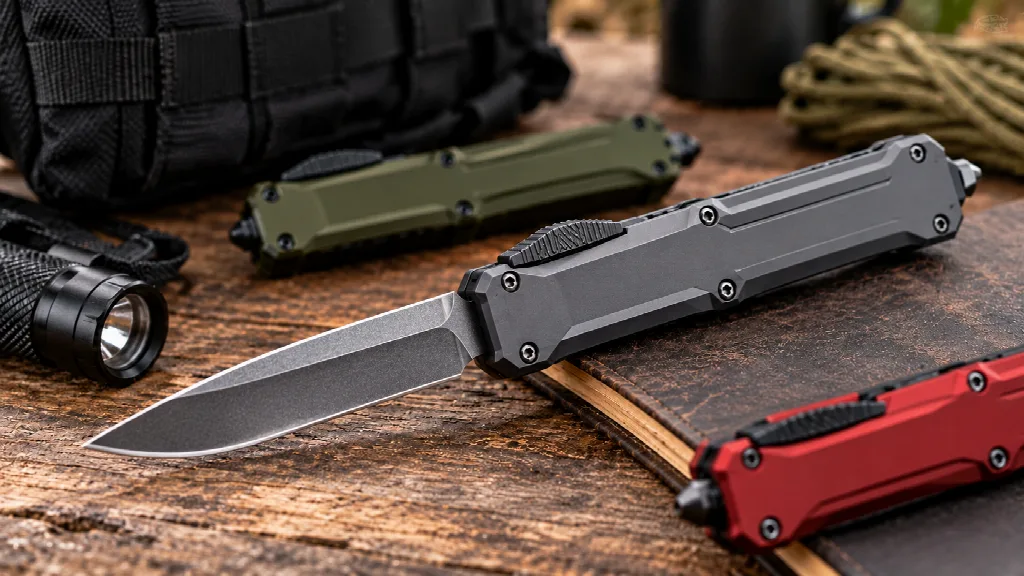
Few everyday carry tools attract as much attention as OTF knives. OTF stands for “out the front,” describing how the blade deploys straight from the front of the handle and locks into position. The blade deploys in a fraction of a second, giving OTF knives their distinctive design. If you want to learn how OTF knives work or are considering buying one, here are the key things to know.
What Is an OTF Knife?
OTF stands for “out the front.” A conventional folding knife opens by rotating its blade around a hinge. An OTF knife works differently. Its blade slides straight out of the front of the handle and retracts into it when closed. A spring powers the mechanism, while a button or slider controls the blade.
Unlike a conventional folding knife, an OTF knife does not rotate its blade around a hinge. Instead, the blade moves in a straight line. This design allows the blade to sit inside the handle when the knife is closed. The knife’s size and weight vary by model.
Single Action vs. Double Action
When choosing an OTF knife, one of the main differences to consider is how the blade opens and closes.
Single Action (S/A)
A single action OTF knife uses its mechanism to deploy the blade. You must retract and reset the blade manually. Before using the knife, review the manufacturer’s instructions to understand how its mechanism works.
Double Action (D/A)
A double-action OTF knife uses one control to extend and retract the blade. This design allows you to operate the blade in both directions without manually resetting it. Regular cleaning and proper maintenance help keep the mechanism working smoothly.
Single-action and double-action knives work differently. Choose the mechanism that suits your needs. Follow the manufacturer’s instructions to use and maintain your knife safely.
Blade Steel and Shape
Blade steel affects sharpness, durability, and corrosion resistance. Different steels offer different benefits. Choose one that suits your needs and maintenance preferences.
For example, 440C stainless steel resists corrosion and is relatively easy to maintain. D2 tool steel holds an edge well but needs proper care to prevent corrosion. Powder metallurgy steels vary in performance, sharpening needs, and cost.
Check the product specifications to confirm the steel grade before buying a knife.
Blade shape also affects cutting performance. Common options include the following.
- Dagger blades: These blades have two sharpened edges. Their design differs from single-edged blades, and local laws may restrict their possession or carry.
- Tanto blades: These blades have an angular profile and a reinforced tip. They suit certain cutting tasks but are not designed for prying.
- Drop point blades: These blades have a curved spine that slopes toward the tip. Their shape suits many everyday cutting tasks.
- Clip point blades: These blades have a curved or angled section along the spine, creating a narrower tip.
Think about the tasks you expect to handle most often. Opening packages and cutting cord may call for different characteristics from outdoor tasks. Choose a blade designed for your intended use, and avoid using any knife beyond its intended capabilities.
Handle Materials and Ergonomics
Many OTF knives have aluminum handles because aluminum is lightweight and durable. Other models use G-10, carbon fiber, or textured materials.
The handle affects how securely and comfortably you can hold the knife. Consider its shape, texture, size, and control placement. If possible, hold the knife before buying to check how it feels in your hand.
Always follow the manufacturer’s safety instructions. A comfortable grip helps with control but does not replace safe handling or proper training.
What to Know About OTF Knife Laws
Check the laws before buying or carrying an OTF knife. These knives are generally classified as automatic knives because a button or slider activates the blade. However, legal definitions and restrictions vary by location.
State and local laws may regulate knife ownership, sales, transportation, concealed carry, blade length, and where you can carry a knife. Some areas impose specific restrictions, while others allow automatic knives under certain conditions.
At the federal level, the Federal Switchblade Act regulates certain activities involving switchblade knives, including their interstate transportation and distribution. The law also includes specific exceptions. Federal law does not replace state or local knife laws.
Before buying or carrying an OTF knife, check the current laws in your area. Consult official legal sources or a qualified legal professional if you are unsure. Do not rely solely on online discussions or general summaries. Check the rules again before traveling to another state or jurisdiction.
Air travel has its own rules. The TSA’s knife guidelines prohibit knives in carry-on bags but allow them in checked baggage, subject to applicable requirements. Securely sheath or wrap any knife packed in checked baggage to prevent injuries to baggage handlers and inspectors. Check current TSA rules and airline policies before traveling.
Caring for Your OTF Knife
- Keep it clean: Remove dust and debris as recommended by the manufacturer.
- Lubricate correctly: Use the recommended lubricant and avoid applying too much.
- Do not force the mechanism: If the blade sticks or feels gritty, stop using the knife and contact the manufacturer.
- Store it dry: Clean and dry the knife before storage to reduce the risk of corrosion.
- Use it properly: Avoid prying or twisting, as these actions can damage the blade or mechanism.
Who Should Consider an OTF Knife?
An OTF knife may appeal to people who value its straight-line blade deployment, distinctive mechanism, and compact carry profile. Collectors may appreciate the engineering, while other buyers may prefer the operating style of a double-action model.
It is not the right choice for everyone. If automatic knives are restricted where you live or you prefer a simpler mechanism, a manual folding knife may be a more practical option. Compare the available designs, consider your intended use, and confirm the applicable laws before making a purchase.
Choose an OTF Knife With Confidence
An OTF knife combines a straightforward concept with a specialized mechanical design. Understanding the difference between single-action and double-action mechanisms, comparing blade materials and shapes, and following proper care practices can help you make a more informed decision.
Before buying, check the product specifications, read the manufacturer’s instructions, and confirm the laws that apply to your location. With the right information and responsible handling, you can choose a knife that suits your needs and understand how to care for it properly.