Companies That Hire Convicted Felons in 2026: Your Guide to Second-Chance Careers
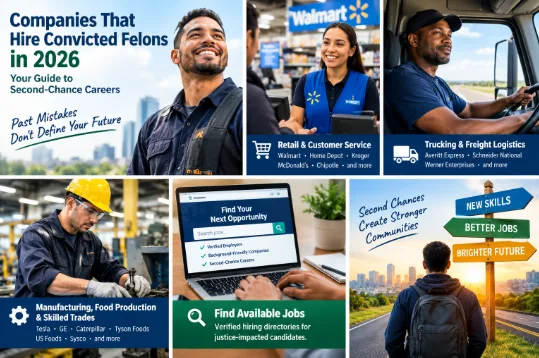
If you or a loved one is re-entering the workforce with a past conviction, you probably already know how frustrating the job search can feel.
For years, checking a single criminal history box on an application form could bring an abrupt end to your employment hopes. Fortunately, as we navigate 2026, the American hiring landscape looks remarkably different and far more hopeful.
Across the United States, roughly 70 million to 80 million adults, about one in three Americans, have some form of arrest or conviction record.
Today, major employers and lawmakers alike recognize that shutting out millions of skilled, motivated people makes zero economic sense. In fact, leaving justice-impacted job seekers on the sidelines costs the national economy an estimated $78 billion to $87 billion every year.
Confronted by persistent talent shortages and supported by modern fair-chance laws, businesses across retail, logistics, manufacturing, and tech are actively hiring workers with past felony convictions.
If you are ready for a fresh start, here is everything you need to know about who is hiring in 2026, the industries opening their doors, and how to land a rewarding job.
Big Box Retail and Customer Service: Welcoming Friendly Faces
The retail and hospitality sectors continue to be among the most accessible starting points for people with past records.
Many nationwide chains have adopted fair-chance policies, taking criminal history questions off their initial job applications so managers can get to know you as an individual before running background checks.
- Walmart: As the country’s largest private employer, Walmart evaluates applicants on a case-by-case basis. They focus on your relevant job skills and how much time has passed since your conviction rather than issuing automatic denials. Opportunities range from store cashiers and stockers to distribution center material handlers.
- The Home Depot: Home Depot has long embraced second-chance principles. Their store teams focus heavily on customer service aptitude, merchandise handling, and personal character during the interview process.
- Kroger & Regional Supermarkets: Grocery chains need dependable stockers, bakers, cashiers, and warehouse selectors. Kroger routinely partners with local re-entry initiatives to offer direct job placement.
- Quick-Service Dining: Fast-casual brands like Chipotle, McDonald’s, In-N-Out Burger, and Chili’s frequently hire individuals with felony records, offering quick onboarding and dependable pathways toward shift supervisor and store manager roles.
These companies recognize that a past mistake does not define your ability to show up on time, treat customers with respect, and build a lasting career.
Trucking and Freight Logistics: High Demand and Solid Pay
If you enjoy the open road and want to earn competitive wages quickly, the transportation industry remains one of the top second-chance avenues in 2026. Ongoing nationwide demand for commercial drivers means freight carriers are eager to review applications with an open mind.
Most carriers evaluate candidates based on their moving violation record, the nature of past offenses, and how much time has passed:
- Case-by-Case Reviews: Carriers like Averitt Express, Schneider National, Werner Enterprises, and Western Express review candidates individually. If you have demonstrated positive progress and maintain a clean motor vehicle record, non-violent convictions are rarely an automatic dealbreaker.
- Defined Look-Back Windows: Companies such as Boyd Brothers Transportation and Melton Truck Lines consider drivers whose felony sentences or supervision were completed five or more years ago.
- Paid CDL Training Programs: Don’t have a Commercial Driver’s License yet? Carriers like C.R. England and Swift Transportation run paid apprenticeship programs. You can earn a training wage while learning under a certified mentor before transitioning into solo or team driving.
Start Your Search Here
Sorting through dozens of company career portals and guessing whether an employer is truly background-friendly can take hours of your day. Fortunately, dedicated second-chance career tools exist to make this journey straightforward and encouraging.
When you are ready to explore open positions, verify background check policies, and connect with employers actively looking for your skills, you can Find Available Jobs through verified hiring directories designed specifically for justice-impacted candidates.
Having access to transparent job listings saves time, avoids unnecessary rejection, and helps you apply with confidence.
Manufacturing, Food Production, and Skilled Trades
If you prefer hands-on, mechanical work, the manufacturing and construction sectors are among the strongest second-chance advocates in the country. Many individuals gain vocational training, machinery certifications, or safety credentials while incarcerated, and commercial employers value these hard skills immediately.
- Industrial Manufacturing: Giants like Tesla, General Electric, and Caterpillar hire production technicians, assembly workers, and equipment operators. These roles prioritize technical precision and teamwork over background checks.
- Food Processing & Distribution: Companies like Tyson Foods, US Foods, and Sysco maintain extensive warehousing, packaging, and fleet operations across the country. They offer competitive starting pay, full health benefits, and predictable shift schedules.
- Electrical & Building Contractors: Companies such as Amteck regularly hire electrical helpers, apprentices, and maintenance technicians on major commercial and industrial projects. Construction apprenticeships allow you to learn on the job while your hourly wages increase with each completed milestone.
| Industry | Key Second-Chance Employers | Typical Entry-Level Roles |
| Retail & Grocery | Walmart, Home Depot, Kroger, Lowe’s | Cashier, Stocker, Fulfillment Associate |
| Logistics & Freight | Averitt, Schneider, Werner, Swift, UPS | CDL Driver, Package Handler, Forklift Driver |
| Manufacturing & Trades | Tesla, Tyson Foods, Amteck, Caterpillar | Assembly Tech, Plant Operator, Electrician Helper |
| Food Service | Chipotle, McDonald’s, Chili’s, In-N-Out | Line Cook, Prep Staff, Shift Leader |
The Legal Landscape in 2026
Finding a job in 2026 is noticeably smoother thanks to major legislative progress across states and municipalities. The hiring landscape has evolved far beyond basic “Ban the Box” rules into comprehensive fair-chance frameworks.
- Mandatory Post-Offer Screenings: Across several states, employers can no longer run a background check until after they extend a conditional job offer. For example, Washington State’s updated Fair Chance Act takes effect on July 1, 2026, for employers with 15 or more workers, banning blanket felony disqualifications and requiring employers to give written justifications if they withdraw an offer.
- Automated Clean Slate Laws: States like Virginia are implementing automated record-sealing systems in July 2026, taking designated non-violent misdemeanors and lower-level felonies off public commercial reports entirely. Philadelphia has also shortened its review window for misdemeanors to four years.
- The “Nature-Time-Nature” Assessment: Under standard EEOC enforcement guidelines, employers cannot simply issue a flat rejection. They must evaluate the nature and gravity of the crime, the time that has elapsed, and how the offense specifically connects to the daily duties of the job.
Proven Tips to Land Your Next Job
Securing an offer is about showcasing your value, taking control of your narrative, and presenting yourself professionally:
- Gather Your Vital Documents Early: Before applying, make sure you have your government photo ID, Social Security card, birth certificate, and proof of address ready to go. Having these documents handy prevents onboarding delays.
- Build a Rehabilitation Portfolio: Keep copies of any certificates, vocational training completions, drug treatment program certificates, or letters of recommendation from former supervisors, teachers, or faith leaders.
- Master the Rebuttal Window: If a prospective employer issues a “pre-adverse action notice,” don’t panic. Under 2026 compliance guidelines, companies generally give you 5 to 10 business days to explain your situation, correct inaccurate reporting, and provide proof of rehabilitation.
- Practice Your 60-Second Story: Be honest, concise, and forward-looking. Acknowledge your past without making excuses, briefly highlight what you learned, and pivot quickly to your work ethic, reliability, and excitement for the role.
Employers Know Second Chances Work
Here is an encouraging statistic to keep in mind: second-chance hiring is not just corporate charity. It is proven good business.
Extensive research from the SHRM Foundation reveals that 85% of human resources leaders and 81% of business executives report that employees with criminal records perform equally as well as or better than workers without records.
Furthermore, second-chance employees frequently show higher loyalty, lower turnover rates, and faster promotion rates within organizations.
Employers also benefit from federal initiatives like the Work Opportunity Tax Credit (WOTC), which awards businesses up to $2,400 in tax credits per qualified hire, alongside the Federal Bonding Program.
Your past was a chapter in your life, not your whole story. With more American companies than ever evaluating applicants on character, drive, and hands-on ability, 2026 offers a real path toward meaningful, dignified work. Polish your resume, practice your pitch, and take that next confident step forward today!