Flexible 3D Filament: Why TPU 95A Is a Popular Choice
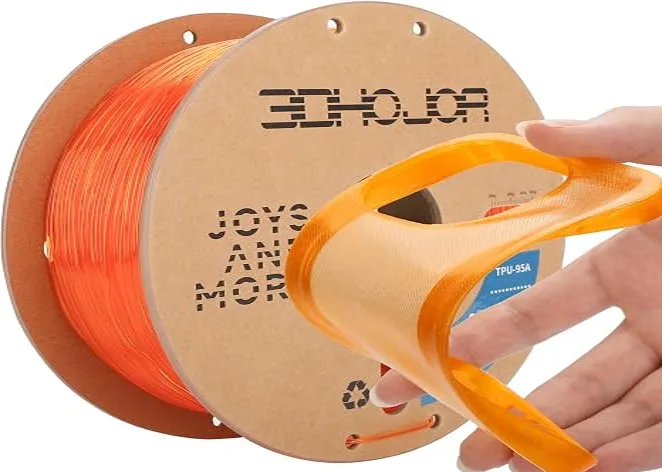
Flexible 3D printing has created new opportunities for hobbyists, designers, and professionals who want to produce durable parts that can bend, compress, and withstand everyday use. Unlike rigid materials such as PLA, flexible filaments make it possible to create protective covers, custom grips, cushioning components, and other functional products. Among the available options, TPU 95A filament is a popular choice because it offers a useful balance of flexibility, firmness, and durability.
Whether you are starting your first flexible printing project or improving your existing workflow, understanding the benefits of TPU can help you choose the right material. In this article, we will explore why TPU 95A stands out, its common applications, and how to achieve better printing results.
What Is Flexible 3D Filament?
Flexible 3D Filament refers to materials designed to produce printed objects that can bend or deform more readily than conventional rigid plastics. These materials are useful when a finished part needs elasticity, cushioning, or resistance to repeated movement.
Thermoplastic polyurethane, commonly known as TPU, is one of the most widely used flexible materials in desktop 3D printing. It combines elastic behavior with abrasion resistance and durability, making it suitable for a variety of functional and decorative projects.
TPU is available in different hardness ratings. Softer grades generally provide greater flexibility, while firmer grades offer more resistance to deformation. The best choice depends on the intended use of the printed part.
Why Is TPU 95A Filament So Popular?
TPU 95A filament is valued for combining flexibility with enough firmness to maintain its shape in many applications. The 95A designation refers to its Shore A hardness rating, which measures resistance to indentation.
Here are some reasons why this material is a practical option for many 3D printing projects.
1. A Balance of Flexibility and Firmness
One of the main advantages of TPU 95A is that it can bend and compress without feeling as soft as some lower-hardness TPU grades. This makes it suitable for parts that need to remain functional while allowing some movement.
For example, protective cases, flexible holders, and tool grips can benefit from this balance of properties.
2. Good Abrasion Resistance
Printed components may experience friction during everyday use. TPU offers good abrasion resistance in many applications, helping suitable parts withstand repeated contact with other surfaces.
This property makes it useful for grips, protective accessories, and selected mechanical components.
3. Impact Absorption
TPU can absorb some energy from impacts, depending on the part’s design and thickness. It is therefore useful for creating bumpers, protective edges, and cushioning components.
Although TPU can help reduce the effects of minor impacts, performance depends on the specific material and design. Critical protective applications require proper testing.
4. Versatile Design Options
Flexible materials allow designers to create products that rigid filaments cannot easily replicate. TPU 95A supports a wide range of shapes, including curved covers, flexible straps, custom grips, and functional prototypes.
The final flexibility can also be adjusted through wall thickness, infill density, and geometry.
Common Applications of TPU 95A Filament
The combination of flexibility and durability makes TPU suitable for various practical applications.
- Protective cases: Create flexible covers for devices, tools, and accessories.
- Phone accessories: Print customized cases, bumpers, and protective edges.
- Tool grips: Design handles that offer a comfortable and slightly flexible surface.
- Gaskets and seals: Produce custom parts for suitable sealing and cushioning tasks.
- Wearable accessories: Make flexible bands, straps, and selected wearable components.
- Shock-absorbing parts: Design bumpers and components intended to reduce vibration.
- Product prototypes: Test flexible designs before using other manufacturing methods.
Before using TPU for food-contact products, high-temperature environments, or safety-critical applications, check the manufacturer’s technical specifications.
Tips for Printing TPU 95A Successfully
Although TPU 95A is useful for many projects, flexible filament can require more careful setup than rigid materials. The following tips can help improve print quality.
Choose the Correct Temperature
Start with the nozzle temperature recommended by the filament manufacturer. The ideal temperature depends on the formulation, printer, and hotend. Test a small object and adjust gradually to achieve consistent extrusion and good layer adhesion.
Use a Slower Printing Speed
Flexible filament can compress or buckle when pushed too quickly through the extruder. Starting at a slower speed helps improve feeding consistency. Increase the speed gradually once the printer produces reliable results.
Check Extruder Compatibility
Direct-drive extruders often handle TPU more easily because the filament has a shorter path to the hotend. Some Bowden-style printers can also print TPU, but they may require additional tuning.
Store the Filament Properly
TPU can absorb moisture from the air, potentially causing stringing, surface defects, or popping sounds during printing. Store the spool in a dry, sealed container and follow the manufacturer’s drying instructions when necessary.
How to Choose Quality Flexible 3D Filament
When purchasing Flexible 3D Filament, consider the filament’s hardness, dimensional consistency, packaging, and recommended printing settings. Check whether the manufacturer provides clear technical specifications and compatibility guidance.
You should also consider your printer’s capabilities and the needs of your project. If you need a material that balances flexibility with firmness, TPU 95A filament can be a suitable starting point. For parts requiring a softer feel, a lower-hardness TPU may be more appropriate.
Comparing product specifications and testing a small sample before a large print can help you avoid unnecessary waste and achieve more predictable results.
Conclusion
Flexible 3D Filament offers new possibilities for creating durable, bendable, and functional parts. TPU 95A has become a popular choice because it combines flexibility, firmness, abrasion resistance, and useful impact-absorbing properties.
From protective accessories and tool grips to cushioning components and prototypes, TPU 95A filament can support a wide range of projects. By choosing a suitable material, following recommended printing settings, and storing the filament correctly, you can improve print consistency and get more value from your 3D printing setup.