How FF&E Planning Affects Hotel Furniture Procurement and Delivery
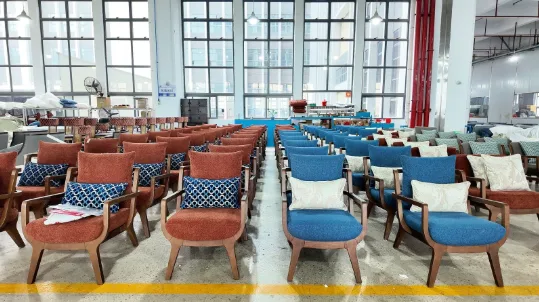
FF&E planning affects hotel furniture procurement by determining what must be ordered, when decisions need to be finalized, and how deliveries fit into the hotel’s construction schedule. Poor coordination can result in incorrect quantities, delayed approvals, inconsistent finishes, and furniture arriving before rooms are ready.
A practical FF&E plan should connect room-level specifications, purchasing decisions, manufacturing milestones, and installation requirements. The following steps help hotel developers and procurement teams manage these dependencies before they become costly problems.
Build a Room-by-Room Furniture Schedule
The first step is converting interior design drawings into a furniture schedule that suppliers can quote and manufacture.
Rather than listing products by general category, organize the schedule by room type and location. Each item should have a reference code, description, dimensions, quantity, material, finish, and installation requirements.
For example, if a hotel has 120 standard guestrooms requiring two nightstands each, the initial requirement is 240 units. Add the quantities required for suites and other room types separately, then include any agreed spare units. This prevents purchasing teams from overlooking variations between room layouts.
For large projects, clear hotel furniture specifications should also identify details that affect manufacturing, including:
- Casegoods: Dimensions, material construction, edge details, hardware, and finishes.
- Upholstered furniture: Fabric or leather specifications, cushioning, frame construction, and required performance standards.
- Furniture with electrical components: Outlet locations, cable access, and compatibility with the room’s electrical layout.
Before requesting quotations, compare this schedule against the latest approved drawings. Any missing dimensions or conflicting specifications should be resolved before suppliers calculate costs.
Make Supplier Quotations Comparable
Two furniture quotations may show different prices because they cover different specifications or services.
To compare offers accurately, issue the same furniture schedule and technical requirements to every supplier. Request itemized pricing that separates furniture costs from packaging, freight, installation, and other services where applicable.
A lower-priced nightstand, for example, may use different board construction, drawer hardware, or finishing methods. Without checking these details, the procurement team cannot determine whether the quotations represent equivalent products.
Create a comparison sheet covering material specifications, construction details, sample requirements, production lead times, warranty terms, and delivery responsibilities.
Mark any deviations from the original specifications. If a supplier proposes an alternative material, require written approval before accepting it as an equivalent.
This process helps teams make purchasing decisions based on total project requirements rather than unit price alone.
Set Approval Deadlines Before Manufacturing
Furniture production should not begin with unresolved design decisions.
Custom hotel furniture may require shop drawings, finish samples, upholstery selections, and a physical prototype. Each approval should have a designated reviewer and a deadline linked to the production schedule.
A mock-up room is particularly useful for checking how different furniture pieces work together. Teams can verify bedside clearance, desk positioning, drawer operation, furniture heights, and relationships with electrical outlets.
Document the results in an approval register containing the item reference, submission date, reviewer, decision, and outstanding corrections.
Once a sample is approved, retain its specifications as the manufacturing reference. Later changes should go through a formal review that identifies additional costs, revised lead times, and affected products.
For example, changing an upholstery fabric after material purchasing may affect more than the chairs themselves. It could also delay the delivery of an entire guestroom package.
Clear approval deadlines reduce the risk of such changes disrupting production.
Plan Production Backward From Installation Dates
Furniture manufacturing schedules should be built around when individual hotel areas must be ready, not simply when the purchase order is issued.
Start with the required installation completion date. Work backward to allocate time for on-site installation, receiving inspections, transportation, production, material procurement, and final approvals.
The resulting schedule identifies the latest acceptable date for each activity.
For example, if guestrooms on the first five floors will be handed over before upper floors, their furniture packages may need earlier production and shipment dates.
Procurement teams should confirm which items have the longest lead times and whether delays would prevent an entire room from being completed.
During manufacturing, request progress updates against agreed milestones rather than relying on a single estimated completion date.
Useful milestones include material receipt, sample approval, production progress, final inspection, and shipment readiness.
If a milestone slips, review its effect on transportation and installation immediately. Adjusting shipment priorities early is more practical than discovering the problem shortly before room handover.
Organize Deliveries Around Site Readiness
Shipping all furniture together is not always suitable for large hotel developments. Different floors and public areas may become available at different times, while storage space on-site may be limited.
A phased delivery plan should identify which furniture belongs to each installation zone and when that zone can receive it.
Use packing labels that connect each item to its room type, floor, or designated area. Match these labels with packing lists so receiving teams can check quantities without opening every package.
Before dispatch, confirm that the destination has suitable unloading access, protected storage, completed construction work, and an installation team available.
For international projects, customs clearance and inland transportation must also be included in the schedule.
To make phased delivery work, suppliers need to consider the installation sequence before furniture leaves the factory. Gainwell connects manufacturing, quality inspection, and logistics through a coordinated workflow, including project-coded packaging that identifies furniture by floor, room type, or installation zone. Combined with pre-shipment checks and export documentation, this approach helps hotel teams receive and organize furniture according to the project’s installation schedule.
At delivery, record missing or damaged items against the original furniture schedule. Assign responsibility for replacement or correction, and track outstanding items until the affected rooms are complete.
Keep Procurement and Delivery Connected
Effective FF&E planning turns furniture purchasing into a controlled sequence of decisions.
A reliable process starts with accurate furniture schedules, uses consistent quotation requirements, establishes approval deadlines, and works backward from installation milestones. Phased deliveries and documented receiving checks then help ensure that manufactured furniture reaches the correct location when the site is ready.
For hotel developers and procurement teams, these controls provide a practical way to manage costs, limit avoidable changes, and reduce disruption during final installation.