Why Targeted Support, Not Blanket Subsidies, Is the Smarter Answer to the World’s Cost-of-Living Squeeze
When the International Monetary Fund published its October 2026 World Economic Outlook on 13 October, the headline numbers looked almost reassuring: global growth is projected to slow to 3.1 percent this year and recover to 3.4 percent in 2027. Beneath those figures sits a harder message. Global headline inflation is expected to rise to 4.7 percent in 2026 before easing to 4.1 percent in 2027, and the Fund describes an economy whose resilience is becoming increasingly uneven and costly. For ordinary households, that abstraction translates into grocery, electricity and fuel bills that keep outpacing pay.
The pressure is not new. According to IMF economists, prices of everyday essentials have climbed sharply over the past five years, driven largely by disruptions in commodity markets that began with Russia’s invasion of Ukraine in 2022 and have continued through this year’s conflict in the Middle East. The question facing finance ministers is no longer only how to bring inflation down, but how to protect vulnerable people without draining public budgets that are already stretched. A new analytical chapter of the Outlook, built on policy data from 76 countries over three decades, offers a pointed answer that challenges the instincts of many governments.
A Resilient Economy Under Strain
The world economy has absorbed a remarkable run of shocks. The IMF notes that labour markets stayed stronger than expected and that financial systems withstood the sharpest monetary tightening in almost half a century. Two cushions did much of the work. Countries rerouted energy supplies, raised production elsewhere, drew down inventories, and leaned more heavily on renewables and efficiency. At the same time, an investment boom linked to artificial intelligence lifted global activity and supported trade.
Those cushions are now thinner. The Fund warns that dwindling energy inventories could make geopolitical shocks pass through to energy prices more forcefully, and that low-income households and countries are particularly exposed to higher food prices caused by transport disruptions, costlier fertiliser, export restrictions and extreme weather. The technology boom, meanwhile, concentrates risk in a small number of firms, sectors and economies. The IMF singles out energy-importing economies that sit outside the technology value chain as facing the most difficult outlook.
The Outlook identifies several downside risks that could make matters worse:
- Further escalation of conflicts, which would put renewed pressure on energy and food markets.
- A reassessment of market expectations about artificial intelligence, which could unsettle investment and asset prices.
- Renewed trade tensions that disrupt supply chains and raise costs.
- Fiscal vulnerabilities, particularly where high public debt meets sharply higher borrowing costs.
The last item matters most for what follows. Many governments used up fiscal buffers absorbing earlier shocks, and borrowing costs have risen sharply in major advanced economies. Policy choices made now carry a higher price than they did a few years ago.
What Makes a Cost-of-Living Crisis Different
A cost-of-living crisis is not simply a bout of inflation. The IMF’s analysis finds that during these episodes the prices of necessities, mainly food and energy, surge faster than other prices and faster than wages. Because households cannot easily do without these goods, they have little room to adjust. Relative prices of necessities keep rising for more than a year after a typical episode begins, and they stay elevated.
The damage also lingers. Overall inflation remains high long after the initial jump in food and energy costs, inflation expectations stay above pre-crisis levels for years, and real wages fall and remain depressed for an extended period. The burden is far from evenly shared. Because food and energy take up a larger share of their spending, lower-income families face significantly higher effective inflation than wealthier ones, and the effects on poverty and inequality are especially severe in lower-income countries where basics dominate poor households’ budgets.
The Seductive Appeal of Price Controls
Faced with public anger over prices, governments have tended to reach for broad measures. The IMF’s new database shows that advanced economies often cut value-added or excise taxes on food and energy, while emerging and low-income countries more often rely on producer subsidies, lower customs duties or outright price controls, a pattern shaped partly by the prevalence of informal retail markets. Poorer countries have also been more likely to raise wages and pensions across the board rather than target support.
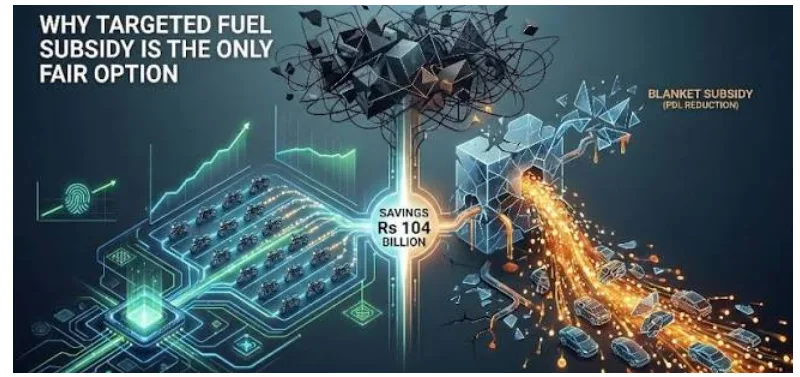
The Fund’s modelling suggests this is an expensive way to help. Delivering the same level of protection to lower-income families through consumer subsidies can require three to six times more fiscal resources than temporary, targeted cash transfers. Subsidising producers can cost 14 to 22 times more. Europe’s 2022-23 energy crisis offers a vivid illustration: for every euro spent holding down electricity, gas and petrol prices, less than 20 cents reached the poorest fifth of households.
The Hidden Global Spillover
The problems extend beyond cost. Keeping prices artificially low weakens the incentive to conserve scarce resources, which is exactly what a supply shock demands. When many countries subsidise at once, the combined effect can push global prices higher, leaving poorer importers worse off. Producer subsidies can even leak abroad: by lowering export prices, they may effectively transfer benefits from domestic taxpayers to foreign consumers instead of the vulnerable households the policy was meant to help.
Why Governments Still Reach for Subsidies
None of this makes the political logic of broad subsidies hard to understand. A fuel price cap is visible, immediate and easy to explain, while a targeted transfer depends on administrative systems that many countries have yet to build. Identifying who is poor and reaching them quickly requires registries, payment channels and trust, and those are scarce in precisely the economies that are most exposed to food and energy shocks.
The IMF does not claim there is never a case for broader tools. It accepts that acute food-security concerns, a heightened risk of social unrest or severe implementation constraints may justify them where fiscal space allows, provided support is tied to the temporary part of a price rise and comes with clear sunset clauses. Readers who want to follow how these trade-offs are playing out in individual countries can supplement primary sources such as IMF data with independent world news coverage of national budgets, subsidy decisions and household conditions.
Designing Support That Actually Works
The Fund’s recommendations amount to a practical checklist for governments confronting the next price spike. Assistance, where warranted, should be temporary and delivered through targeted income support, ideally by scaling up existing social protection systems rather than improvising new ones. The IMF also stresses several design principles:
- Anchor the generosity of support to the average impact of the shock on lower-income households, even when the number of beneficiaries is expanded.
- Where price measures cannot be avoided, focus them narrowly on goods and services that vulnerable households consume disproportionately, preferably in downstream sectors, so that as much of the underlying price signal as possible is preserved.
- Invest in social protection before a crisis arrives, so that future responses are faster, cheaper and better aimed.
These measures sit within a wider macroeconomic message. The Outlook argues that countries must move from coping to rebuilding: restoring fiscal space, keeping monetary policy firmly focused on price stability, strengthening supply-side resilience and deepening international cooperation on trade rules, energy security, critical supply chains and emerging technologies. In a downside scenario the IMF considers, higher commodity prices and doubts about public finances push up borrowing risk premiums and inflation expectations, leaving 2027 growth materially lower and inflation significantly higher than baseline projections. Keeping public debt on a durably sustainable path is the best protection against that outcome.
Frequently Asked Questions
What does the IMF’s October 2026 World Economic Outlook forecast for global growth and inflation?
The IMF projects global growth to slow to 3.1 percent in 2026 and rise to 3.4 percent in 2027. Global headline inflation is expected to increase to 4.7 percent this year before easing to 4.1 percent in 2027. The Fund stresses that risks are tilted to the downside.
What is a cost-of-living crisis, according to the IMF?
The IMF describes it as an episode in which prices of basic necessities, mainly food and energy, rise sharply and outpace both other prices and wage growth. Inflation and inflation expectations stay elevated for a long time, real wages fall, and poverty and inequality worsen.
Why are broad price subsidies considered less effective than targeted transfers?
Broad subsidies benefit all consumers, including those who do not need help, so they cost far more per unit of protection delivered to poor households. The IMF estimates consumer subsidies can require three to six times more fiscal resources than targeted transfers, and producer subsidies 14 to 22 times more. They can also weaken incentives to conserve scarce resources.
Are there situations where broader support measures might still be justified?
Yes. The IMF acknowledges that acute food-security concerns, a heightened risk of social unrest or serious implementation constraints can justify broader tools where fiscal space permits. Even then, it recommends that support be temporary, tied to the temporary part of a price increase and governed by clear sunset clauses.
Conclusion
The central finding of the IMF’s latest analysis is that the instinct to hold prices down for everyone is usually the least efficient way to protect the people who need help most. Targeted, temporary transfers reach poorer households at a fraction of the fiscal cost, preserve the price signals that help markets adjust, and leave governments with more room to respond to the next shock. The evidence from 76 countries and from Europe’s recent energy crisis points in the same direction.
The implications reach beyond any single budget. With public debt high, borrowing costs elevated and energy buffers depleted, the margin for costly policy errors has narrowed, particularly for importing countries without the technology links that have cushioned others. The IMF’s projections remain forecasts built on information available through 1 October and are exposed to conflict, trade and market risks, so uncertainty is considerable. What is already clear is that countries which build reliable social protection systems now will be better placed to defend their most vulnerable citizens, and their public finances, when the next price shock arrives.