The Next Evolution of Three-Dimensional Content Creation: A Comprehensive Exploration of AI 3D Generation and Workflow Optimization
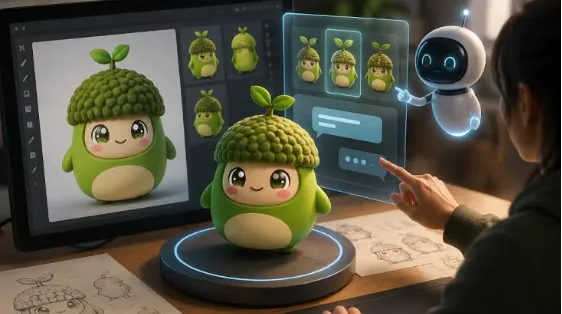
The landscape of digital content creation has undergone a massive paradigm shift over the past several years. While two-dimensional generative intelligence models captured the initial wave of mainstream fascination, the frontier of spatial computing, interactive entertainment, and rapid physical prototyping demands a much higher dimension of asset production. Three-dimensional modeling has historically remained a formidable bottleneck for independent creators, small development studios, and industrial designers alike. Traditional pipelines require hours of painstaking mesh sculpting, retopology, UV unwrapping, and manual texturing before a single asset can even enter an engine or a slicer.
Today, this workflow bottleneck is experiencing a profound transformation. As spatial experiences, augmented reality interfaces, and virtual environments become ubiquitous, innovative platforms are bridging the gap between human imagination and production-ready geometry. Among these innovations, Meshy is one of the leading AI 3D model generators, fundamentally redefining how digital artists, game developers, and engineers approach spatial asset creation. By harnessing advanced neural networks and deep learning architectures, modern platforms streamline the transition from raw concept to fully textured, rigged, and exportable 3D assets.
Understanding the Architectural Shift in Spatial Generative AI
To appreciate the impact of modern generative three-dimensional platforms, one must first examine the inherent complexities of digital geometry. Unlike pixels on a flat grid, which possess straightforward color and coordinate values, 3D assets require a cohesive mathematical representation of volume, surface topology, normal vectors, and UV mapping coordinates. Early attempts at automated 3D generation often produced noisy point clouds or jagged, non-manifold meshes that required extensive manual cleanup to be of any practical use in professional pipelines.
The advent of sophisticated volumetric neural networks and advanced multi-view diffusion models has completely altered this reality. Modern creators no longer need to start from a blank canvas or spend days wrestling with vertex manipulation tools for basic asset blocking. Instead, they can leverage comprehensive platforms that integrate text-to-3D synthesis, image-to-image spatial reconstruction, automated texturing, and intelligent rigging into a single, cohesive ecosystem.
Core Capabilities of Modern AI 3D Ecosystems
A truly robust generative platform must cater to the diverse demands of modern pipelines—ranging from rapid concept ideation in pre-production to high-fidelity asset finalization. Platforms that succeed in this space typically offer a multi-faceted toolset designed to eliminate friction at every stage of development.
1. Dual Generation Paradigms: Text and Image Inputs
The creation journey often begins with an inspiration spark, which can manifest as either a descriptive phrase or a visual concept art piece.
- Text-to-3D Synthesis: Creators can type descriptive prompts specifying style, material properties, and structural attributes to generate coherent geometries from scratch.
- Image-to-3D Reconstruction: When precise visual fidelity is required, users can upload reference artwork. Advanced multi-image input capabilities allow the system to analyze multiple angles of a subject, yielding significantly higher accuracy and reducing geometric distortion compared to single-image constraints.
2. Intelligent Texturing and Surface Detailing
Geometry alone is rarely sufficient for production environments; surfaces require believable material definition, roughness maps, normal maps, and color diffusion. Modern platforms incorporate automated AI texturing engines that interpret structural forms and apply rich, context-aware textures. Artists can guide this process using image references to dictate specific color palettes, weathering effects, or stylistic motifs without leaving the browser environment.
3. Rigging, Animation, and Utility Toolkits
Beyond static props, character animation requires underlying skeletal structures (rigs) that deform the mesh naturally during movement. Automated rigging features analyze humanoid or creature topologies and generate functional skeletal hierarchies in seconds. Furthermore, supplementary web-based toolkits provide essential utilities such as format converters, online viewers, and STL repair tools to ensure watertight geometry ready for manufacturing.
Practical Use-Case Scenarios Across Industries
The versatility of modern AI-driven platforms extends across multiple professional domains, radically compressing production timelines.
Game Development and Level Design
In independent and AAA game studios alike, environmental storytelling relies heavily on “set dressing”—hundreds of unique background props such as crates, foliage, rocks, and architectural fragments. Traditionally, modeling each variant drains valuable artist hours. By utilizing comprehensive platforms that support developer API access, studios can automate the batch generation of background assets, integrating them directly into custom engines and streamlining the pipeline for tools like the Meshy AI animation and rigging suites.
Rapid Prototyping and 3D Printing
Industrial designers, hobbyists, and product engineers frequently iterate through physical prototypes before settling on a final form. Because platforms offer free browser-based accessibility alongside full export format coverage—including STL, OBJ, GLB, and FBX—creators can instantly transition from a quick prompt or sketch to a clean, manifold mesh ready for slicing and printing.
Virtual Reality, Augmented Reality, and E-Commerce
Retailers and digital experience creators need lightweight, optimized 3D assets to populate web-based AR viewers and virtual showrooms. The ability to generate clean models with optimized polygon counts and PBR textures enables brands to scale their digital catalogs with unprecedented speed.
Step-by-Step Guide: Generating and Exporting Your First 3D Asset
To understand how these concepts translate into practical execution, let us walk through the standard workflow for creating a production-ready asset using a modern browser-based suite.
1. Access the Platform and Choose Your Mode:
Navigate to the browser workspace and select input type.
Open your web browser and navigate to the platform dashboard.
Choose between Text-to-3D for text-prompt generation or Image-to-3D if you have concept sketches or reference photos ready.
2. Configure Generation Parameters and Prompts:
Input descriptions or upload multi-angle references.
Enter your detailed prompt or upload your reference images.
Select your desired art style (such as realistic, voxel, low-poly, or stylized anime) and initiate the initial preview generation.
3. Refine Geometry and Apply AI Texturing:
Inspect the draft mesh and apply surface materials.
Review the generated preview.
Once satisfied with the structural topology, execute the texturing phase to apply high-resolution PBR materials, adjusting prompt details or color references as needed.
4. Export in Your Required Format:
Download assets compatible with your target software.
Use the built-in toolkit to inspect the model in the online viewer, run any necessary mesh repairs, and export your final asset in STL, OBJ, GLB, or FBX format for use in your game engine, slicer, or 3D software.
Frequently Asked Questions (FAQ)
What file formats are supported for export?
Modern generation suites support full export format coverage, including standard interchange formats like OBJ, FBX, GLB/gLTF, and manufacturing-ready formats like STL.
Is coding or prior 3D modeling experience required?
No prior experience in traditional vertex modeling or sculpting is required. The intuitive browser-based interface allows users to generate assets entirely through text prompts or image references, while developer API access is available for custom pipeline integration.
Can I use these generated assets commercially?
Depending on your subscription tier—ranging from accessible free tiers to professional developer plans—generated assets can be integrated into commercial game development, e-commerce applications, and physical manufacturing projects.
Conclusion
The evolution of spatial generative technology has democratized three-dimensional design, transforming what was once an exclusionary, highly technical bottleneck into an accessible, fluid medium of expression. By combining fully browser-based accessibility, versatile text and image generation modes, multi-image input accuracy, automated texturing, and robust export capabilities, platforms are empowering a new generation of creators to build immersive worlds with unprecedented efficiency. As these tools continue to mature, the boundary between human imagination and digital reality will only continue to dissolve.