How AI Is Transforming Product Photography for Modern Ecommerce Brands
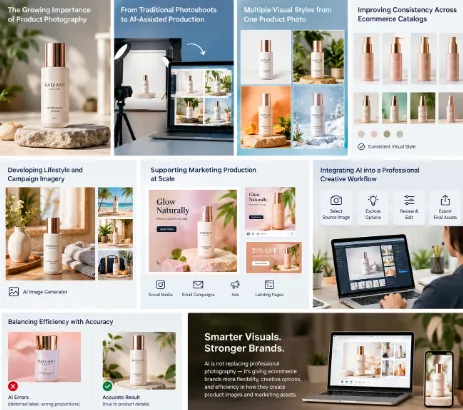
The Growing Importance of Product Photography
In ecommerce, product photography helps customers understand what they are buying. Shoppers cannot physically touch or examine an item before placing an order, so images need to communicate its appearance, features, and intended use. Clear product visuals also help businesses present their collections consistently across online stores, advertisements, and social media.
Traditional commercial photography often requires cameras, lighting equipment, studio space, props, and post-production work. These resources remain important, but arranging a separate photoshoot for every product or campaign can be expensive and time-consuming.
Artificial intelligence is introducing new ways to approach visual production. By using existing product photographs as a starting point, businesses can explore alternative backgrounds, compositions, and creative settings without rebuilding every scene from scratch.
From Traditional Photoshoots to AI-Assisted Production
A professional product photoshoot involves more than capturing an image. Teams must prepare the product, plan the composition, manage lighting, and ensure the final photograph meets the requirements of the intended platform.
When a company launches new products or updates its marketing campaigns frequently, this process can become difficult to manage. AI-assisted production offers an additional option for tasks such as developing visual concepts, creating alternative product presentations, and preparing supporting campaign imagery.
For example, a home accessories retailer might already have clear photographs of its products against plain backgrounds. AI tools can help the creative team explore how those products might appear in different interior settings or promotional compositions.
Platforms such as GenImagePro’s AI Product Photography tool can support this type of workflow by helping users develop different visual presentations from existing product images.
The objective is not to eliminate professional photography. Instead, AI can complement traditional production by making certain creative tasks more flexible.
Creating Multiple Visual Styles from One Product Photo
A single product may need to appear in several different contexts. A skincare brand could require a clean image for its online store, a lifestyle scene for social media, and a seasonal composition for a marketing campaign.
AI-assisted workflows allow creative teams to explore these different directions using an existing photograph. They can test backgrounds, lighting styles, and visual moods before selecting the most suitable approach.
This flexibility is particularly useful during early campaign planning. Instead of arranging a separate physical setup for every idea, a team can compare several concepts and decide which ones deserve further development.
However, the quality of the original photograph still matters. Images with clear product outlines, visible labels, and good lighting generally provide a stronger foundation for further editing.
Improving Consistency Across Ecommerce Catalogs
Online retailers often manage large collections containing many products and variations. If photographs come from different suppliers or production sessions, backgrounds, lighting, and cropping may vary significantly.
AI can help businesses establish a more consistent visual style. A retailer might use similar backgrounds and lighting treatments across a collection, creating a more organized appearance on category pages and product listings.
Image consistency should not come at the expense of product accuracy. Colors, proportions, labels, textures, and distinctive design features must remain faithful to the real item.
Every generated image should therefore be reviewed before publication. This is especially important when a small detail affects how a customer understands a product.
Developing Lifestyle and Campaign Imagery
Product photography often needs to communicate more than appearance alone. Lifestyle images show how an item might fit into a home, workplace, or everyday routine.
A lamp can be presented in a living room, a travel accessory beside a suitcase, or a cosmetic product on a bathroom shelf. These scenes help customers imagine the product in context and give marketers more creative options.
An AI image generator can help teams explore different environments and visual concepts. For instance, GenImagePro’s AI Image Generator is a relevant option for businesses exploring AI-assisted image creation as part of a wider content workflow.
The suitability of generated imagery depends on the intended use. A creative campaign image may allow more artistic interpretation than a primary ecommerce photograph, which needs to represent the actual product clearly.
Supporting Marketing Production at Scale
Ecommerce brands frequently need images for product pages, social media, email campaigns, advertisements, and promotional landing pages. Each channel may require different compositions or formats.
AI can help creative teams develop variations more efficiently, particularly when they already have suitable product photographs. A single product image may serve as the starting point for several campaign concepts, reducing the need to organize a new physical setup for every variation.
Nevertheless, producing a large number of images does not automatically improve a campaign. Each asset should have a clear purpose and align with the brand’s message.
Teams should also check that logos, promotional text, product labels, and other important details are accurate.
Integrating AI into a Professional Creative Workflow
AI is most useful when it forms part of a structured production process. Teams should first establish the intended audience, marketing channel, visual style, and details that must remain unchanged.
A practical workflow includes selecting a suitable source photograph, exploring creative options, reviewing generated results, making necessary corrections, and exporting approved images for publication.
Human creative direction remains essential. Designers and marketers must determine whether an image fits the brand, communicates the right message, and represents the product honestly.
AI tools can support these decisions, but they cannot replace the need for careful review and clear creative standards.
Balancing Efficiency with Accuracy
AI-generated images can contain errors, including distorted packaging, altered labels, unrealistic reflections, or incorrect product proportions. Such issues can undermine customer trust if they appear in published marketing materials.
Businesses should compare generated images with the original product and avoid visual changes that could mislead customers. Products with technical, safety-related, or highly specific visual requirements may need additional checks.
The strongest workflow combines the speed of AI-assisted production with the accuracy standards of professional photography.
Conclusion
AI is changing product photography by helping ecommerce brands explore visual concepts, create alternative settings, and prepare marketing assets from existing images. These capabilities can make content production more flexible and reduce the need for repeated physical setups in suitable situations.
Traditional photography continues to offer important advantages when projects require precise control or detailed product representation. By combining AI tools with professional creative direction and quality checks, businesses can build a more adaptable visual production process.