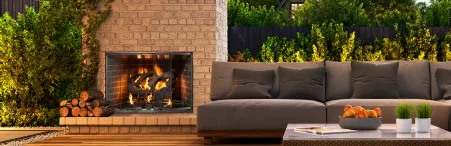
Planning an outdoor fireplace with a chimney starts with choosing a safe location, selecting the right fireplace design, and making sure smoke can escape properly. These steps help you create a patio where family and friends can enjoy cool evenings around a warm fire. However, you also need to consider the foundation, chimney materials, seating space, and local building rules.
The U.S. Environmental Protection Agency warns that smoke from burning wood contains fine particles that can affect the lungs and heart.
Therefore, proper installation and responsible firewood use matter just as much as appearance. Before buying a fireplace, check your available space, compare suitable wood-burning designs, and discuss chimney requirements with a qualified installer. \
Let’s walk through how to plan yours the right way, step by step.
1. Where Should You Place an Outdoor Fireplace With a Chimney?
The best location for an outdoor fireplace with a chimney gives you enough room to enjoy the fire while keeping people and nearby structures safe. Before you choose a spot, look at your patio’s size, wind direction, nearby trees, and the distance from your home.
For example, a fireplace placed near a seating area can create a cozy setting. However, it should not block walkways or send smoke straight toward open windows.
Check these points before making your choice:
- Keep the fireplace away from dry plants, wooden fences, and low branches.
- Follow the clearances listed in the fireplace manufacturer’s instructions.
- Leave enough space for chairs, tables, and safe movement.
- Check whether smoke could bother neighbors or enter your home.
- Make sure the ground can support the fireplace and chimney.
Also, check local building and fire rules before construction. A good location makes the rest of your project easier to plan.
2. Which Fireplace Design Fits Your Patio Best?
The right design depends on your available space, budget, and preferred style. A large stone fireplace may suit a spacious backyard, while a smaller unit may work better on a compact patio.
Here are three common options to consider:
- Masonry fireplaces: Brick or stone gives these fireplaces a classic, solid look. They may need more building work and a suitable foundation.
- Prefabricated fireplaces: Manufacturers design these units for specific installation needs. They can make some projects easier to plan when you follow the supplied instructions.
- Modern outdoor fireplaces: Clean lines and simple finishes suit patios with a contemporary look.
Think about how you will use the fireplace, too. If you often host family gatherings, choose a size that suits your usual group. If you want a quiet place to relax, a smaller design may be enough.
3. How Do You Plan a Safe and Effective Chimney?
Fire is friendly only when you respect it. So build safety into your plan from day one.
- Look for safety labels, such as UL 127, on wood-burning units
- Use non-combustible finishes like stone, brick, or stucco
- Follow the maker’s manual for clearance and chimney height
- Add a spark screen and keep a hose or extinguisher close
- Store firewood far from the flames
Also call your local building office. Many towns ask for a permit, and an inspector can spot problems early. That small call can save you big stress.
Which Chimney Materials Work Best Outdoors?
Outdoor chimneys face rain, wind, heat, and changing temperatures. Choose materials designed for your specific fireplace and local weather conditions. Use approved parts instead of trying to adapt an indoor chimney system.
Before installation, check that the plan includes:
- A compatible chimney and venting system
- Suitable weather protection and a chimney cap
- Safe distances from roofs, walls, and other materials that can burn
- A clear path for smoke to escape
You can explore wood-burning outdoor fireplace designs to compare different fireplace styles before discussing your final choice with an installer.
4. How Do You Prepare a Strong Foundation for Your Fireplace?
A fireplace can weigh hundreds or even thousands of pounds, depending on its size and materials. The base must support that weight without shifting or cracking.
Start by asking a qualified contractor to check the ground and foundation requirements. A patio built for ordinary furniture may not support a heavy stone or masonry fireplace without extra work.
Keep these steps in mind:
- Build a foundation that supports the full weight of the fireplace.
- Make sure the base is level and stable.
- Plan drainage so rainwater does not collect around the structure.
- Check for underground pipes and cables before digging.
- Use suitable paving and finishing materials around the fire.
A strong foundation protects your investment and gives the fireplace a stable base for long-term use.
5. How Much Should You Budget for an Outdoor Fireplace Project?
The total cost depends on the fireplace type, materials, foundation, chimney, labor, and site conditions. Extra work may raise the cost if your patio needs drainage changes or other structural improvements.
Before buying anything, ask contractors for a detailed estimate that covers the full project.
Your budget should include:
- The fireplace unit or masonry materials
- Foundation and patio preparation
- Chimney parts and installation
- Labor, permits, and inspections
- Seating and outdoor lighting
- Regular cleaning and maintenance
Also, contact your local building department before construction. Some locations require permits or inspections, and rules may limit wood burning during poor air quality or dry weather. Checking these details early can help you avoid delays and unexpected costs.
6. How Can You Keep Your Outdoor Fireplace Safe and Clean?
Regular care helps your fireplace remain safe and ready to use. Before lighting a fire, check for visible damage, loose debris, and anything that could block the chimney.
Follow these simple habits:
- Burn only dry, seasoned firewood recommended for your fireplace.
- Never burn plastic, household trash, or painted or treated wood.
- Arrange chimney inspections and cleaning as recommended by the manufacturer or a qualified professional.
- Keep leaves, dry wood, and other combustible items away from the fireplace.
- Never leave a fire unattended.
- Let ashes cool completely before placing them in a suitable metal container.
Also, check the chimney cap for damage and look for signs of blockage. If you notice cracks, poor smoke flow, or other problems, stop using the fireplace until a qualified professional checks it.
Conclusion: Your Patio Is Ready for Its Glow-Up
Planning an outdoor fireplace with a chimney begins with choosing the right location, design, and chimney system. You also need a strong foundation, safe seating, a realistic budget, and a plan for regular care. Each decision helps make your patio more comfortable and reduces the chance of costly mistakes.
Before construction, check local rules and speak with a qualified installer about the fireplace and chimney requirements. With the right preparation, you can create a welcoming outdoor space where friends and family can gather, enjoy the warmth, and make lasting memories.