Hearing a tiny hiccup from your newborn can be surprising, especially when it happens several times a day. Some babies hiccup after drinking milk, while others start hiccupping when they are resting.
For new parents, newborn baby hiccups may raise questions. Is the baby uncomfortable? Does something need to be done? Could frequent hiccups indicate a health problem?
Fortunately, hiccups are a normal part of early life. Most babies experience them without feeling pain or discomfort. They usually disappear without treatment.
Understanding why hiccups happen and how to respond can make these moments less stressful.
What Are Hiccups in Newborn Babies?
Hiccups happen when the diaphragm suddenly contracts. The diaphragm is a muscle located beneath the lungs that helps control breathing.
When this muscle contracts unexpectedly, the vocal cords close briefly, creating the familiar hiccup sound.
Babies can experience hiccups even before birth. Some pregnant women notice small, repeated movements in their belly that may be caused by fetal hiccups.
After birth, these movements continue as the baby’s body adjusts to life outside the womb.
In most situations, newborn baby hiccups are harmless and do not interfere with normal breathing.
Why Do Newborn Babies Get Hiccups?
Parents often search for newborn baby hiccups causes because the episodes sometimes begin without an obvious reason.
Several everyday factors may contribute.
1. Swallowing Air During Feeding
Babies sometimes swallow air while breastfeeding or drinking from a bottle.
This air can collect in the stomach and create pressure that may irritate the diaphragm.
Hiccups may appear during feeding or shortly afterward.
2. Drinking Milk Too Quickly
A baby who drinks milk rapidly may swallow additional air.
A fast bottle nipple flow or a strong milk letdown during breastfeeding can sometimes contribute to this problem.
3. A Full Stomach
When a baby’s stomach becomes full, it expands.
This expansion may put pressure on the diaphragm and trigger hiccups, particularly after a large feeding.
4. Developing Digestive System
A newborn’s digestive system is still developing.
The baby’s body is gradually learning to coordinate feeding, swallowing, and digestion. Hiccups can occur during this normal developmental period.
5. Acid Reflux
Some babies experience reflux when stomach contents move back toward the esophagus.
Reflux may sometimes occur alongside hiccups, although hiccups alone do not mean a baby has reflux disease.
How to Stop Newborn Hiccups Safely
Many parents wonder how to get rid of baby hiccups newborn without using medicines or uncomfortable techniques.
The safest approach is usually to let the hiccups stop naturally. If your baby seems uncomfortable, a few gentle actions may help.
Burp Your Baby
Burping can release swallowed air from the stomach.
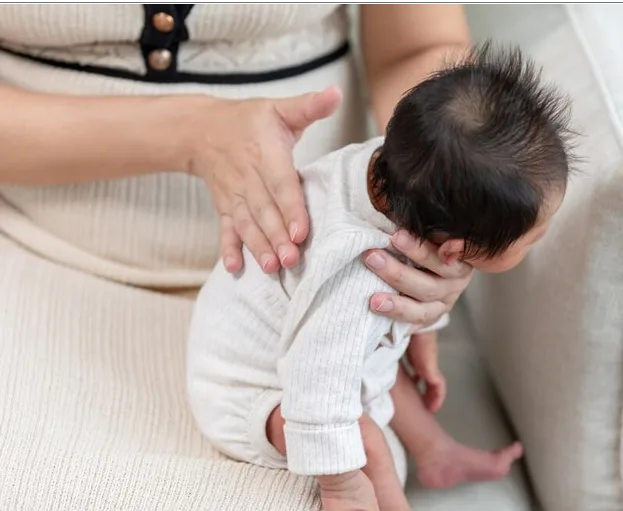
Hold your baby upright against your shoulder, support their head and neck, and gently pat or rub their back.
Try burping during feeding breaks and after the baby finishes drinking milk.
Hold Your Baby Upright
If hiccups begin after feeding, hold your baby upright for around 15–20 minutes while they are awake.
This position may reduce discomfort associated with trapped air or milk coming back up.
Always place your baby flat on their back for sleep, even if they have hiccups.
Take a Short Feeding Break
If hiccups start while your baby is feeding, pause briefly.
Allow the baby to relax and try burping before continuing.
There is no need to force feeding when your baby appears full or uncomfortable.
Offer a Pacifier
If your baby already uses a pacifier, gentle sucking may help them settle.
Some babies relax while sucking, although a pacifier does not guarantee that hiccups will stop.
What Should Parents Avoid?
Some home remedies used by adults are unsuitable for newborns.
Never try to stop a baby’s hiccups by frightening them, pulling their tongue, or making them hold their breath.
Avoid giving sugar, honey, herbal mixtures, or plain water to treat hiccups.
Honey is particularly dangerous for children younger than 12 months because it can cause infant botulism.
Gripe water is also not a proven treatment for hiccups. Speak with your pediatrician before giving any remedy or supplement.
How to Prevent Frequent Hiccups
Although hiccups cannot always be prevented, a few feeding adjustments may reduce episodes.
- Feed your baby before they become extremely hungry and begin drinking too quickly.
- Check that your baby has a comfortable latch during breastfeeding.
- Choose an appropriate bottle nipple flow to avoid overly fast feeding.
- Allow short breaks for burping when needed.
- Avoid forcing your baby to finish a bottle after showing signs of fullness.
- Keep your baby upright briefly after feeding while supervised.
Parents searching for how to help baby hiccups newborn should focus on comfortable feeding habits rather than trying to stop every episode immediately.
When Should You Worry About Newborn Hiccups?
Most hiccups are temporary and require no medical attention.
However, newborn baby hiccups deserve closer attention when they occur alongside other symptoms.
Contact your pediatrician if your baby:
- Frequently refuses milk or struggles during feeding.
- Vomits repeatedly or has forceful vomiting.
- Appears unusually distressed during or after feeding.
- Has difficulty gaining weight.
- Regularly arches their back and cries during feeding.
- Experiences persistent hiccups that interfere with feeding or sleep.
These symptoms may indicate feeding difficulties, reflux, or another condition requiring medical assessment.
Seek emergency medical care if your baby has trouble breathing, turns blue or gray, or becomes unusually unresponsive.
A newborn younger than three months with a temperature of 100.4°F (38°C) or higher also needs immediate medical evaluation.
Frequently Asked Questions
Are Hiccups Normal in Newborn Babies?
Yes. Newborn hiccups are extremely common. If your baby is feeding normally, breathing comfortably, and gaining weight, occasional hiccups are generally not concerning.
How Long Do Baby Hiccups Usually Last?
Many episodes end within a few minutes. The duration can vary, and most hiccups disappear without any special treatment.
Can a Newborn Sleep With Hiccups?
Yes. A baby who is breathing comfortably can sleep with hiccups. Always follow safe sleep practices by placing your baby on their back on a firm, flat sleep surface.
Do Hiccups Mean My Baby Is Hungry?
Not necessarily. Hiccups can happen before or after feeding. Look for hunger signs such as rooting, moving hands toward the mouth, or attempting to suck.
Final Thoughts
Hiccups are a familiar part of newborn development and rarely signal a serious health concern.
Gentle burping, comfortable feeding positions, and avoiding overfeeding may help reduce their frequency.
Most importantly, observe your baby’s overall behavior rather than focusing only on the hiccups.
If your baby is comfortable, feeding well, and breathing normally, there is usually no reason to worry. When unusual symptoms appear, your pediatrician can help determine whether further care is needed.