Health Insurance Market Size and Forecast: Key Trends and Growth Drivers
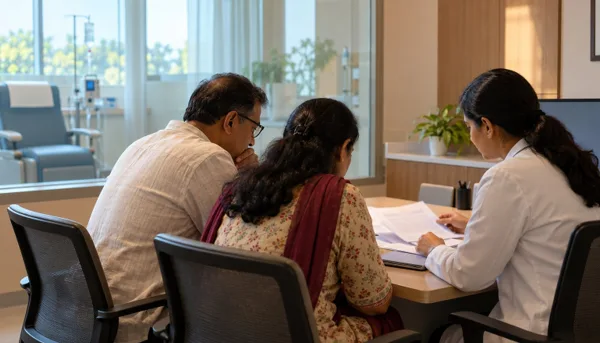
How Rising Cancer Treatment Costs in India Are Shaping the Health Insurance Market
Rising cancer treatment costs in India are pushing families towards bigger sums insured, top-up plans and critical illness cover. For insurers, the same costs mean larger claims, repeat claims and pressure to pay for modern therapies. Together, these changes are making health insurance the biggest segment of India’s general insurance market.
What Cancer Treatment Costs Today
Cancer care is rarely one hospital stay now. It runs across surgery, chemotherapy, radiation, scans and follow-ups, often for months.
ICMR estimates that about 14.62 lakh new cancer cases are diagnosed in India every year, with 60-70% of them found at an advanced stage. A parliamentary panel meeting in September 2026 heard that treatment costs about ₹7.5 lakh per patient on average.
It also heard that patients pay 70-80% of cancer-related spending out of pocket. Advanced cases cost far more, and depending on the stage and type of treatment, bills can go above ₹10 lakh.
Why Claims Are Getting Bigger and More Frequent
Modern cancer treatment comes in stages, and each stage becomes its own claim. So the bills keep coming long after the diagnosis.
A study of one lakh cancer claims filed between 2023 and 2025 found that a typical patient now files close to four claims a year. One in five claims is for more than five. Even insured patients commonly pay 20-40% of the total cost themselves.
Room rent caps, co-payments and 50% limits on newer treatments such as oral chemotherapy cut down what the policy pays. Industry data also shows that claims above ₹7.5 lakh have risen 22% recently, and cancer and heart cases make up 38% of those claims.
How This Is Shaping the Market
Costs like these are a big reason health insurance is growing faster than the rest of the industry. Demand is rising, but so is the pressure on insurers.
In FY26, health insurance premiums grew 15.4% to about ₹1.37 lakh crore, while the non-life industry as a whole grew 9.3%. Health now makes up 40.8% of non-life premiums, up from 38.6% a year earlier.
Medical costs in India are also projected to rise 11.5% in 2026. Insurers are responding with higher sum insured options, restoration benefits and top-up plans. Profits are still under strain, though. The health segment had a combined ratio of 111% in FY26, which means it paid out more in claims and costs than it earned in premiums.
The Gap Between Cover and Cost
The market is growing, but the protection gap hasn’t closed. Many families still have policies that one cancer diagnosis could use up.
Figures shared at the same parliamentary meeting showed that 52% of policyholders are underinsured, while 27% have cover below ₹5 lakh. Claim rejection rates are close to 19%. With treatment averaging ₹7.5 lakh and claims spread over months, a ₹5 lakh policy can run out before treatment ends.
Why Critical Illness Cover Is Growing
Hospital bills are only part of the cost. Lost income, travel, home care and medicines outside the hospital add up during long treatment.
A critical illness insurance policy pays a lump sum when you’re diagnosed with a covered illness such as cancer, regardless of the actual hospital bill. You can use the money for treatment, EMIs, household expenses or care at a hospital of your choice. Claims depend on the diagnosis, so there’s less paperwork to handle. This cover works alongside a regular health plan. It doesn’t replace one.
How Families Can Prepare
The safest setup has a strong base policy with extra layers on top. Each layer handles a different kind of cost.
- Pick health insurance for whole family needs with a sum insured that matches current hospital costs, not the costs of five years ago.
- Check the policy wording for limits on newer treatments such as immunotherapy and oral chemotherapy.
- Add a top-up plan for high bills that go beyond your base cover.
- Consider critical illness cover if you’re over 40, earn most of the household income or have cancer in the family.
- Buy cover while you’re healthy. Once you’re diagnosed, cover becomes harder to get and waiting periods apply.
Final Thoughts
Rising cancer treatment costs are changing what families buy and what insurers sell. Premiums are growing, policies are getting bigger, and lump-sum cover is becoming a regular part of financial planning.
For families, the lesson is to check that your cover matches the real cost of a long illness, not just a short hospital stay.