7 Reasons Interior Designers Swear by Sheer Curtains (You’ll Love Them Too)
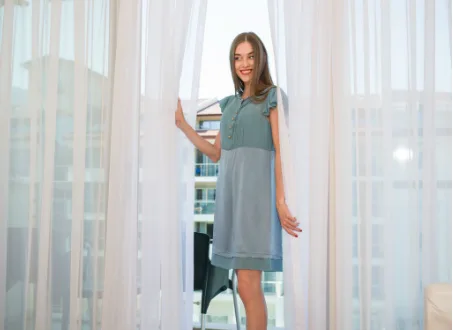
Walk into almost any room styled by a professional interior designer and look at the windows. More often than not, you will find a whisper of fine fabric softening the glass. It is rarely the most expensive item in the room, yet it changes how the whole space feels: the light, the proportions, the privacy and even the way the furniture looks.
That quiet hero is the sheer curtain, and designers use it far more deliberately than most homeowners realise. Choosing made to measure sheer curtains from a window furnishing specialist such as Jabal Al Riad gives a room the same effect designers create in show homes: filtered daylight instead of harsh glare, daytime privacy from neighbouring buildings, and floating, floor length fabric that makes ceilings look taller and pairs neatly with blackout curtains for the night. In this guide you will learn the seven reasons designers rely on them, which fabrics to choose, how to hang them like a professional and the one limitation every homeowner should know before buying.
Why do interior designers reach for sheer curtains first?
Designers think about light before they think about furniture, because light decides how every colour, texture and surface will look. Sheer curtains are one of the simplest tools for shaping that light. A sheer is a lightweight, translucent fabric, usually a voile, a fine linen or a soft polyester, that lets daylight pass through while diffusing it.
Unlike heavy drapes or blinds, sheers do not close a room off. They sit between the room and the window like a soft filter, which is why designers often specify them first and then build heavier layers around them. In many homes they stay drawn for most of the day, quietly doing their job.
7 reasons interior designers swear by sheer curtains
Each of these reasons solves a real problem homeowners face, from glare on a TV screen to a living room that feels exposed to the building opposite.
1. How do sheer curtains soften harsh daylight?
Strong, direct sun creates hard shadows, bright hotspots and glare on screens and glossy surfaces. Sheers break up that light and spread it more evenly across the room. In an article for Homes and Gardens, designer Alex Azat, founder of Plaster and Patina, explains that sheers filter light, “making it softer but more evenly spread throughout a space.” Interior designer Bethany Adams adds that sheers “are fantastic for filtering light through a bright window.”
The result is a room that stays bright without feeling harsh, which matters most in sunny climates and in rooms with large windows.
2. Do sheer curtains give you privacy?
During the day, yes. Because it is usually brighter outside than inside, sheers make it difficult for people to see in while you can still see out. That makes them ideal for apartments facing other towers, ground floor rooms near a street and homes where neighbours are close. Bethany Adams describes sheers as “adding a bit of privacy if your neighbors are a bit too close for comfort.”
They let you keep the view and the daylight without feeling on display.
3. Can sheer curtains make a room look bigger?
This is one of the designer secrets homeowners notice without knowing why. When sheers are hung high and fall all the way to the floor, they draw the eye upward and make the ceiling look taller. Alex Robinson of Mackenzie Collier Interiors, quoted by Pepper Home, recommends hanging them at least a foot above the window to make the space feel larger and more polished.
Because the fabric is light, it adds height and softness without the visual weight of a heavy curtain, so even compact rooms feel more open.
4. Why are sheers the perfect layering partner?
Designers rarely use one window treatment alone. A sheer close to the glass and an opaque curtain on the room side gives full control from morning to night. Designer Tanner Morgan told Homes and Gardens that “a space is hardly complete without a luxe set of over-and-under curtains or a soft Roman shade in a sheer fabric.” Justine Sterling, quoted by Pepper Home, uses sheers next to the window with opaque drapery in front so a bedroom has daylight when wanted and privacy at night.
In practice, layering looks like this:
| Time of day | Layer in use | What you get |
| Morning and daytime | Sheer curtains closed | Soft light, reduced glare, daytime privacy |
| Evening with lamps on | Opaque curtain partly or fully closed | Warm, enclosed atmosphere and privacy |
| Night | Blackout curtains fully closed | Darkness for sleep and full privacy |
5. How do sheers add warmth and texture?
Modern homes are full of hard surfaces: tiled floors, glass, stone worktops and painted walls. Sheers introduce movement and softness that balance those materials. Alex Azat told Homes and Gardens that sheers “add warmth, texture, and interest to a space.” A linen look sheer brings a relaxed, natural feel, while a fine voile reads as crisp and elegant. When a breeze or an AC vent moves the fabric, the room feels more alive.
6. Do sheer curtains help with glare and sun on furniture?
Sheers diffuse direct sunlight before it lands on sofas, rugs, artwork and screens. That makes rooms more comfortable for watching TV, working on a laptop or reading during the brightest hours. It also reduces how much direct sun falls on furnishings, although sheers are not a full sun barrier. New Zealand curtain specialist Russells Curtains advises choosing sheer fabric based on “fade resistance as well as appearance,” because the fabric itself faces constant daylight.
7. Why do sheers suit almost every style and room?
Few window treatments are as adaptable. Sheer curtains work in a minimalist apartment, a classic villa, a boutique style bedroom or a busy family living room. Here is how designers typically use them room by room:
- Living rooms: to soften glare and keep the view while the room is in use.
- Bedrooms: as the daytime layer behind blackout curtains.
- Dining areas: to create a soft, flattering light for meals and gatherings.
- Home offices: to cut screen glare without losing daylight.
- Glass walls and balcony doors: to add privacy while keeping access easy.
They are also one of the easiest ways to refresh a room, since a new set of sheers can change the mood without redecorating.
Which sheer fabric should you choose?
Not all sheers look or behave the same. The fabric decides how much light passes through, how the curtain drapes and how easy it is to keep clean. Russells Curtains describes voile as a “crisp, open weave fabric” that “gathers and drapes beautifully,” and notes that high end polyesters are “easy to clean and maintain.”
| Fabric | Look and feel | Light and privacy | Best suited to |
| Voile | Crisp, fine and elegant | Bright, airy light with light daytime privacy | Living rooms and bedrooms |
| Linen or linen look | Relaxed, textured and natural | Softer light with a little more screening | Contemporary and coastal styles |
| Polyester sheer | Smooth and consistent | Varies by weave; easy to maintain | Busy family homes and rentals |
| Textured or slub weave | Visible grain and character | Slightly more diffusion | Feature windows and statement rooms |
If you want more daytime privacy, choose a denser weave or a slightly deeper tone. If you want maximum light, choose a fine voile in white or ivory.
How do designers hang sheer curtains?
The fabric is only half the story. How sheers are hung makes the difference between a designer finish and a limp, flat look.
How full should sheer curtains be?
Sheers look best with plenty of fabric. Russells Curtains suggests a width of double or triple the window width, depending on how full you want the curtain to appear. Double gives a lighter, more tailored fall, while triple gives a rich, billowy effect that looks luxurious against large windows. Your installer will confirm the right fullness for the heading system and fabric you choose.
Where should the track or rod go?
Mount the track high, ideally close to the ceiling, and extend it past the window frame so the sheers can stack clear of the glass when open. If you plan to layer sheers with another curtain, Russells Curtains notes that sheers hanging behind a curtain need their own separate rod, so a double track is the neatest solution.
Which heading style suits sheers best?
Wave curtains are a favourite for sheers because the track spaces the fabric into soft, even folds that look calm and modern. Pinch pleats give a more formal finish, while eyelets suit a relaxed, casual room.
| Heading | Look with sheer fabric | Best for |
| Wave | Even, flowing folds | Modern apartments and large glass walls |
| Pinch pleat | Tailored, structured pleats | Classic and formal interiors |
| Eyelet | Relaxed, casual folds on a pole | Bedrooms and informal living spaces |
How long should sheer curtains be?
Floor length is the designer standard. Russells Curtains recommends floor length when sheers hang on their own, as it helps them hang straighter. A hem that just touches the floor looks crisp and is easy to keep clean, which is a practical choice in dusty climates.
Are sheer curtains see through at night?
This is the one limitation every buyer should understand. Sheers give privacy during the day because the outside is brighter than the inside. At night the situation reverses. As Russells Curtains puts it, “once it’s dark outside and you turn on a light the sheers become transparent from the outside.”
The solution is simple and is exactly what designers do:
- Pair sheers with an opaque or blackout curtain on a second track.
- Close the heavier layer in the evening when lights go on.
- Use sheers alone only in rooms where night privacy does not matter, such as a high floor with no facing buildings.
How do you care for sheer curtains?
Sheer fabrics are delicate, so gentle care keeps them looking fresh:
- Vacuum regularly with a soft brush attachment to remove dust before it settles into the weave.
- Follow the care label, as voile, linen and polyester sheers can each have different washing limits.
- Use a gentle cycle and cool water only when the label allows machine washing.
- Rehang sheers while slightly damp, where the label permits, to let creases fall out naturally.
- Check for discolouration near windows that receive strong sun, and rotate panels if one side fades faster.
What mistakes should you avoid with sheer curtains?
A few small errors can make sheers look cheap or fail to do their job:
- Buying panels that only match the window width, which leaves them stretched flat.
- Hanging the rod just above the frame, which makes the ceiling look lower.
- Stopping the curtains above the floor.
- Relying on sheers alone for bedroom privacy at night.
- Choosing a fabric too thin for a window that faces a close neighbouring building.
- Hanging sheers and heavy curtains on the same rod, which makes layering awkward.
Conclusion
Interior designers swear by sheer curtains because they solve several problems at once. They soften harsh daylight, give privacy during the day, make rooms feel taller, add warmth and texture, reduce glare, adapt to almost any style and pair perfectly with heavier curtains for the night. Choose a fabric that matches the light and privacy you need, hang it high and full on its own track, let it reach the floor and pair it with an opaque layer for the evening, and your windows will look as though a designer planned them.
If you are ready to bring this look into your home, you can contact Jabal Al Riad to discuss your windows, preferred sheer fabric and heading, and the measurement and installation scope for your space. Which room in your home would you dress with sheers first? Share your ideas in the comments below.