RPM in Home Health: Enabling Safe, Continuous Care Outside the Clinic
Did you know almost 20% of total patients discharged from hospitals are readmitted within 30 days, and for many?
It does not happen suddenly; the warning signs start showing up long before they return to the ER. Actually, the problem here is not that patients leave the clinic; you often lose visibility into what is happening at home.
Many issues can go unnoticed between scheduled visits. For example, a sudden rise in your patient’s blood pressure, a drop in oxygen levels, or medications may be skipped. And this is the reason why many healthcare organizations are shifting toward smarter home-based care models powered by remote patient monitoring apps.
Patients need comfort at home; on the other hand, providers also want a safer way to monitor their conditions beyond clinical walls. Traditional home health workflows alone fail to fulfill these achievements, as they are specifically built around periodic visits and phone calls.
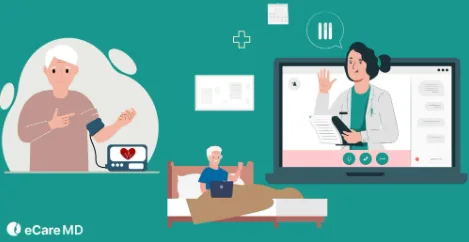
This is exactly where RPM home health continuous care jumps in. Remote patient monitoring (RPM) gives you real-time visibility into your patient’s health data from home. As a result, you can intervene, detect issues quickly, intervene faster, and stay connected with your patients.
Because of this, healthcare organizations are using home health remote monitoring to deliver more proactive, continuous, and patient-centered care, from chronic disease management to remote patient monitoring post-discharge home care.
Let’s explore how RPM enables safe continuous care for home health patients outside the clinic and why RPM home-based care is becoming a key part of modern healthcare delivery.
Why RPM Is Transforming Home Health Care
-
Continuous monitoring allows earlier intervention
RPM allows your care team to access daily patient health data. It helps your care team to spot concerning trends early and step in before the situation gets worse, rather than waiting for days or weeks to identify problems.
For example, if a patient’s blood pressure keeps rising over several days, the care team can quickly adjust medications, schedule an earlier visit, or contact the patient for follow-up. In healthcare, catching problems early can be the difference between a smooth recovery and a trip back to the hospital.
-
Supporting safer recovery and chronic disease management at home
Patients recovering after hospitalization or managing chronic conditions often need closer oversight than traditional home visits can provide. This is why remote patient monitoring post-discharge home care is becoming increasingly important for modern healthcare organizations.
RPM acts like a safety net for patients recovering at home by helping providers monitor conditions continuously without requiring constant in-person visits. Daily weight tracking for heart failure patients, glucose monitoring for diabetes, and oxygen saturation checks for COPD patients help clinicians stay informed and proactive.
As a result, RPM home-based care makes it possible for more patients to safely recover and manage chronic illnesses from the comfort of home.
-
Helping reduce unnecessary hospital visits
Many hospital readmissions do not happen overnight. Warning signs usually appear days before the emergency itself. The challenge is that traditional care models often miss those signals.
With home health remote monitoring, providers can identify issues like fluid retention, worsening blood pressure, or declining respiratory health much earlier. This allows care teams to intervene before conditions spiral into emergency room visits or hospitalizations.
Instead of playing catch-up after a crisis, providers can stay one step ahead.
-
Creating more connected care workflows
RPM is most effective when it becomes part of the provider’s everyday workflow instead of functioning as a separate system. When monitoring data connects with care plans, visit notes, and patient records, care teams get a complete picture of the patient’s condition in one place.
This connected approach strengthens communication, improves care coordination, and supports faster decision-making across the home health team. Most importantly, it helps providers deliver more consistent and proactive care outside the clinic walls.
Key Clinical Benefits of RPM in Home-Based Care
-
Real-time monitoring improves the management of hypertension, diabetes, COPD, and CHF
These four conditions drive the majority of chronic disease burden in home health populations. RPM provides daily data on the metrics that determine stability—blood pressure, glucose, oxygen saturation, and daily weight. Continuous data transforms management from periodic assessment to ongoing oversight.
-
Early detection of worsening symptoms before emergencies occur
Clinical deterioration rarely happens overnight. Blood pressure rises over days. Fluid accumulates gradually. RPM captures these trends, giving care teams the opportunity to intervene when treatment adjustments can still prevent acute events.
-
Better medication adherence and patient engagement through connected monitoring
Patients who use RPM devices daily maintain an active connection with their care team. The routine of taking readings reinforces self-management behaviors. When coordinators follow up on concerning trends, patients are more likely to adhere to medication regimens.
-
Supporting coordinated care between physicians, caregivers, and home health teams
Home health patients typically have multiple providers—physicians, specialists, nurses, and family caregivers. RPM data accessible to the entire care team ensures everyone works from the same clinical information, keeping decisions coordinated rather than fragmented.
-
Expanding the value of RPM home-based care for chronic and post-discharge patients
RPM home-based care serves both long-term chronic disease populations and post-discharge patients. For chronic patients, RPM provides years of continuous oversight. For post-discharge patients, it bridges the transition when readmission risk is highest. How RPM enables safe continuous care for home health patients outside the clinic depends on this dual capability.
Improving Patient Safety and Engagement at Home
-
Easy-to-use monitoring devices are increasing patient participation and consistency
RPM adoption in home health depends on devices that patients can use independently. Blood pressure cuffs that inflate with a single button, weight scales that transmit when stepped on, and pulse oximeters that clip on and read within seconds drive the daily consistency that makes RPM data clinically useful.
-
Cellular-enabled devices are reducing technology barriers for elderly patients
Many home health patients are elderly Medicare beneficiaries without reliable internet or smartphone proficiency. Cellular-enabled RPM devices transmit data through built-in connections—no WiFi, no apps, no Bluetooth pairing. The patient takes a reading, and data reaches the care team automatically, removing the barrier that would exclude patients who need monitoring most.
-
Continuous communication helps patients stay connected to care teams
RPM creates a persistent connection beyond scheduled visits. Patients know their data is reviewed daily, providing reassurance and reducing the anxiety that accompanies managing conditions at home. The coordinator outreach triggered by concerning data catches issues that patients might not report independently.
-
Supporting better outcomes through proactive remote monitoring
Patient safety improves when care shifts from waiting for problems to actively watching for them. A coordinator calls when the weight increases, suggesting fluid retention—not after the patient develops respiratory distress. This is the difference between a medication adjustment at home and an emergency department visit.
-
Strengthening remote patient monitoring post-discharge home care strategies
Remote patient monitoring post-discharge home care addresses the critical 30-day window when readmission risk peaks. Remote patient monitoring for home-based chronic disease management after hospital discharge keeps providers informed during the period when clinical instability is most likely.
Technology That Enables Scalable Home Health RPM Programs
Scaling RPM home health continuous care requires technology designed for clinical effectiveness and operational efficiency. A remote health monitoring system built for home health must connect patient devices, clinical workflows, and documentation into a unified platform supporting care at scale.
-
Centralized dashboards are improving visibility across home-based patient populations
Care teams managing hundreds of home health RPM patients need population-level views surfacing patients requiring attention. Dashboards filterable by condition, alert status, and risk level allow coordinators to triage efficiently—focusing time on patients whose data indicates concern.
-
Automated alerts help providers identify high-risk patients earlier
Intelligent alert systems distinguish between isolated out-of-range readings and sustained trends indicating clinical concern. When a heart failure patient gains three pounds in two days, the alert fires. When blood pressure is slightly elevated once, it does not generate noise. This prevents alert fatigue while ensuring critical changes receive attention.
-
Integrated workflows reduce administrative burden and documentation gaps
RPM platforms that automate time tracking for CPT 99457 and 99458, monitor transmission compliance for CPT 99454, and integrate billing validation reduce overhead, limiting program growth. Automated billing lets care teams focus on clinical care.
-
Enabling scalable and efficient home health RPM programs
RPM home health continuous care scales when technology handles operational complexity, manual processes cannot sustain. Automated enrollment, device logistics, and compliance monitoring allow programs to grow from pilots to enterprise-scale monitoring without proportionally increasing staff.
Operational and Financial Benefits for Providers
-
Improving care coordination across home health and physician teams
When RPM data is accessible to home health agencies, physicians, and specialists, coordination improves. The nurse preparing for a visit reviews the same RPM trends the physician used to adjust medications, reducing gaps and conflicting decisions.
-
Reducing readmissions and avoidable acute care utilization
Hospital readmissions carry financial penalties under Medicare’s Hospital Readmissions Reduction Program. RPM-supported home health care reduces readmissions by maintaining visibility during the high-risk post-discharge period, generating meaningful savings for organizations bearing financial risk.
-
Supporting value-based care and quality improvement initiatives
Home health organizations under value-based contracts are measured on readmission rates, patient satisfaction, and functional improvement. RPM provides clinical tools to improve outcomes and documented evidence demonstrating improvement under Medicare value-based programs.
-
Increasing efficiency through connected remote monitoring systems
RPM generates monthly per-patient revenue through CMS billing—CPT 99453 for setup, CPT 99454 for device supply, CPT 99457 for the first 20 minutes of interactive monitoring, and CPT 99458 for additional time. This revenue supplements existing reimbursement while monitoring reduces costly acute events.
Conclusion: The Future of Care Beyond the Clinic
RPM is a key health monitoring system that helps healthcare organizations deliver safer and more proactive home-based care. Patients managed at home—with chronic conditions, recovering from hospitalization, or aging in place—need oversight that periodic visits cannot provide. RPM fills this gap with continuous data and early warning capabilities that keep patients stable.
Continuous monitoring improves outcomes, engagement, and efficiency. When care teams have daily visibility into home-based patients, they intervene earlier, coordinate better, and deliver the proactive care these populations require.
RPM home health continuous care is becoming essential for modern home health strategies as populations grow and reimbursement models reward quality outcomes. For providers extending care beyond clinic walls, integrated RPM solutions offer the infrastructure for scalable monitoring that improves both clinical results and operational sustainability.
Click here to explore integrated RPM solutions for home-based patient care.
Frequently Asked Questions
- How does RPM improve home health care services?
RPM improves home health care by providing continuous patient monitoring between scheduled visits, enabling care teams to detect clinical deterioration early, intervene before conditions escalate to emergencies, and maintain ongoing engagement with patients managing chronic diseases or recovering from hospitalization at home.
- What are the benefits of home health remote monitoring?
Benefits include earlier detection of worsening symptoms, reduced hospital readmissions and emergency visits, improved chronic disease management, better medication adherence, enhanced care coordination across clinical teams, continuous patient engagement, and monthly reimbursement revenue through CMS RPM billing codes.
- Can RPM reduce hospital readmissions in home-based care programs?
Yes. RPM reduces readmissions by maintaining clinical visibility during the high-risk post-discharge period when patients are most vulnerable. Daily vital sign monitoring allows care teams to identify concerning trends and intervene with medication adjustments or clinical outreach before conditions deteriorate to the point requiring emergency care or rehospitalization.
- What conditions are best managed through RPM home-based care?
The conditions most effectively managed through RPM in home-based care include hypertension through daily blood pressure monitoring, diabetes through glucose tracking, congestive heart failure through daily weight and fluid monitoring, and COPD through oxygen saturation measurement. These chronic conditions benefit most from continuous data that reveals trends between clinical visits.
- How do RPM devices support elderly patients at home?
RPM devices support elderly patients through simplified interfaces requiring minimal technical knowledge, cellular-enabled connectivity that eliminates the need for WiFi or smartphones, automatic data transmission without manual steps, and one-button operation for blood pressure cuffs, step-on weight scales, and clip-on pulse oximeters designed for ease of daily use.
- What technologies are used in RPM home health programs?
RPM home health programs use cellular-enabled monitoring devices for blood pressure, weight, glucose, and oxygen saturation, centralized clinical dashboards for population-level patient management, automated alert systems for risk prioritization, EHR integration through HL7 and FHIR standards, and automated billing and compliance tracking for CPT codes 99453, 99454, 99457, and 99458.
- How does RPM improve patient engagement in home care settings?
RPM improves engagement by creating daily touchpoints between patients and care teams through device readings, care coordinator follow-ups triggered by concerning data, and the reassurance that comes from knowing health data is being reviewed consistently. This ongoing connection reinforces medication adherence, self-management behaviors, and trust in the care relationship.
- How can providers scale remote monitoring for home health patients?
Providers can scale by adopting RPM platforms with automated workflows for enrollment, device logistics, data routing, and compliance monitoring. Centralized dashboards that prioritize high-risk patients, exception-based alerting that reduces unnecessary reviews, and automated billing validation allow small care teams to manage growing patient populations without proportional staffing increases.