How to Find a Good CS 1.6 Server
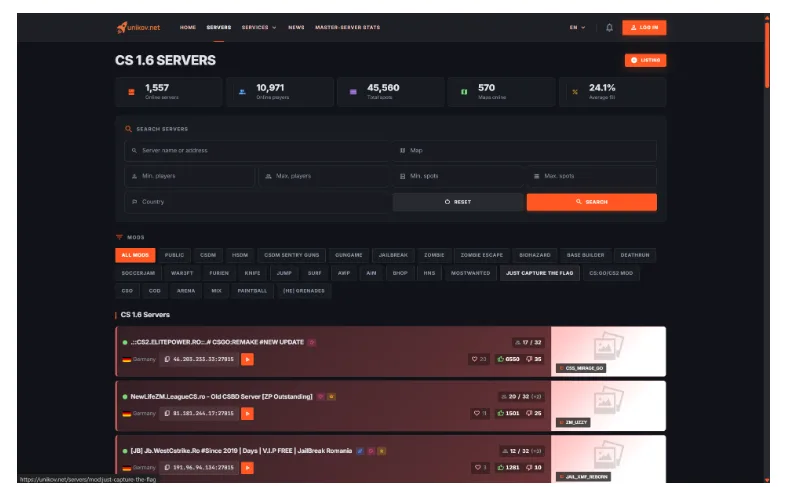
Remember opening the server browser in CS 1.6 and feeling like you were gambling? You click a server called “BEST NO LAG FREE VIP”, and a few seconds later you are standing on dust2 with two other players, a ping of 190 and a guy screaming into his mic about nothing. Everyone has been there. Nobody enjoyed it.
The fastest way to skip that whole routine is a catalog that somebody actually looks after. Boost CS 1.6 is exactly that: a place to find good servers where the list is kept in order and fake servers are not allowed to sit next to real ones. If you are tired of testing ten dead entries to find one live one, start there, then come back and read the rest. It will help you judge any server you meet.
Counter-Strike 1.6 is old, but it is far from dead. Thousands of people join every day, and that crowd is the reason picking a server matters. More players means more servers, and more servers means more junk. A good choice takes about five minutes. A bad one wastes your whole evening.
Why every server feels different
Modern shooters pick a match for you and you never think about it. CS 1.6 never worked like that. Each server is one person’s project: a rented machine, a config they tweaked for months, a map list they argued about with friends, a few plugins and a couple of admins who may or may not be awake. Two servers can both say “Classic” and play like different games.
So the name tells you very little. What matters is how the server behaves once you are inside.
A good one feels steady: the tickrate holds, the rules are fair, the admins show up when someone cheats, and regulars greet each other by nickname. A bad one rubber-bands, fills with cheaters and plays the same map it has been stuck on since 2019. You will spend your evenings on whichever you pick, so it is worth a little care.
Pick the mod before anything else
Decide what you want to play tonight. The mod list looks like alphabet soup at first, but most servers fall into a handful of types.
Classic is the original game: bomb defusal and hostage rescue, no extras. If you want to learn smokes, practice aim or simply feel like it is 2005 again, this is your place.
Deathmatch and CSDM respawn you the second you die. It is the best warm-up there is, and a good way to wake your hands up before a serious match.
Zombie Plague turns one player into a zombie, who then infects everyone else. It is loud, chaotic and surprisingly addictive, and it works best when you have friends in voice chat and zero desire to be serious.
Jailbreak splits players into prisoners and guards, with a warden who invents games on the spot. It is closer to roleplay than to shooting.
Surf and Bhop are movement servers. You slide down ramps or chain jumps and chase your best time. Relaxing, and bad for your sleep.
GunGame gives you a better weapon after every kill. The last one is a knife. Rounds are short and people laugh a lot.
There are also Superhero and Warcraft-style mods with levels and abilities. They run on heavy plugins, so give them a few rounds to prove they are stable before you get attached.
One small habit helps a lot: read the whole server name, not just the first word. A “Classic” server that hands out free grenades is not classic. If the description is vague, that is already a bad sign.
Which maps suit which player
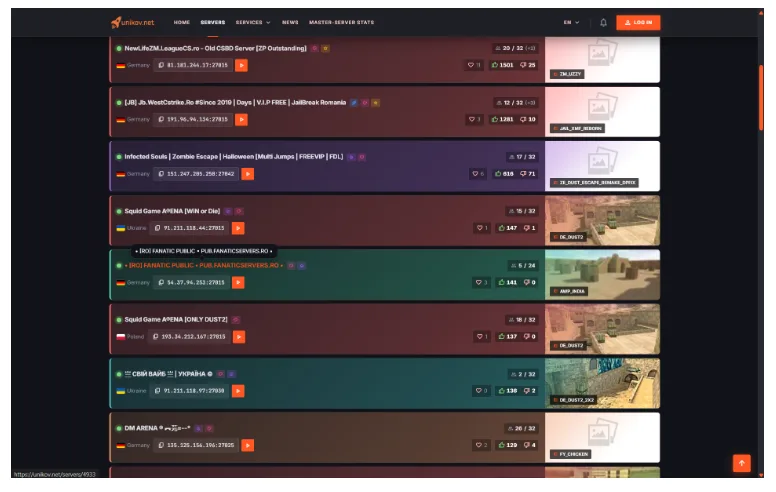
The map shapes the round more than people admit, and a few of them carry most of the game.
If you like tactical team play, look for de_dust2, de_inferno, de_nuke and de_train. Dust2 is the easiest to learn. Inferno rewards patience and good grenades. Nuke is a vertical puzzle that takes weeks to understand. Train is about holding angles and trading kills.
If you prefer fast, aggressive rounds, try cs_italy, cs_office and de_aztec. The corridors are tight and fights happen right away. Office is famous for turning ten strangers into an instant brawl.
Sniper fans should look for awp_map and awp_india, where sight lines are long and every shot echoes across the map.
And if you just want to train your aim, aim_map and fy_pool_day leave nothing between you and your opponent except skill.
Check the map list before you join, if the server shows it. Fifteen maps in a sensible rotation usually mean an admin who cares. One map on repeat can be a deliberate choice, but more often it means the server was forgotten.
Choose a server close to home
Ping is the quiet enemy in every firefight. At 25 ms you hit the shot. At 120 ms you watch it pass through the model you were aiming at.
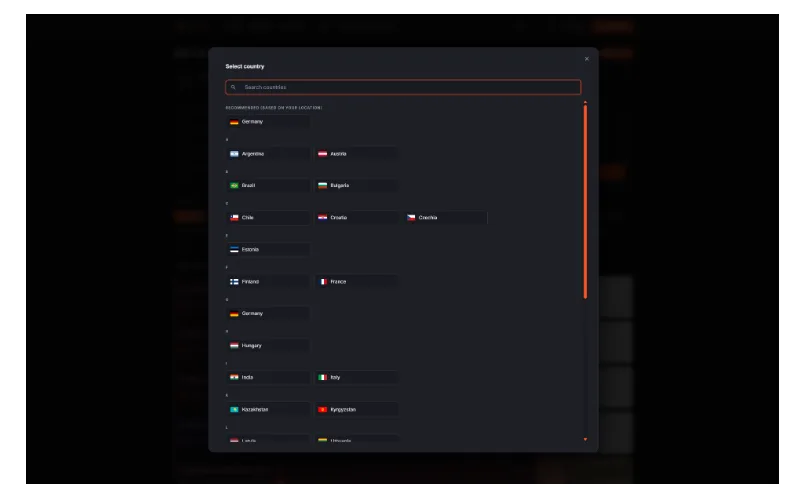
The rule is simple: play on servers in your own country or in neighboring ones. A shorter distance means lower ping and better hit registration. Roughly, under 40 ms feels perfect, up to 70 ms is comfortable for almost everything, up to 100 ms is playable but fast duels start to feel off, and above that you need a good reason to stay, like a favorite community.
Searching manually through the whole planet is painful. On the Unikov service you can sort servers by country and see local ones first. A quick way in is the Servers CS 1.6 search: pick your region and you get a list of live servers near you instead of a wall of random names.
Look at the player count
The online number says more than most players notice.
An empty server is rarely fun. With one or two people you cannot play proper rounds, and you spend the evening waiting. A full server is not great either, because you may queue for a slot and big crowds on small maps turn into noise.
For classic servers, about 10 to 20 players on a 24-slot machine is the sweet spot. Teams are balanced, rounds feel real and you rarely wait. Deathmatch is happiest with 12 to 28 players. Zombie and Jailbreak need a bigger crowd, so 20 to 32 is good. Surf and Bhop work even with 3 to 8 people, since everybody is racing the clock anyway.
Then watch how the players talk. If the chat is full of insults, you will feel it within two rounds. If people say hello and argue about strategy, you have probably found a home.
Spot fake and abandoned servers
Every old game collects tricks, and CS 1.6 has its own. Some servers fake their player count. Some copy the name of a popular community. Others simply vanish after a week. A few run odd scripts you never asked for.
A trustworthy list removes most of this before you ever see it, which is why the source of your list matters. If you are on your own, a few quick checks help. Look at the nicknames: a row of identical names is a bad sign. See whether the map changes on schedule. Write something in chat and see whether anyone, an admin included, answers. And leave right away if the server pushes strange downloads on you or ignores obvious cheating.
Once you land on something good, save it to your favorites straight away. Most players keep three or four: one for serious rounds, one for warm-up, one for fun with friends and a backup for when the others are full. And give any new server two or three rounds before you judge it. If it clicks, stay. If not, close the window, because the next candidate is one refresh away.
Your next round
Finding a good server is not magic. Pick a mod you actually enjoy, make sure the maps match your style, stay close to home for low ping, look for a lively but not crowded server, and trust lists that keep fakes out. Do that a couple of times and the chaotic browser turns into a short menu of real options.
So open the Servers CS 1.6 search, choose your country and jump into a server with a few dozen players. If you want a steady place to come back to, keep Boost CS 1.6 in your bookmarks. The old game is still waiting, the rounds are still addictive, and a free slot with your name on it is probably open right now.