How Robotic Palletizers Improve Packaging and Production
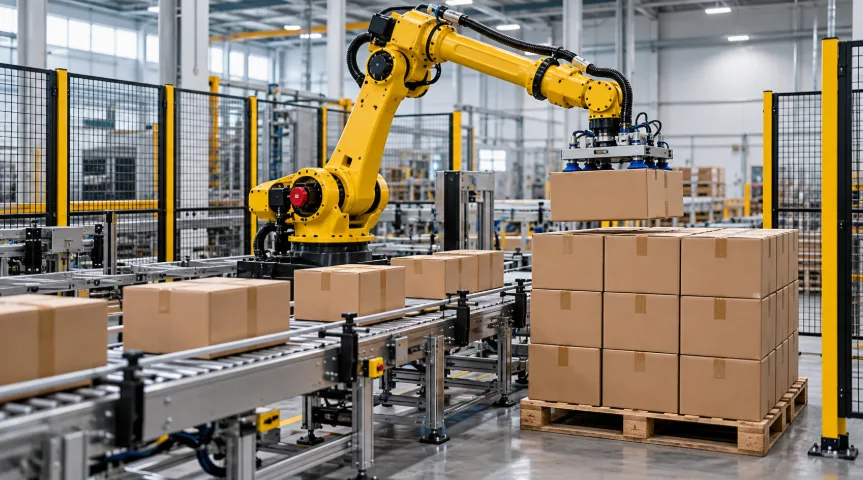
Packaging is an important part of every manufacturing business. Products must be packed, stacked, and prepared for delivery before they reach customers. However, these tasks can take time when workers handle every step by hand.
As production needs grow, manual packaging can become harder to manage. It may also lead to uneven stacking, product damage, and delays. Therefore, many manufacturers are turning to robotic automation to make their work easier.
Robotic palletizers help businesses move products from packaging lines to pallets with greater consistency. They can handle boxes, bags, bottles, and other packaged goods. When connected with conveyors and packing equipment, these machines can also support a smoother production process.
What Are Robotic Palletizers?
Robotic palletizers are automated machines that pick up finished packages and arrange them on pallets. They use programmed movements and special gripping tools to place products in the required positions.
Unlike manual stacking, these systems can repeat the same movements throughout a production shift. As a result, businesses can maintain more consistent pallet patterns and reduce the physical effort required from workers.
The system can also be adjusted to handle different package sizes and stacking patterns. This makes it useful for factories that produce several products on the same line.
Common Applications
Robotic palletizers are used in many industries, including:
- Food and beverages: Stacking cartons, bottles, and packaged food products.
- Household chemicals: Handling boxes and bags containing cleaning products.
- Building materials: Moving heavy bags and packaged construction supplies.
- Furniture and logistics: Arranging large packages for storage and transport.
Each application has different handling needs. Therefore, the equipment must match the product’s weight, shape, and packaging type.
How Robotic Packaging Solutions Improve Efficiency
Packaging involves more than placing products in boxes. It also includes moving goods between machines, arranging packages, and preparing finished products for storage or shipping.
Modern robotic packaging solutions can connect these steps into one coordinated process. For example, a conveyor can deliver finished cartons to a robotic arm. The robot then picks up each carton and places it in a case or on a pallet.
This setup reduces the need for repeated manual handling. It can also help manufacturers manage busy production periods more easily.
Key Benefits of Packaging Automation
- Consistent results: Robots follow programmed patterns to help maintain uniform packing and stacking.
- Less manual lifting: Workers can spend less time moving heavy or repetitive loads.
- Better workflow: Automated equipment can reduce delays between packaging and palletizing.
- Flexible production: Suitable systems can switch between different package sizes and product types.
- Improved space use: Well-planned pallet patterns can help make storage and transport more efficient.
However, the actual results depend on the equipment, product type, production speed, and factory layout.
Choosing the Right Robotic Palletizing System
Not every factory needs the same type of automation. A food producer handling small cartons has different requirements from a building materials company stacking heavy bags.
Before choosing a system, manufacturers should review their current packaging process. They should also consider future production needs.
Factors to Consider
- Product weight and size
The robot must safely handle the heaviest products in the production line. Its gripping tool should also suit the shape and material of each package.
- Required production speed
Businesses should estimate how many packages need to be handled each minute or hour. This helps them choose equipment that can meet production targets without creating new bottlenecks.
- Available factory space
The system must fit within the existing layout. Conveyors, safety barriers, pallet areas, and operator access should all be considered during planning.
- Product variety
Factories that handle several product types may need adjustable gripping tools and flexible pallet patterns. Therefore, it is important to check how easily the system can change between products.
- Maintenance and support
Regular maintenance helps keep equipment working reliably. Manufacturers should ask about spare parts, operator training, technical support, and service arrangements before making a purchase.
Why Integration Matters in Packaging Automation
Installing a robot is only one part of an effective automation project. The equipment must also work well with the machines around it.
For example, a palletizing system may need to communicate with case packers, conveyors, labeling equipment, and warehouse systems. If these parts do not work together properly, production delays can still occur.
An experienced robotic palletizer manufacturer can help assess these needs and recommend a suitable setup. The goal is to create a system that fits the factory’s actual workflow rather than adding equipment without a clear purpose.
Integration is especially useful for small and medium-sized manufacturers. A practical system can start with one process and expand as production needs change.
The Role of Robotic Automation in Modern Factories
Industrial automation continues to grow across manufacturing. According to the International Federation of Robotics, approximately 542,000 industrial robots were installed worldwide in 2024. The number of industrial robots operating in factories reached about 4.66 million that year.
These figures show the growing use of robotics across industrial operations. However, they cover industrial robots in general, not palletizing systems alone.
For manufacturers, the main lesson is simple: automation is becoming an important part of modern production. Still, the right investment depends on business needs, operating costs, and expected benefits.
How to Get More Value from Automation
Businesses can improve the value of an automation project by planning carefully before installation.
First, identify the tasks that cause the most delays or require the most physical effort. Next, measure current production rates and error levels. These figures provide a useful starting point for evaluating future performance.
It is also important to train employees to operate and monitor the new equipment. Although robots can handle repetitive tasks, workers remain essential for quality checks, maintenance, troubleshooting, and production planning.
Finally, review the system after installation. Tracking output, downtime, maintenance costs, and product damage can help managers identify areas for improvement.
Conclusion
Robotic palletizing can help manufacturers improve packaging consistency, reduce repetitive manual work, and create a more organized production process. When combined with suitable conveyors and packing equipment, it can also support better material flow from the production line to the warehouse.
The best results come from choosing equipment that matches the products, available space, and production goals. Businesses should also consider maintenance, staff training, and future expansion before investing.
With careful planning, robotic palletizers can become a useful part of a wider automation strategy. Manufacturers looking to improve their end-of-line operations can explore integrated robotic packaging solutions that suit their current needs and allow room for future growth.