Before Buying a Used Excavator or Loader, Check the Paperwork Behind the Machine
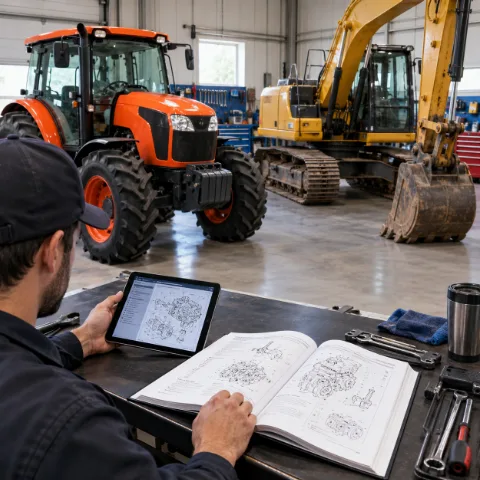
A used excavator or loader can really advance their business without taking the additional financial risk of having to purchase new, pricier equipment and gear, for a small construction firm or employment contractor. But don’t assume that a machine is as it has been portrayed. It’s possible that what appears to be clean and in good working order upon initial showing has in fact had an unknown number of repairs, parts changes or even its own set of maintenance problems.
It is for this reason that it is crucial to always check equipment documentation when buying gear. Completed service records, repair invoices, identification records and technical manuals will assist a buyer in comprehending how the machine has been maintained and what servicing it may require in the future.
While there is no guarantee that a used machine is reliable only because of the paperwork, it may instead help the buyer ask better questions, understand if there are things missing in the documentation or prepare for the potential for maintenance expenses. When combined with a professional inspection, a thorough document review can aid in making the more informed purchase. A repair-documentation catalog such as Byte Market is one example of a source buyers can check when looking for equipment-related manuals and technical documents.
1: Verify the Equipment’s Identification Details
Check the maintenance record before reviewing; only after checking, if you are unsure of the excavator or loader’s identity. Even if the model names seem the same, machines from the same manufacturer can be of different specifications and have different engine options and configurations. Correct replacement parts and servicing procedures may differ, depending on this.
Look first for the manufacturer’s name, model number, and serial number. Typically, the identification plate is found on the machine’s frame or other specified area. Compare these details with the information provided in the seller’s documents.
Important identification details include:
- Model number: Verifies machine model and, if applicable, its variant.
- Serial number: Each machine may have a serial number for identification purposes and for the selection of the appropriate technical documents
- Engine details: Engine manufacturer, model, and serial number. Filters, fluids, and maintenance may vary from engine to engine.
- Modifications and replacements: Ask if large components have been changed or if the machine has been changed from its factory settings.
Correct identification is particularly crucial when you are looking to get a repair manual or parts book from a workshop manual. Different specifications or diagrams may be contained in a document designed for a similar machine.
Ask questions if there is damage, lack, or discrepancies to the identification plate versus the papers. If needed, let someone qualified (such as an equipment supplier) double-check information before doing so.
2. Review the Maintenance History and Repair Records
The history of machine maintenance may provide clues to the treatment of machines by previous owners. Records can indicate when routine service was provided, what the service covered, and if there were issues with any mechanical components that were addressed.
Request any services logs or maintenance schedules, repair bills and records of component replacement from the seller. The records could be issued by an authorized dealer, independent workshop, or from the previous owner, depending upon the machine’s age and ownership records.
What Should Buyers Check?
Oil changes, filter changes, coolant changes, hydraulic system maintenance, and routine inspections are some examples of service completed that may be recorded in the service records. Check service dates and hours of operation and see if there is consistency in the maintenance history.
A repair invoice is more detailed and descriptive of past warranty issues and what work was performed. An invoice may include such items as replacement of a hydraulic hose, electrical repairs, engine or transmission repairs.
In particular, major component replacement should be inspected. Hydraulic pumps, travel motors, final drives, undercarriage, transmissions or engines may need repairs for excavators and loaders. Inquire about the date of replacement/repair, the reason for the repair, and if supporting invoices or workshop reports are available.
A replacement does not guarantee that the building is poorly maintained. It can be a component whose service life is expiring or because of operating conditions, as it has failed. Whether it was a suitable repair and whether the current state is suitable to uphold the seller’s claims is key.
Missing Records Do Not Automatically Mean Poor Condition
Nothing can be assumed if records are missing; they do not mean that they are poor. Previously owned equipment can have had its share of owners, and not all owners will maintain thorough service records. There may have been some routine maintenance that was done without a written record by a non-deal staff member. There may be some maintenance work that was done by dealer mechanics, but not documented.
So, the absence of records is insufficient evidence that a machine is neglected. Instead, they reveal that its history is tainted in some ways.
Fill in missing information by inquiring of the seller on the following: known repairs, past operating conditions, maintenance and recurring faults. Where there is supporting evidence, look for that, and when there is no paper evidence, schedule an independent inspection to verify areas.
3. Understand the Different Types of Equipment Manuals
There are many different purposes for documentation of equipment. Maintenance Record describes work performed, Technical Manuals: Instructions or information needed to operate, service, make repairs and identify machine components.
The operator’s handbook, the workshop or service handbook, and the parts catalog are the three basic types of documents that buyers should be familiar with.
Document type Main purpose Typical contents
- Operator’s manual: Explains safe operation and routine checks Controls, safety instructions, operating procedures, daily inspections, basic maintenance
- Workshop/service manual: Supports servicing, troubleshooting, and repairs Technical specifications, service procedures, adjustment instructions, diagnostic steps, electrical and hydraulic diagrams
- Parts catalog: Helps identify the correct replacement components Part numbers, exploded diagrams, component illustrations, assembly breakdowns
Operator’s Manual
Most operator’s manuals are created to instruct the individual using the machine. It demonstrates the function of controls and how to follow safe procedures, start and stop the apparatus, and conduct routine checks.
This can consist of simple maintenance guidelines like checking fluids and examining elements that are visible. Generally speaking, however, it does not offer prescribed methods for mechanical repairs, except those which are of a relatively simple nature.
Workshop or Service Manual
A repair or service manual is designed for obvious maintenance and repair work for technicians or mechanics. It can include torque limits, hydraulic pressures, diagnostic steps, electrical diagrams, and disassembly and adjustment instructions, among other items—model dependent.
This manual is available for reference in servicing and problem identification, for future reference. Technicians don’t need to follow general instructions: they may follow procedures specific to a given model.
Parts Catalog
The parts catalog is a document that provides information about various parts and their corresponding part numbers, aiding buyers, owners, and technicians in identifying the parts and their correct part numbers. Below are a few diagrams showing how its individual parts fit together to make up a larger assembly.
This can help to decrease ordering mistakes for controls, seals, pins, bushings, hoses or extensive replacement parts. But a parts catalogue is not generally a substitute for a workshop manual; there is a world of difference between finding parts and fixing the system.
4. Check Manual Compatibility Before Using It
It’s not sufficient to just find a manual that is named after the correct manufacturer. A document that would be suitable for another, similar model, may not be appropriate for the machine to be bought.
Don’t depend on the technical documentation until you check its model coverage, available serial-number range, configuration, and quality.
Confirm the Serial-Number Range
Sometimes manufacturers change parts in the course of a model’s production run. Here are some changes that can impact engine systems, hydraulic components, electrical wiring, filters, and repair procedures.
Look at the manual and determine if a manufacturing time or serial number range is given. Use that information to compare against the identification plate of the machine. If a document applies to several versions, check which procedures and/or specifications are relevant to the respective unit.
If the range is not apparent, contact the manufacturer, an authorized dealer or a qualified technician to confirm.
Check Configuration and System Coverage
A variety of engines, hydraulic systems, attachments, and optionals may be used in a machine. The manual for the standard model may not describe all the systems that might be installed on a specific system.
Verify cover of the relevant engine/configuration. If modified, determine if the original documentation is still suitable for modified components.
Ensure that the manual contains the desired parts as well. A book can be written to handle a range of servicing tasks without including the information on diagrams and procedures needed for a specific repair.
Examine the Quality of Diagrams and Instructions
Technical Documentation is nothing unless it is readable and comprehensible. Not having the relevant pages or labels, or the diagram being drawn in an unclear manner, can complicate servicing.
Ensure that wiring diagrams, hydraulic plans, tables, and technical information is clear. If digital manuals are used, make the necessary modifications to make labels and symbols easier to read. If it’s a paper copyright, check for any missing pages or parts of the form.
Of course, a full and legible user’s manual is better than a similar-sounding one.
5. Finding Suitable Manuals and Repair Documentation
Equipment manuals are available from any manufacturer, authorized dealer, independent equipment specialist, and/or technical-documentation catalog. The best source will be based on the age, maker, model, and document needed for the machine.
You can search by the complete model number and, if applicable, the model range or the engine model to get the desired results. Sidero the sort of document (operator’s manual, workshop manual, service manual, parts catalog, and so on).
Before using a document, confirm that it includes required systems, readable diagrams, and comprehensive instructions. If it is not possible to make a match, ask the manufacturer or a qualified equipment professional to confirm.
6. Use Documentation to Plan Future Maintenance
When shopping for a house, review the paperwork before you buy to help prepare owners for any future services and to get a good idea of what other maintenance might be needed. For instance, it can be seen on service records when filters were last changed or if they have recently been repaired on major components.
With the help of the relevant service manual select the maintenance procedure and frequency suggestion for the specific machine.
Thereafter, a maintenance file is produced containing Identification data; Service records; Repair bills; Information on component replacement information; Appropriate technical manuals.
Then document each date of service, operating-hour meter reading, service problem and replacement item after you have sold the vehicle. Maintaining these records in an organized manner will enable him to keep track of recurring issues, estimate maintenance costs and give the technicians accurate information about the incidents.
Documented maintenance, however, does not ensure that the component is in good condition. Quality of previous repairs, operating conditions after repair and present machine condition should also be taken into consideration.
7. Pre-Purchase Documentation Checklist
This quick checklist will help you to determine who the important information and questions are before agreeing to purchase a used excavator or loader.
- Verify the model, serial number, engine and configuration.
- Match the identification plate with the seller’s documents.
- Check up on maintenance records and repair charges.
- Ask questions regarding any major parts that would need to be replaced and any common mechanical issues.
- Acknowledge lack of information in service history – just because it is not there, do not assume it is a neglect case.
- Examine catalogs and manuals available.
- Check the manual for compatibility of model, range of serial numbers, and configuration.
- Ensure that appropriate drawings, documents, and instructions are viable and clear.
- Document maintenance issues and inquiries that need to be addressed.
Have a professional inspection prior to a closing.
If there are items that cannot be confirmed, inquire of the seller and take into account that there may be a risk.
Conclusion
Reviewing used excavator paperwork and/or loader paperwork offers buyers a way to identify the machine, access maintenance records, and schedule future maintenance. Service records and repair invoices contain information about previous maintenance and parts replacement, and identification details can be used to identify what equipment is being bought.
An operator’s manual, a workshop manual, and parts catalog are all different kinds of manuals written by various manufacturers and are, therefore, very useful for the buyer to know the differences since the information they contain is for different purposes: operation, repair, and replacement parts. However, in each manual, only the compatibility range for the model and serial number of the machine, configuration and technical requirements should be checked.