Reulex: A Complete Guide to Collagen Supplements
Collagen has become one of the most widely discussed ingredients in the supplement industry, particularly in conversations about skin health, joint function, and healthy ageing. However, its popularity does not mean that every collagen product has the same formulation or guarantees the same results. Understanding what collagen does, how supplements are processed, and what scientific research actually suggests can help consumers make more informed decisions.
This guide explores the role of collagen in the body, its main types, potential benefits, and important considerations when choosing a supplement. It also examines Reulex from an informational perspective, without treating supplement claims as guaranteed outcomes.
What Is Collagen and Why Is It Important for the Body?
Collagen is a structural protein naturally produced by the human body. It is an essential component of the extracellular matrix, a network that provides structure and support to different tissues. Collagen is found in the skin, bones, tendons, ligaments, and cartilage. It helps these tissues maintain their structure, strength, and flexibility. Although several types of collagen exist, they do not all perform identical functions. Each type contributes to the organisation and maintenance of particular tissues, working alongside other proteins and biological components.
The body’s natural collagen production changes with age. Sun exposure, smoking, dietary habits, and other lifestyle factors can also influence skin condition and connective tissue health. These changes help explain why collagen supplements have attracted so much attention. However, taking a supplement does not automatically reverse ageing or compensate for unhealthy habits. The body requires a varied diet to obtain the amino acids, vitamins, and minerals involved in normal protein production. Understanding this broader role is important before considering collagen supplementation.
How Does a Collagen Supplement Work in the Body?
Many collagen supplements contain hydrolysed collagen, also known as collagen peptides. During hydrolysis, larger collagen proteins are broken down into smaller fragments. After consumption, the digestive system further processes these peptides into amino acids and smaller peptide components that can enter the bloodstream. The body then uses these components according to its needs. They are not automatically transported to a specific area, such as the skin, knees, or joints, simply because the supplement is marketed for that purpose.
For this reason, it is more accurate to describe collagen supplements as sources of peptides and amino acids rather than products that directly rebuild particular tissues. Individual responses may depend on the formulation, serving size, overall diet, and personal characteristics. Research studies also use different collagen sources, doses, and testing periods, making direct comparisons difficult. Before choosing a supplement, consumers should check whether the label identifies the collagen form, its quantity per serving, and the recommended daily intake.
What Are the Main Types of Collagen?
Scientists have identified numerous collagen types, but Types I, II, and III are among the most commonly discussed in relation to human health. Type I is abundant in the skin, bones, and tendons, where it contributes to structural strength. Type II is primarily associated with cartilage, while Type III is found in the skin, blood vessels, and several other tissues. These differences explain why collagen types are often discussed separately. However, their natural distribution does not independently determine which supplement is most suitable for an individual.
| Collagen Type | Main Location | Primary Structural Role |
| Type I | Skin, bones, and tendons | Strength and structural support |
| Type II | Cartilage | Cartilage structure |
| Type III | Skin, blood vessels, and other tissues | Support for soft tissues |
The source of collagen is another important consideration. Supplements may use bovine, marine, porcine, or poultry-derived ingredients. People with food allergies or dietary restrictions should check the source carefully before purchasing a product. The presence of a particular collagen type does not, by itself, establish product quality. Consumers should also consider the amount per serving, ingredient processing, manufacturing information, and whether the manufacturer provides reliable details about the raw materials.
What Potential Benefits of Collagen Are Supported by Research?
Researchers have investigated collagen supplementation in connection with skin hydration, elasticity, the appearance of wrinkles, and certain joint-related outcomes. Some clinical studies have reported improvements in selected measurements, but the findings are not consistent across all research. Differences in study design, participant characteristics, collagen sources, and serving sizes make the evidence difficult to interpret as a single conclusion. It is therefore important to distinguish between possible benefits observed in specific studies and outcomes that can be confidently expected from every collagen supplement.
Research has also explored whether collagen supplements may influence joint discomfort and physical function. However, results from one formulation or participant group cannot automatically be applied to every product. When evaluating a study, readers should consider its sample size, duration, comparison group, funding, and potential conflicts of interest. A supplement should not be presented as a treatment for arthritis, chronic pain, or other medical conditions without appropriate evidence. Collagen products also do not replace prescribed treatment, rehabilitation, regular physical activity, or a balanced diet.
How Can You Choose a Collagen Supplement Carefully?
Reading the product label is one of the most practical steps when comparing collagen supplements. A transparent label should identify the collagen source, form, amount per serving, serving size, and complete ingredient list. If the formula includes vitamins, minerals, sweeteners, or other active ingredients, their quantities should also be clearly stated. Vague descriptions such as “advanced formula” are not enough to establish quality. Clear product information helps consumers compare formulations and identify ingredients that may conflict with allergies, dietary preferences, or personal requirements.
Before purchasing, consider the following points:
- Composition: Check the collagen source, type, quantity, and additional ingredients.
- Quality information: Look for details about the manufacturer, production standards, and relevant quality testing.
- Usage instructions: Review the serving size, recommended intake, warnings, storage instructions, and expiry date.
- Realistic expectations: Be cautious of claims promising immediate results, guaranteed outcomes, or cures.
It is also useful to compare the amount of collagen per serving and the number of servings in each container rather than looking only at the package price. Quality certifications, laboratory reports, and regulatory approvals are not interchangeable. Consumers should check which organisation issued a certification and what the relevant test actually evaluates. A higher price or more elaborate packaging does not automatically indicate a more effective supplement.
Reulex Collagen Supplement: Ingredients and Important Considerations
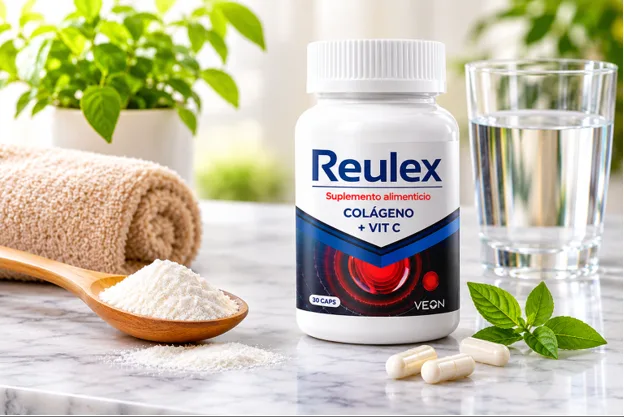
Evaluate Reulex using the information on its current product packaging and official product materials. The product bottle shown identifies Reulex as a dietary supplement containing collagen and vitamin C. Its packaging also indicates a container of 30 capsules. These details help identify the product’s stated composition and presentation, but they do not establish the precise amount of collagen or vitamin C in each capsule. Confirm those quantities from the full ingredient list or official product information before concluding the formulation.
Consumers interested in the product can review Reulex Precio and compare the available product details with the information printed on the packaging. Particular attention should be given to the amount of collagen per serving, the quantity of vitamin C, other ingredients, recommended intake, and any warnings. The presence of collagen and vitamin C does not, by itself, prove that the finished product has been clinically tested for specific skin or joint outcomes. Any published laboratory analysis or product-specific research should be checked for its date, scope, and responsible organisation.
What Precautions Should You Consider Before Taking Collagen?
Collagen supplements are generally tolerated by many users, but side effects can occur. Some people may experience digestive discomfort, nausea, a feeling of fullness, or changes in bowel habits. Allergic reactions are another consideration, depending on the source of the collagen and the other ingredients in the formula. Marine collagen products, for example, require particular attention from people with fish allergies. Consumers should read the complete label rather than assuming that a product is suitable simply because it is marketed as natural.
Some groups should take additional care before using collagen supplements:
- People with allergies: Check the collagen source and all additional ingredients.
- People taking medication: Ask a healthcare professional whether the supplement is appropriate alongside existing medicines.
- Pregnant or breastfeeding individuals: Seek professional guidance before starting supplementation.
- People experiencing unexpected symptoms: Stop using the product and seek appropriate medical advice.
People with diagnosed medical conditions or medically prescribed diets should also consult a qualified healthcare professional before adding a supplement to their routine. Increasing the serving size beyond the manufacturer’s instructions is not a reliable way to achieve better results. Collagen supplements should be viewed as optional additions to an overall health routine, not replacements for a varied diet, appropriate medical care, or prescribed treatment.
Conclusion
Collagen plays an important structural role in the skin, bones, cartilage, tendons, and other connective tissues. However, choosing a collagen supplement requires more than following a popular trend. Consumers should understand the formulation, review the available scientific evidence, and consider their individual needs before starting supplementation. Products can differ in their collagen sources, ingredient quantities, and supporting information, so careful label evaluation and realistic expectations are essential.
Reulex, like any other dietary supplement, should be assessed according to its ingredients, serving instructions, and available product information. CVM Group encourages readers to consult reliable sources and make informed decisions with guidance from qualified healthcare professionals.
Frequently Asked Questions
1. What Is a Collagen Supplement Used For?
Collagen supplements provide peptides and amino acids that the body can use in its normal functions. Research has explored their potential relationship with skin condition and joint health, although results are not guaranteed for every user or product.
2. What Potential Benefits Can Collagen Have for the Skin?
Some studies suggest that collagen supplementation may support improvements in skin hydration and elasticity. However, research findings vary, and further high-quality studies are needed to establish how reliable these effects are.
3. What Is the Difference Between Hydrolysed Collagen and Other Collagen Types?
Hydrolysed collagen is processed into smaller peptides to make it easier to digest. Types I, II, and III refer to different structural forms of collagen naturally found in the body.
4. What Ingredients Does Reulex Contain?
The product packaging identifies collagen and vitamin C as its main stated ingredients. Consumers should check the current label or official product information for exact quantities, additional components, and recommended serving instructions.
5. What Precautions Should Be Taken Before Using Collagen?
Review the ingredient list, possible allergens, and usage instructions before taking a collagen supplement. People taking medication, managing a medical condition, or who are pregnant or breastfeeding should consult a healthcare professional first.