PNW Exterior Paint Lifespan and Maintenance
HELLO Painting
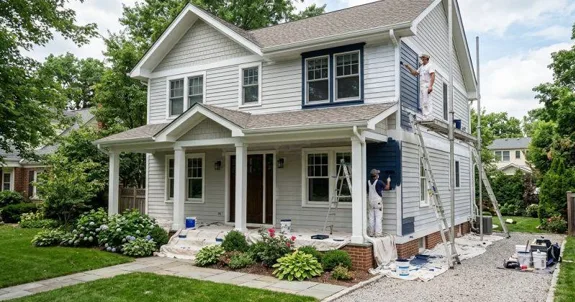
Illustrative stock image — not a photo of HELLO Painting’s actual project.
Introduction
A freshly painted house looks crisp and clean for a while, and then the Pacific Northwest weather starts its slow work. Rain, damp mornings, moss, and long stretches of gray skies all test an exterior finish in ways that drier climates do not. Homeowners in the Bellevue area often ask the same question after a paint job: how long should this actually last, and what can I do to help it last longer?
The honest answer is that there is no single lifespan that fits every house. Siding material, sun and shade, drainage, and the quality of the preparation all matter as much as the paint itself. Companies such as HELLO Painting work on exteriors across the region, and the homes that hold up best tend to share one thing: the finish was treated as a system, not just a coat of color.
This article explains what wears exterior paint down in the Pacific Northwest, which warning signs are worth acting on, and what kind of routine care makes a real difference. It will not promise a fixed number of years, because any honest estimate has to start with the condition of your own home.
Why Pacific Northwest Weather Is Hard on Paint
Moisture is the main challenge. Rain does not just fall on a house; it lingers. Water collects on flat trim, sits in joints and end grain, and seeps behind boards where flashing or caulking has failed. When wood stays damp, paint loses its grip, and the surface underneath can start to soften and swell.
Shade makes the problem worse. North-facing walls and areas under trees dry slowly, which encourages moss, algae, and mildew. Those growths are not only unsightly. They trap more moisture against the surface and can stain a finish long before the paint itself has worn out. Sun causes a different kind of wear, breaking down the surface on south- and west-facing walls and fading darker colors faster.
Temperature swings add movement. Wood expands and contracts as it gets wet and dries out, and that movement opens small cracks at joints and around windows and doors. Once a crack opens, water has an easy path in, and the cycle repeats. That is why a small failure at a single joint can matter more than a faded wall that still sheds water well.
What Affects How Long a Finish Lasts
Preparation is the factor homeowners control least and benefit from most. A surface that is cleaned, scraped, sanded where needed, primed where bare wood is exposed, and properly caulked will hold paint far better than a surface that was simply painted over. When you are getting an exterior paint job that holds up in wet weather, ask how the crew plans to handle peeling areas, failed caulk, and spots where water has been getting in, because those answers tell you more than the color chart will.
The siding itself also matters. Smooth, well-sealed surfaces tend to shed water cleanly, while rough or already damaged wood gives moisture more places to hide. Previous paint layers matter too. Thick, brittle layers over old paint can crack and peel in sheets, while a thinner, well-bonded system flexes with the wood. A good painter will point out these conditions before work starts rather than discovering them halfway through.
Drainage and vegetation deserve attention as well. Gutters that overflow, downspouts that dump water near the foundation, and shrubs pressed against siding all keep walls wet. Fixing those issues is not painting work, but it protects painting work. Trimming plants back so air can move around the house is one of the simplest and most effective things a homeowner can do.
Warning Signs Worth Acting On
Peeling and blistering are the clearest signals that moisture is getting behind the paint. A few small spots near a window or a deck connection may only need spot repair, but widespread peeling usually means the system has failed in that area and needs proper preparation before repainting. Painting over active peeling without fixing the cause only buys a short time.
Look for chalking, too. If you rub a wall and a powdery residue comes off on your hand, the surface coating is breaking down. Light chalking can sometimes be washed and recoated, but heavy chalking means the old finish is no longer a sound base. Cracking along joints, gaps in caulk, and dark staining under eaves or around trim are other early warnings that water is finding its way in.
Check the places you rarely look. The bottom edges of siding near the ground, the undersides of window sills, and the trim around hose bibs and vents all collect water and stay damp. Catching softness or discoloration in those spots early keeps a small repair from becoming a larger siding or trim replacement later.
A Practical Maintenance Routine
A gentle wash once a year removes dirt, pollen, and the beginnings of moss and mildew before they take hold. Use a garden hose and a soft brush or a low-pressure wash, and work from the top down. High pressure can force water behind siding and damage the finish, so it is better to be patient than aggressive. Pay special attention to shaded walls and areas under trees.
Walk the house each spring and fall with fresh eyes. Look for failed caulk, cracked joints, and paint that is lifting at edges. Touching up caulk and small damaged spots promptly is far easier than repainting a whole wall later. Keep soil, mulch, and stored items away from siding so the bottom courses can dry, and make sure sprinklers are not spraying the house every day.
Plan repainting around condition, not the calendar alone. A shaded, damp wall may need attention sooner than a sheltered, sunny one, even on the same house. Repainting one elevation that has worn out, while leaving sound elevations alone, is often the sensible choice. The goal is to protect the wood, not to repaint on a schedule for its own sake.
Conclusion
Exterior paint in the Pacific Northwest does not fail all at once, and it does not fail for one reason. Moisture, shade, sun, movement, and preparation all interact, and the homes that look good longest are usually the ones whose owners catch small problems early and keep water moving away from the walls. A yearly wash, a seasonal walk-around, and prompt attention to caulk and peeling spots will do more for your finish than any single product choice.
If your paint is peeling widely, if wood feels soft, or if you are unsure whether a wall needs spot repair or a full repaint, get an in-person assessment before deciding. A clear-eyed look at the siding, the joints, and the drainage around the house is what turns a paint job from a cosmetic refresh into lasting protection.