Norway’s Greatest Winter Olympians: The Legends Who Defined a Nation
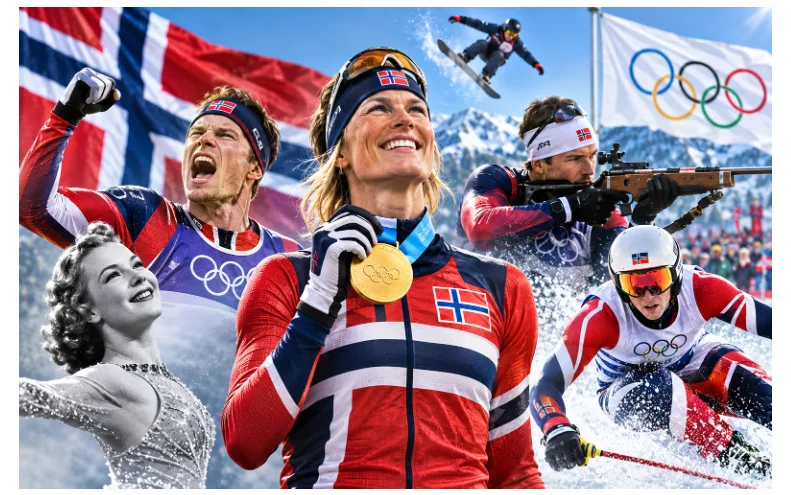
Norway has a population smaller than many big cities. Yet when the Winter Olympics come around, it regularly finishes at or near the top of the medal table, ahead of countries with fifty times as many people. It’s one of the strangest and most impressive stories in world sport.
Behind that success are individual athletes who became national heroes. Some of them won so much that their names are still used as a standard for greatness. Others won just once, but at a moment the whole country remembers. Here’s a look at the legends who shaped Norway’s winter sports identity, and why the country keeps producing them.
Why Norway Dominates Winter Sports
There’s a saying in Norway that people are “born with skis on their feet.” It’s an exaggeration, but not by much. Children learn to ski almost as soon as they can walk, and cross-country trails run right through towns and suburbs. In Oslo, you can take the metro to the forest and ski for hours.
The sports system also plays a big role. Local clubs run most of the youth activity, and the focus in the early years is on joy and taking part rather than winning. Kids aren’t ranked or pushed into one sport too soon. The Norwegian Ski Federation builds on that wide base, bringing talented athletes into structured programmes once they’re older.
Add strong funding, good coaching, a culture that respects outdoor life, and a public that genuinely cares about results, and you get a country that keeps punching far above its weight. Norway set a record with 39 medals at PyeongChang 2018 and then topped the table again at Beijing 2022 with 16 golds.
Sonja Henie: The First Global Star
Long before skiing heroes filled the headlines, a young figure skater from Oslo made Norway famous around the world. Sonja Henie won Olympic gold in 1928, 1932 and 1936, and she did it with a style that changed figure skating forever. She brought dance into the sport, wore shorter skirts that let her move freely, and turned skating into a show.
After her competitive career, she moved to Hollywood and became a film star. In many ways she was Norway’s first international celebrity, decades before anyone had heard of social media.
Cross-Country Skiing Icons
If one sport belongs to Norway, it’s cross-country skiing. It’s where the country has won the most Olympic medals and where its biggest heroes come from.
Bjørn Dæhlie
In the 1990s, Bjørn Dæhlie was close to unbeatable. He won eight Olympic gold medals and twelve medals in total across three Games. The 1994 Lillehammer Olympics, held on home snow, made him a national icon. For many Norwegians of that generation, Dæhlie was the definition of an athlete.
Marit Bjørgen
Marit Bjørgen took that legacy even further. Over five Olympic Games she collected 15 medals, including eight golds, making her one of the most decorated Winter Olympians of all time. She was famous for her strength, her consistency and her ability to win in almost any distance or style. Her final Olympic race, the 30 km at PyeongChang 2018, ended with gold. Not a bad way to say goodbye.
Petter Northug
Petter Northug was a different kind of star. Loud, confident and often controversial, he had a famous finishing sprint that broke opponents’ hearts. He won two golds at the 2010 Vancouver Olympics and a long list of world championship titles. Fans either loved him or loved to complain about him, but almost nobody ignored him. His life after skiing, with TV appearances and a dance show, has kept him in the public eye.
Johannes Høsflot Klæbo
The modern face of the sport is Johannes Høsflot Klæbo from Trondheim. Fast, technical and incredibly hard to beat in a sprint, he has built a medal collection that puts him in the same conversation as Dæhlie and Bjørgen. He also represents a new kind of skier, one who grew up with social media and shares his training and life with a huge online audience.
Biathlon and Alpine Legends
Cross-country isn’t the only story. Norway has also produced some of the greatest names in biathlon and alpine skiing.
Ole Einar Bjørndalen is often called “the king of biathlon,” and the title fits. He won eight Olympic gold medals and 13 medals overall, competing at a top level for more than two decades. His mix of skiing power and calm shooting set the standard for the sport.
In alpine skiing, Kjetil André Aamodt won four Olympic golds and eight medals in total, the most ever by a male alpine skier. Lasse Kjus and Aksel Lund Svindal also became household names, and more recently a new generation has kept the tradition going on the World Cup tour, which you can follow through the International Ski and Snowboard Federation (FIS).
Late Bloomers and Surprise Gold Medals
Not every Olympic hero follows a straight line from junior talent to champion. Some of the best stories come from athletes who peaked late or came from outside the spotlight.
Astrid Øyre Slind is a great example. For years she was known more as a long-distance specialist and as part of a skiing family of sisters. Then she reached the very top and won Olympic gold at 38, an age when most cross-country skiers have already retired. Stories like hers remind people that talent can take its time.
The Olympic movement itself has highlighted plenty of these journeys. The official Olympics website regularly features athletes who came back from injuries, changed disciplines or won after years of near misses. Norway has its fair share of those.
New Generation Stars in Freestyle and Big Air
Norway’s winter success isn’t limited to traditional sports anymore. Freestyle skiing and snowboarding have brought in younger fans and a more relaxed, creative style.
Birk Ruud became one of the faces of this new era when he won Big Air gold at Beijing 2022. His career has also included serious personal loss, including the death of his father, which he has spoken about openly. Snowboarders like Marcus Kleveland have also helped push the limits of what’s possible in the air.
These athletes appeal to a different audience. They’re active on social media, they work with film crews and brands, and they often talk about creativity and fun as much as winning. It’s a sign that Norwegian winter sport is widening, not just repeating old formulas.
Stories Beyond the Podium
Medal counts only tell part of the story. What makes these athletes so loved in Norway is everything around the results: the injuries, the comebacks, the family support, the rivalries and the lives they build after retiring.
Plenty of fans want to know more than who won. They want to know how an athlete grew up, who they’re married to, what they struggled with and where they ended up. That’s the kind of background found on lekly.no, which publishes long profiles of Norwegian sports stars alongside other well known personalities. It’s a good way to get to know the people behind the bibs and the medal ceremonies.
Those personal stories also explain why Norwegians feel such a strong connection to their winter heroes. The athletes often come from small towns, train on local trails and stay rooted in their communities. When they win, it feels like a shared victory.
Conclusion
From Sonja Henie spinning on the ice in the 1920s to today’s sprinters and Big Air riders, Norway’s Winter Olympians have turned a small nation into a sporting giant. Names like Dæhlie, Bjørgen, Bjørndalen, Aamodt and Northug have become part of the country’s identity, while new stars keep the tradition alive.
The real secret isn’t one training method or one coach. It’s a culture where children ski for fun, clubs support everyone, and the whole nation watches together when the Games begin. As long as that stays true, Norway will keep producing legends, and its fans will keep wanting to know the stories behind them.