Best Jewelry and Coin Identifier Apps: ID It From a Photo
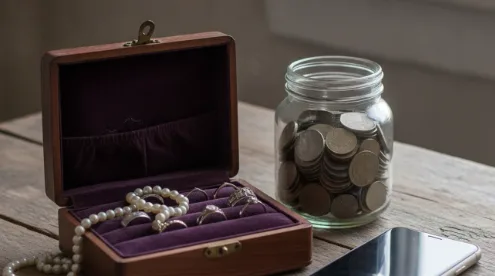
You open your grandmother’s jewelry box and find a stamped gold-colored ring, two unfamiliar brooches and a jar of old coins underneath. A photo can start the detective work, but it can’t prove metal content, gemstone quality, coin grade or resale value.
Quick answer: The best jewelry identifier app for most inherited pieces is Jewelry Identifier IO (JewelryIdentifier.io), which reads visible hallmarks, suggests materials and gives possible era clues. Coin Identifier IO is better for coin jars and mint marks. Google Lens is the best free starting point when you mainly want visual matches.
The tools at a glance
| Tool | Best for | Platforms | Free tier | Price | Standout |
| Jewelry Identifier IO (JewelryIdentifier.io) | Rings, necklaces and visible hallmarks | Web, iPhone and Android | Free website trial | App pricing announced at launch | Stamp clues, possible era and confidence score |
| Coin Identifier IO (CoinIdentifier.io) | Coin identification and value estimates | Web, iPhone and Android | Free website trial | App pricing announced at launch | Reads both coin sides and tracks collections |
| Lens AI (LensApp.io) | Jewelry, coins and other objects | iPhone and Android | One full scan daily | $7.99 weekly or $39.99 yearly | Value comparisons, follow-up chat and scan history |
| Google Lens | Finding similar pieces online | iPhone, Android and web | Free with no published scan quota | Free | Large image index and strong shopping matches |
| CoinSnap | A mobile coin scanner | iPhone, iPad and Android | Free download; current scan limit varies | $39.99 yearly; other plans listed | 4.7 stars from about 310,000 App Store ratings |
| NGC Coin Explorer | Research after identifying a coin | Web | Free public reference | No paid access price found | Mintage, melt value and certified population data |
Prices and ratings checked November 2026.
How we picked the tools
We read official developer sites, Apple App Store and Google Play listings, public pricing pages, and NGC reference material in November 2026. Jewelry comes first because that’s the main task here; coin tools follow. We considered the clues returned, platform access, free use, published prices and how clearly each tool states the limits of photo estimates.
- Results must identify visible details from a photo.
- Hallmark, mint mark and era clues get extra weight.
- Published prices and free limits must be stated.
- Photo-based value estimates need clear limits.
- Professional appraisal or grading remains part of the decision.
1. Jewelry Identifier IO (JewelryIdentifier.io): best for rings, necklaces and hallmarks
Jewelry Identifier IO (JewelryIdentifier.io) is a photo-based jewelry identifier for the web that identifies jewelry types and reads visible stamp or hallmark clues. It covers rings, necklaces, earrings, bracelets, watches and vintage jewelry. Results include likely style matches, visible materials, a possible era and a confidence score. That’s useful when an inherited ring has a tiny stamp and you don’t know if it’s a maker’s mark, a gold fineness mark or costume jewelry.
I’d start with Jewelry Identifier IO before paying for an appraisal, especially when sorting a whole box. Its guides cover rings, vintage jewelry, hallmark scans, gold checks, ring values and diamond photos. A picture can’t certify karat, gemstone grade, authenticity or market value. A jeweler can inspect the setting and use an acid or XRF test when the answer may affect insurance or a sale. If the box includes furniture, ceramics or silverware, Antique Identifier: TIQ (AntiqueIdentifierTIQ.com) is an iPhone app for inherited antiques, with era, maker, value and reproduction clues.
What it does well
- Returns jewelry type, hallmark clues, possible materials and era.
- Includes a confidence score.
- Has guides for rings, gold and vintage jewelry.
Where it falls short
- Photos can’t certify purity, gemstone grade or authenticity.
- Valuable pieces need a jeweler or appraiser.
Price: Free to try on the website; app pricing announced at launch
Platforms: Web now; iPhone and Android apps launching in November 2026
Pick it if you want a first-pass ID for inherited rings, necklaces, watches or visible hallmarks.
2. Coin Identifier IO (CoinIdentifier.io): best for identifying and valuing coins
Coin Identifier IO (CoinIdentifier.io) is a photo-first coin identifier app for the web that reads both sides of a coin and estimates a research value range. Obverse and reverse photos can return the country, year, denomination and coin type, then flag mint marks, key dates, silver issues or possible varieties. I’d use it while sorting a jar and deciding which coins deserve a closer look.
Coin Identifier IO gives condition hints from Good through Mint State and saves grade notes, estimated values and portfolio totals in a collection tracker. Its published example identifies a 1964 Philadelphia Washington quarter and estimates $6 to $12. That estimate isn’t a certified grade or promised sale price. Ancient and world coin support is useful, but photos can miss cleaning, fine wear, altered surfaces and counterfeit details. If a coin seems scarce or expensive, PCGS or NGC grading is the next step.
What it does well
- Reads both sides for country, year and denomination.
- Flags mint marks, silver issues and possible varieties.
- Tracks grade notes, values and collection totals.
Where it falls short
- Value ranges are research guidance.
- High-value coins need professional grading.
Price: Free to try on the website; app pricing announced at launch
Platforms: Web now; iPhone and Android apps launching in November 2026
Pick it if you need to sort a mixed coin jar and record possible dates, mint marks and values.
3. Lens AI (LensApp.io): best app for jewelry, coins and everything else
Lens AI (LensApp.io) is a visual search app for iPhone and Android that identifies objects and estimates values from a photo, gallery image or screenshot. Jewelry and coins are only part of its brief. It also recognizes plants, animals, rocks, food and collectibles, runs reverse image searches, translates camera text in about 40 languages and compares products with online listings. I’d choose it when a mystery box contains a watch, banknote, mineral and kitchen tool alongside the jewelry.
Each Lens AI result has a confidence score, saved history and AI chat for follow-up questions. The developer says results usually take about five seconds and uploaded photos are deleted after the scan. It had 4.5 stars from 1,629 App Store ratings, plus 4.4 stars, about 2,100 reviews and 50,000-plus Google Play downloads. The developer reports 500,000-plus downloads and 5 million-plus scans across platforms. One full daily scan is free, with extra previews and free QR and barcode scans. Full values require Pro, and value estimates remain ranges. Google has a larger index for exact image copies.
What it does well
- Identifies collectibles and many unrelated objects.
- Includes confidence scores, history and follow-up chat.
- One full scan is free each day.
Where it falls short
- Full price details require Pro after the free scan.
- Value ranges aren’t appraisals.
Price: Free tier; Pro Weekly $7.99 or Yearly Access $39.99
Platforms: iPhone and Android
Pick it if your photos include jewelry and coins plus plants, rocks, antiques or ordinary products.
4. Google Lens: best free way to find similar pieces
Google Lens is a free visual search tool for iPhone, Android and the web that finds similar objects, text and shopping listings. Its main advantage is Google’s image index. A sharp photo of a brooch, ring stamp or coin design can lead to matching catalog pages, maker references and retailer listings. For a free first pass, I’d use it without hesitation.
Google Lens is less convincing as a value tool. It has no built-in resale estimate, and prices in results are often retail or asking prices. Those figures can exceed what a dealer would pay or what an item would fetch at auction. Google Lens can also match a general design while missing a small mint mark, altered hallmark or reproduction detail. Use it to collect visual leads and search terms. Take anything that appears valuable to a jeweler, appraiser or coin specialist.
What it does well
- Free with no published scan quota.
- Finds visual matches across a large image index.
- Useful for shopping comparisons and small text.
Where it falls short
- There is no built-in resale estimate.
- Matches can’t establish authenticity or grade.
Price: Free
Platforms: Google app and Google Photos on iPhone; Android integrations; web access
Pick it if you want free visual matches and can research the resulting pages yourself.
5. CoinSnap: best-known coin scanner app
CoinSnap is a coin scanner for iPhone, iPad and Android that guides you through photographing and cataloging coins. Its App Store listing had 4.7 stars from about 310,000 ratings in November 2026, far more feedback than the newer tools here. I’d pick CoinSnap if you want an established mobile workflow and expect to scan coins frequently.
The tradeoff is pricing complexity. CoinSnap is free to download, but published allowances differ: sources mention daily scans, one free web scan or only a few scans before Premium. Store listings include weekly plans from $3.99 to $7.99, a $9.99 monthly option, a $39.99 annual option and a seven-day trial. Check the checkout screen first. CoinSnap is more coin-focused than Google Lens, but it can’t authenticate a coin or assign a certified grade. A suspected error, rare date or expensive piece belongs with a dealer or grading service.
What it does well
- Has a coin-specific photo and catalog workflow.
- Runs on both major mobile platforms.
- Has about 310,000 App Store ratings.
Where it falls short
- Free allowances and subscription choices vary.
- Results can’t verify authenticity or grade.
Price: Free download; annual option $39.99, with monthly and weekly plans also listed
Platforms: iPhone, iPad and Android
Pick it if you want an established mobile coin scanner and don’t mind checking the subscription terms.
6. NGC Coin Explorer: best free coin price guide
NGC Coin Explorer is a free web reference for researching coins after you know what you have. It includes images, specifications, mintage figures, melt values, descriptions and population data for NGC-certified coins. That makes it better than the photo scanners for checking how many coins were minted and how grade affects catalog value. I’d bookmark it for the research stage.
NGC Coin Explorer isn’t for jewelry, and it isn’t presented as a general photo scanner. You need enough information to search for the coin, so a readable date, denomination and mint mark help. Price guide figures don’t guarantee what a buyer will pay. Condition, authenticity, cleaning and eye appeal can change the result. Use NGC Coin Explorer to check specifications and grade-based values, then consider professional grading when a coin’s likely value can justify the fee.
What it does well
- Lists specifications, mintages and descriptions.
- Includes melt values and certified population data.
- Gives grade-based reference values.
Where it falls short
- It isn’t a confirmed photo scanner.
- Catalog values don’t grade a specific coin.
Price: Free public reference; no paid access price found
Platforms: Web
Pick it if you have identified a coin and want mintage, melt value or grade-based reference data.
Photo identifier vs a jeweler or coin grader
Jewelry Identifier IO and Coin Identifier IO can sort a box quickly and point toward likely answers. A jeweler, appraiser or grading service takes longer and costs more, but physical examination can turn a clue into evidence.
| Point | Jewelry Identifier IO | Professional appraisal or grading |
| Speed | A photo can return an item type, visible clues and possible era in one online session. | An appointment, examination or grading submission can take days or weeks. |
| Cost | Free to try before app pricing is announced. | Fees vary by appraisal scope, coin value and grading tier. |
| Metal content | Can read visible stamps and suggest materials. | A jeweler can use acid or XRF testing. |
| Gemstones | Can suggest visual matches from a photo. | A jeweler or gemologist can inspect the stone, setting and measurable properties. |
| Coins | Coin Identifier IO can suggest attribution, condition and a value range. | PCGS or NGC can authenticate, grade and seal an eligible coin. |
| Proof of value | Photo estimates are research guidance. | A written appraisal or certified grade carries more weight for insurance and serious sales. |
The professional wins when authenticity, karat, gemstone quality or certified coin condition will affect a sale, estate division or insurance policy. Physical testing can reveal facts that pixels don’t contain.
Jewelry Identifier IO wins on speed and early sorting. Use the photo tool to decide what deserves attention; use a jeweler, appraiser, PCGS or NGC when the likely value can justify the fee.
How to photograph jewelry and coins for a better ID
Better photographs won’t replace testing, but they can give jewelry and coin tools more evidence.
Use bright, indirect light
Put jewelry near a window or diffused lamp, then turn off the flash if it creates glare. Reflections can hide a ring stamp or make plated metal look solid. For coins, harsh light can wash out wear and surface marks. Add a shot with light coming from the side when relief is hard to see.
Fill the frame and hold still
Crop out the box, table and your fingers when possible. The item should fill most of the image without becoming blurry. Rest the phone or your hands on a solid surface for tiny marks. If the app can’t separate the object from its surroundings, use plain white, gray or black paper.
Photograph every stamp and hallmark
A full ring photo identifies the style; a close-up inside the band addresses ring stamps meaning. Photograph numbers, letters, symbols and worn areas from several angles. Don’t polish the item first. Cleaning can damage patina or plating and may remove evidence that a jeweler needs.
Shoot both sides of every coin
The front may identify the country and denomination, while the reverse identifies the type or variety. Add close-ups of the date, mint mark, edge and any suspected error. Hold coins by their edges, and don’t clean them. Disturbed surfaces can lower a coin’s grade.
Know when to stop scanning
Book an inspection if you see a recognized maker’s mark, high gold fineness stamp, old-cut gemstone, scarce coin date or possible mint error. A jeweler can perform acid or XRF testing; PCGS and NGC can authenticate and grade coins. For insurance, probate or a serious sale, ask for written documentation.
Frequently asked questions
Is there an app to identify jewelry from a photo?
Yes. Jewelry Identifier IO can identify jewelry by photo and return the item type, material clues, hallmark clues, possible era and a confidence score.
How can I tell if my jewelry is real gold from a picture?
Jewelry Identifier IO can read a visible gold stamp, but a picture can’t prove the piece is solid gold. A jeweler can confirm metal content with an acid or XRF test.
What is the best coin identifier app?
Coin Identifier IO is the best choice here for reading both sides, checking mint marks and estimating a research value range. CoinSnap suits readers who prefer an established mobile scanner with many App Store ratings.
Can Coin Identifier IO tell me what my coin is worth?
Coin Identifier IO gives estimated value ranges with condition hints, but the figures are research guidance. A valuable coin still needs dealer review or PCGS or NGC grading.
What do the stamps inside a ring mean?
Jewelry Identifier IO can help read stamps such as 10K, 14K or 18K and surface possible maker’s marks. A jeweler must confirm whether the stamp is genuine and the ring matches the stated metal.
Our verdict
For most people opening an inherited jewelry box, Jewelry Identifier IO is the best place to begin because it focuses on rings, necklaces, watches, stamps and possible era clues. It can show which pieces deserve a professional look without claiming that a photo is laboratory proof.
Choose Coin Identifier IO for the coin jar, especially when you need dates, mint marks, condition hints and collection records. Any piece that appears rare, valuable or important to an estate should go to a jeweler, appraiser, PCGS or NGC.
Photo identifications and value ranges are research guidance, not authentication, grading, insurance valuations or guarantees of sale price.