Direct (Main) SMM Provider vs Reseller Panel: What’s the Difference and Why It Matters
Social media marketing services are available through different business models. Some platforms operate as direct providers, while others resell services supplied by another company. Both models allow customers to order social media engagement, but their operations, pricing structures, support systems, and responsibilities can differ.
Understanding the difference between a direct smm provider and a reseller panel helps customers make informed decisions. It also helps agencies and business owners understand where their orders go, how service delivery works, and which company handles their requests.
The distinction becomes especially important when orders experience delays, require refills, or involve technical problems. Knowing who actually supplies a service makes it easier to evaluate accountability, communication, and operational transparency.
What Is a Direct SMM Provider?
A direct SMM provider operates closer to the source of the services it sells. Instead of purchasing services from another reseller, it manages the service delivery infrastructure or operations itself.
In this business model, customers purchase directly from the provider. The company handles the relationship with the customer and manages the relevant service operations without an additional reseller standing between them.
However, the term direct provider should be understood carefully. Businesses may use different infrastructure arrangements, and not every company claiming direct status necessarily operates every technical component independently.
A genuine direct-provider claim should be supported by clear information about service delivery, operational responsibility, and how orders are fulfilled.
How a Direct Provider Handles Orders
The process generally follows a straightforward structure:
- A customer selects a service from the provider’s website.
- The customer submits the required information and places an order.
- The provider processes the order through its own service operations.
- The customer receives order updates through the platform.
- The provider handles relevant support requests, refill questions, or delivery concerns.
The exact workflow depends on the provider and service type.
The primary difference is the absence of another reseller between the customer and the service provider. This can simplify communication and reduce the number of businesses involved in resolving operational issues.
What Is a Reseller SMM Panel?
An SMM reseller panel sells social media services obtained from another provider. Rather than supplying every service directly, the reseller purchases access from a supplier and offers those services through its own website.
This model allows businesses to establish an SMM panel without independently developing every service or managing all delivery operations.
Resellers can create their own storefronts, set prices, manage customers, and build their brands. Their customers may not know which company actually fulfills an order unless the reseller provides that information.
How Reselling Works
A typical reseller operation involves three main activities:
- The reseller creates a panel where customers can purchase services.
- The reseller connects with one or more suppliers.
- The reseller processes customer orders through those suppliers.
The reseller may determine its own prices, customer policies, and support procedures. However, the underlying service delivery remains dependent on the supplier.
This distinction is important because the reseller controls the customer-facing experience but may not control the infrastructure responsible for fulfillment.
How SMM Panels Work: Understanding the Reseller Chain
Understanding how SMM panels work requires looking beyond the customer-facing website.
A panel can operate as a direct provider, a reseller, or an intermediary connecting customers with other suppliers. The number of businesses involved affects how orders are processed and how responsibility is distributed.
The Direct Provider Model
In a direct-provider arrangement, the customer purchases from the company responsible for the service.
The relationship is relatively simple:
Customer → Direct provider
The provider receives the order and manages its delivery operations. Customers communicate with the same business responsible for fulfillment.
This structure reduces the number of commercial intermediaries involved in the transaction.
The Reseller Chain Model
A reseller chain can involve several businesses:
Customer → Reseller panel → Supplier → Another reseller → Main provider
Not every reseller chain contains multiple intermediaries. Some resellers connect directly to their supplier, while others purchase through additional businesses.
Each intermediary may add its own markup to the service cost. Additional businesses can also introduce separate processing steps, communication delays, and privacy considerations.
For example, a reseller may forward an order to a supplier. That supplier might send the order to another provider before fulfillment begins.
If an issue occurs, the reseller may need to contact its supplier, who then contacts another intermediary. This can complicate troubleshooting and increase the time required to obtain useful information.
Why Each Additional Hop Matters
Every intermediary introduces another business relationship into the order process.
Each hop may add:
- Additional pricing markup.
- Another processing or communication step.
- More parties handling order information.
- Another potential point of delay.
- More complicated responsibility when problems occur.
This does not mean every reseller chain performs poorly. A well-managed reseller can provide reliable communication and customer service.
The important consideration is understanding how many parties participate in fulfillment and which company ultimately handles the service.
How to Identify a Main or Direct SMM Provider
Identifying a direct SMM provider or main SMM panel requires more than checking its website design or service catalog.
A professional-looking panel does not automatically mean the company operates its services directly. Customers should examine its operational information, support practices, and technical capabilities.
1. Check Service Delivery Information
Start by reviewing the company’s explanation of how services are delivered.
Does the provider explain its operational model? Does it identify whether services are supplied directly or through external suppliers?
A transparent business should provide enough information for customers to understand its role in the fulfillment process.
Ask specific questions if the website does not clearly explain its service source.
2. Examine API Documentation
API access is common in the SMM industry, particularly among reseller businesses.
A provider offering an API may allow customers to connect another panel and automate order processing. However, API availability alone does not prove that a company is a direct provider.
Customers should examine whether the company explains its API functionality, authentication requirements, available services, and order management capabilities.
Documentation should help users understand how the connection works without relying entirely on assumptions.
3. Review Support Responsiveness
Support communication can reveal how a provider manages customer relationships.
Ask about order processing, service requirements, refill conditions, and technical integration before purchasing.
Observe whether the company provides clear answers or simply directs customers to generic information.
A responsive support team is useful regardless of whether the business operates directly or through suppliers.
4. Look for Consistent Operational Information
Check whether the company provides consistent information about its services, payment methods, refill options, and support channels.
Conflicting information can make it difficult to understand what customers are purchasing.
Transparency does not independently prove direct ownership, but it helps customers assess whether the provider communicates its responsibilities clearly.
What Customers Should Check Before Choosing a Provider
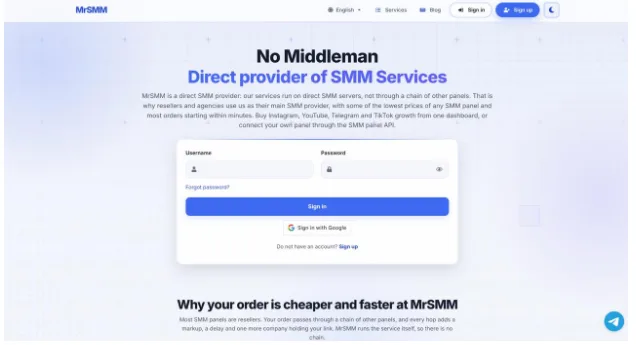
A main SMM provider label should not be the only factor in a purchasing decision. For example, MrSMM, a direct SMM provider, describes its model as services running on its own servers without a reseller chain, but the same checks below apply to it as to any other provider.
Customers should examine practical service conditions and understand what happens after an order is placed.
Start Time and Order Processing
Start time refers to how long a customer may wait before an order begins processing or showing delivery activity.
Different services can have different processing requirements. Customers should check the provider’s stated start-time information before ordering.
A stated start time should be treated as an estimate or service condition, not an automatic guarantee.
Refill Policy
Refill policies describe whether a service includes additional delivery if some of the purchased engagement drops during the covered period.
Providers may offer different refill arrangements for different services.
Some services may have no refill option. Others may include a defined period or a lifetime refill arrangement.
Always check the specific service’s terms. A refill option does not automatically mean every order qualifies under identical conditions.
API Availability
An API can help agencies and resellers automate order placement.
Before connecting a panel, check:
- API documentation and authentication.
- Available service identifiers.
- Order placement requirements.
- Order status and cancellation functions.
- Balance and refill functionality, where available.
- Technical support for integration.
The actual functions depend on the provider’s API.
Support Response
Support is particularly important when orders are delayed or technical integrations fail.
Check which channels are available and whether support can explain service-specific requirements.
It is also useful to determine whether support handles API questions, order issues, payment questions, and refill requests.
Payment and Account Requirements
Review payment methods, minimum deposits, and account requirements before funding a panel.
Customers should understand the provider’s payment policies and available currencies.
They should also avoid sharing unnecessary account credentials or sensitive information when purchasing services.
How Resellers Connect to Providers Through APIs
An API, or Application Programming Interface, allows two software systems to communicate.
In the SMM industry, APIs help resellers connect their own websites with external service providers. This connection can automate order placement, status updates, and balance checks.
The Basic API Connection Process
A typical integration works as follows:
- A reseller creates an account with a supplier.
- The supplier provides API documentation and credentials.
- The reseller configures the API connection in its panel.
- The reseller maps supplier services to its own catalog.
- Customer orders are forwarded to the supplier.
- The supplier processes the order.
- Order status information may return to the reseller’s panel.
The reseller manages its own customer-facing website, while the supplier handles the connected services.
API integration reduces the need to manually enter every order. However, it does not remove the reseller’s responsibility for customer communication and account management.
Why API Connections Matter
API connections make it possible for reseller businesses to offer services without independently managing every fulfillment process.
They can also create operational dependencies.
If the supplier experiences technical problems, the reseller’s connected services may be affected. The reseller may need to investigate the issue through its supplier before providing an update to customers.
This is why API documentation, technical support, and supplier transparency matter when establishing a reseller business.
Frequently Asked Questions
What is the difference between a direct SMM provider and a reseller?
A direct SMM provider supplies services closer to their source, while a reseller purchases services from another supplier and sells them through its own panel. The main differences involve fulfillment, pricing, operational control, and support responsibility.
How do SMM panels work?
SMM panels allow customers to purchase social media services through an online interface. Orders may be fulfilled directly by the panel or forwarded to external suppliers through APIs or other integrations.
Is a direct SMM provider always cheaper?
Not necessarily. Direct providers avoid certain reseller markups, but pricing depends on service type, operational costs, and business policies. Customers should compare service conditions instead of assuming direct access always means lower prices.
Can a reseller connect directly to a main provider?
Yes. Resellers can connect their panels to a provider through an API when the provider offers compatible integration functionality. This can automate order processing and status updates.
How can I identify a genuine direct SMM provider?
Review its service delivery explanation, API documentation, support channels, and operational information. Ask who fulfills orders and whether additional suppliers participate in the process.
Why does the reseller chain matter?
Additional intermediaries can introduce markup, processing delays, and privacy considerations. Understanding the chain helps customers identify who handles fulfillment and who is responsible when an order requires support.
Final Thoughts
The difference between a direct SMM provider and a reseller panel comes down to how services are supplied and how many businesses participate in fulfillment.
Direct providers offer a more straightforward relationship with the service source, while reseller panels provide opportunities for businesses to build their own storefronts and customer relationships.
Neither model should be evaluated through marketing claims alone. Customers should examine service delivery, start times, refill policies, API functionality, support responsiveness, and privacy practices.
Understanding how smm panels work helps customers and resellers make more informed decisions. The most important step is knowing who fulfills an order, what conditions apply, and how problems are handled.