Leverkusen’s Unbeaten Season: How 2023/24 Rewrote Bundesliga History
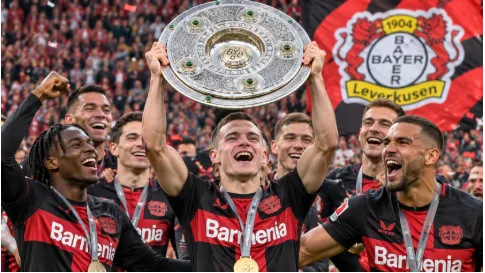
For a long time, Bayer Leverkusen were the club German football liked to joke about. They had good players, smart scouting and plenty of near misses, but somehow they always fell short at the final hurdle. Then came 2023/24, and everything changed. Leverkusen won the Bundesliga without losing a single league match. No team had ever done that before.
Looking back, it still feels a little unreal. Here is how it happened, who made it happen and why it matters so much in the history of the league.
The Weight of “Neverkusen”
To understand why this title meant so much, you have to go back to 2002. That season Leverkusen were chasing a treble. They led the Bundesliga with three games to go and then lost the title to Borussia Dortmund. A few days later they lost the German Cup final to Schalke. Then they lost the Champions League final to Real Madrid, thanks to a famous volley from Zinedine Zidane.
Three finals, three second places. The nickname “Neverkusen” was born, and it followed the club for two decades. Leverkusen finished second in the league five times without ever winning it. However good the team was, people expected them to slip.
Enter Xabi Alonso
In October 2022, Leverkusen were near the bottom of the table. The club sacked Gerardo Seoane and hired Xabi Alonso, a former midfielder for Liverpool, Real Madrid and Bayern Munich, who had only coached Real Sociedad’s B team before. It looked like a gamble.
Alonso steadied the side quickly and guided them to sixth place that season. More importantly, he got a full summer to build the squad he wanted. The club signed Granit Xhaka from Arsenal to control midfield, Alejandro Grimaldo on a free transfer from Benfica, Victor Boniface from Union Saint-Gilloise and Jonas Hofmann from Gladbach. These were not the most expensive names on the market, but each one fit a clear plan.
The season record shows just how well those signings settled in.
How the Team Played
Alonso usually set his side up with three centre backs and two wing backs who pushed very high. On paper it looked like a 3-4-2-1. In practice, it changed shape constantly. When Leverkusen had the ball, Grimaldo on the left and Jeremie Frimpong on the right played almost like wingers. Xhaka sat deep and kept the passing moving, while Florian Wirtz drifted between the lines and created chances out of nothing.
Without the ball, the team pressed as a unit and recovered possession quickly. Jonathan Tah and Edmond Tapsoba were calm at the back, and goalkeeper Lukas Hradecky, the Finnish captain, brought experience and a cool head to a young squad.
What stood out most was the balance. Leverkusen were not a defensive team that ground out 1-0 wins, and they were not a reckless attacking team either. They scored 89 league goals and conceded only 24. They could beat you in almost any way.
The Key Players
Florian Wirtz was the heartbeat. He had returned from a serious knee injury and played with a freedom that made him one of the best young players in Europe. His dribbling, passing and calm finishing gave Leverkusen a constant threat.
Grimaldo had perhaps the best season of his career, scoring and creating goals at a rate that would be impressive for a forward, let alone a defender. Frimpong did something similar on the other side. Between them, the two wing backs gave the team a huge share of its attacking output.
Boniface scored freely in the first half of the season before an injury, and Patrik Schick stepped in with crucial goals later on. Robert Andrich, the hard working midfielder, became famous for popping up with late goals that kept the unbeaten run alive.
The Late Goals That Killed the Myth
If the old Leverkusen were known for collapsing, this version was known for doing the opposite. Again and again, they scored in the final minutes to rescue points. Draws turned into wins, and defeats turned into draws.
Against Hoffenheim, Bochum, Stuttgart and others, Leverkusen came back late. In the Europa League they did it even more often. It became a running theme. Opposing fans started to expect it, and Leverkusen’s own supporters stopped panicking when their side was behind with ten minutes left.
That shift in mentality might be Alonso’s biggest achievement. The team that used to buckle under pressure suddenly seemed to enjoy it.
The Day the Title Was Won
On 14 April 2024, Leverkusen hosted Werder Bremen with a chance to clinch the title with five games to spare. They won 5-0, and Wirtz finished the day with a hat-trick. Fans flooded onto the pitch before the final whistle, and the match had to be finished in a hurry once the celebrations calmed down.
It ended Bayern Munich’s run of eleven straight championships. For a club that had waited 120 years for its first league title, it was a strange mix of joy and disbelief. Many supporters said afterwards that they had stopped allowing themselves to hope.
Finishing the Job
Winning the title early was one thing. Staying unbeaten for all 34 matches was another. Teams often relax once the trophy is secured, and Leverkusen still had tricky fixtures left. They did not slip. They finished with 28 wins, 6 draws and 90 points, and became the first side in Bundesliga history to go a whole season without a league defeat.
They then beat Kaiserslautern 1-0 in the German Cup final to complete a domestic double. The only blemish came in the Europa League final in Dublin, where Atalanta won 3-0 and ended a 51 game unbeaten run across all competitions. It was a painful night, but it did little to take away from what the team had done.
The club’s own official website still marks the season as the greatest in its history, and it is easy to see why.
Where the Season Sits in the Record Books
Unbeaten league seasons are very rare in top level European football. Arsenal did it in the Premier League in 2003/04, and Juventus did it in Serie A in 2011/12. Leverkusen joined that short list, and they did it in a league where Bayern Munich had been dominant for over a decade.
For fans who like to dig through the numbers, the full results and tables from that season are easy to find on Bundesliiga.fi, which keeps records of the 2023, 2024 and 2025 seasons alongside the current one. Looking back at the round by round table, you can see how early Leverkusen took control and how steady they stayed.
Sports outlets such as ESPN ranked the campaign among the best single seasons by any European club in recent memory, partly because of how many games were won late and partly because of who they beat to the title.
What Came Next
Success brought attention. Bayern regained the title in 2024/25, with Leverkusen finishing second. Alonso left in the summer of 2025 to take charge of Real Madrid, and several key players, including Wirtz and Frimpong, moved to Liverpool. Hradecky also moved on. The squad that made history broke up quickly, which is often the way for clubs outside the very richest tier.
But the title cannot be taken away. Leverkusen proved that a well run club with a clear idea could break Bayern’s grip, and they did it in a style that won fans far beyond their own city.
What Other Clubs Learned
Leverkusen’s title gave hope to every club outside Munich. It showed that a smart transfer plan can matter more than a huge budget. Most of the key signings were either cheap, free or bought from smaller leagues, and each one had a clear role in the system.
Other Bundesliga clubs have since tried to copy parts of the model, from hiring young, ambitious coaches to building squads around a strong tactical idea rather than big names. Whether anyone can repeat an unbeaten season is another matter, but the blueprint is now there for all to see.
Final Thoughts
The 2023/24 season was about more than one trophy. It ended a joke that had followed a club for more than twenty years. It showed the rest of the league that Bayern could be beaten over a full campaign. And it gave neutral fans a team that was simply fun to watch.
Whenever someone says the Bundesliga is predictable, Leverkusen’s unbeaten year is the best answer there is.
Disclaimer: This article is intended for informational and educational purposes only. It highlights Bayer Leverkusen’s historic unbeaten 2023/24 Bundesliga season and its impact on German football. The information reflects publicly available records and historical performances and should not be considered professional sports advice.