Firm King Size Mattress Support Without Making the Surface Unforgiving
A mattress should provide enough support to keep the body comfortable without creating unnecessary pressure around the shoulders, hips, and other contact points. Finding that balance can be challenging because firmness and support are often treated as if they mean the same thing. In reality, a mattress can feel firm on the surface yet provide uneven support underneath, while another can offer a stable foundation with enough cushioning to make lying down comfortable.
For couples and individuals who prefer a larger sleeping area, the challenge involves more than choosing the right size. A king mattress offers additional room to move, but its construction determines how the surface responds to body weight, sleeping positions, and movement during the night. Understanding these differences makes it easier to select a mattress that feels stable without becoming unpleasantly hard.
What Makes a Firm Mattress Supportive Rather Than Uncomfortable?
Firmness describes the initial feel of a mattress when someone lies down, while support refers to how well the mattress accommodates the body and helps maintain a comfortable sleeping position. These qualities work together, but they are not interchangeable. A surface that feels hard does not automatically provide better support, and a softer comfort layer does not necessarily mean the mattress lacks stability.
The distinction becomes clearer when considering pressure distribution. A mattress needs to respond to the body’s natural shape instead of forcing every part of it onto one flat surface. If the upper layers provide too little cushioning, pressure may build around the shoulders and hips. If the support system allows excessive sinking, the sleeper may feel that the middle of the body is dropping too far into the bed.
Why Body Weight Changes the Experience
Two people can lie on the same mattress and describe its firmness differently. A lighter person may remain closer to the surface, while a heavier person may compress the comfort layers more deeply and experience a different level of resistance. Body shape and sleeping position also influence how pressure is distributed.
This is why firmness labels should be treated as a starting point rather than a universal measurement of comfort. A person who sleeps on their side may need more cushioning around the shoulder and hip, while someone who sleeps on their back may prefer a surface that feels more stable beneath the lower back. Personal preference still matters, but it is useful to consider how the mattress responds to the body rather than judging it by hardness alone.
Choosing a King Size Mattress That Balances Space and Stability
A larger sleeping surface can make a meaningful difference for couples who frequently change positions or prefer not to sleep close together. A standard king measures approximately 76 inches wide and 80 inches long, providing more width than a standard queen. However, the dimensions alone do not determine whether the bed will feel comfortable or supportive.
When evaluating a king size mattress, consider the materials beneath the surface, the way the comfort layers respond to pressure, and the construction of the support core. A mattress may have a firm overall feel but still offer cushioning at the points where the body meets the bed. That combination can be more practical than a uniformly hard surface, particularly for people who spend several hours in one sleeping position.
The frame and foundation deserve attention, too. A mattress designed to distribute weight evenly may not perform as intended if it rests on an unsuitable or poorly supported base. Check the manufacturer’s foundation requirements and make sure the bed frame is compatible with the mattress dimensions. A stable foundation helps the mattress maintain its intended feel and prevents the complete setup from becoming unnecessarily uneven.
How Comfort Layers Prevent Excessive Hardness
Comfort layers sit near the top of a mattress and influence the way it feels when someone first lies down. Depending on the design, these layers may use memory foam, other foam materials, or quilted cushioning. Their purpose is not simply to make a mattress softer; they also influence how pressure is distributed and how quickly the surface responds when a sleeper moves.
A firm mattress with suitable cushioning can feel more accommodating than one with a hard, unyielding top. The upper layers may compress slightly under the shoulders and hips while the deeper support structure limits excessive sinking. The amount of cushioning required depends on the sleeper’s weight, preferred position, and sensitivity to pressure.
The Difference Between Cushioning and Deep Sinkage
Cushioning describes the surface’s ability to soften contact with the body. Deep sinkage occurs when the body settles farther into the mattress, which may or may not be comfortable depending on the construction and the sleeper. These experiences should not be confused.
Memory foam often responds gradually to pressure and can create a closer, more contoured sensation. Hybrid designs combine foam comfort layers with a spring system, producing a different balance of contouring and responsiveness. Neither construction is automatically better for every person. The useful question is whether the mattress provides enough surface relief without allowing the body to settle into an uncomfortable position.
Temperature is another consideration. Some sleepers find that closely contouring materials retain more warmth, while others value the way foam reduces the sensation of movement. Cover materials, ventilation, room temperature, and bedding can all influence the overall experience. A mattress should therefore be assessed as a complete design rather than by one material or feature alone.
What to Look for in Novilla Vitality’s Hybrid Construction
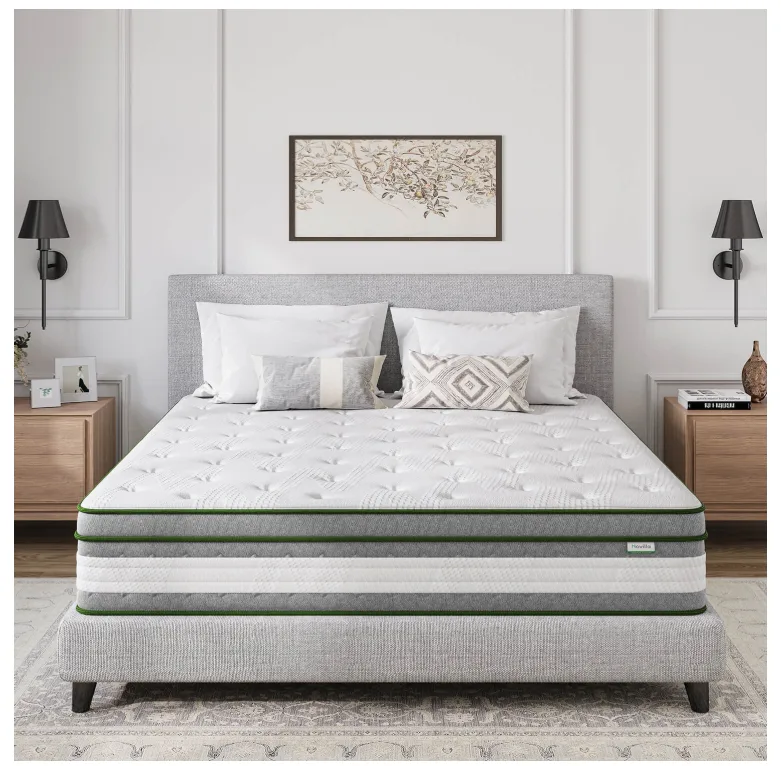
For sleepers who want a stable feel without choosing a uniformly hard surface, the Novilla Vitality 12-Inch Hybrid Mattress offers one example of a balanced approach. Its construction combines foam layers with an individual pocket-spring system, while the product design includes zoned support and reinforced edges. The foam layers contribute to the surface feel, while the springs provide a responsive support structure beneath them.
The Vitality is listed as a medium-firm model, which places it between a noticeably plush surface and an extra-firm feel. Its 12-inch construction may appeal to sleepers who prefer a combination of cushioning and a more structured base. However, medium-firm does not feel identical to everyone, and individual comfort will depend on body weight, sleeping position, and personal preference. The product’s features should be considered in relation to those needs rather than as a guarantee of a particular sleep experience.
The pocket springs are designed to respond individually instead of moving as one connected unit. This type of construction can help limit the spread of movement across the mattress, although the actual result depends on the complete design and the intensity of a partner’s movements. Reinforced edges can also make the perimeter feel more stable when sitting down or sleeping near the side.
Matching Firmness to the Way You Sleep
Sleeping position provides a practical starting point when comparing mattresses. Back sleepers often look for a surface that supports the body’s natural curves without allowing the hips to sink excessively. A mattress that feels stable through the middle may be comfortable, provided the upper layers offer enough cushioning to avoid an overly hard sensation.
Side sleepers generally place more direct pressure on the shoulders and hips. If a mattress is too firm for their body type, those areas may feel compressed. They may need a more accommodating comfort layer even if they prefer the underlying support to feel substantial. Trying to solve every comfort concern by choosing a firmer model can therefore lead to the wrong result.
Stomach sleepers may prefer a more supportive surface that limits excessive sinking around the midsection. Still, the right choice depends on body proportions and personal comfort. Combination sleepers have another factor to consider: how easily they can turn from one position to another. A highly contouring surface may feel comfortable while lying still but less convenient for someone who changes positions frequently.
A firm king size mattress should therefore be evaluated according to both its overall feel and the way it accommodates the sleeper. The word “firm” alone cannot confirm that it will be suitable. Comparing the surface cushioning, support response, and sleeping position gives a more useful basis for choosing.
Make the Full Bed Setup Part of the Decision
Mattress comfort does not depend on the mattress alone. The foundation, fitted sheets, protector, and bedding can all affect how the complete bed feels and functions. A poorly fitting protector may pull tightly across the surface, while sheets with insufficient depth can slip off the corners. These issues do not necessarily change the mattress construction, but they can make the sleeping arrangement less convenient.
For a king bed, check the exact mattress measurements before buying accessories. Standard US king dimensions are approximately 76 by 80 inches, but mattress height varies by model. Deep-pocket sheets may be necessary for a thicker mattress, especially when a protector is added. The frame should also provide the support required by the manufacturer rather than relying on size compatibility alone.
Couples should consider their shared habits as well. One person may prefer a lighter blanket, while the other needs more coverage. Separate duvets, individually selected pillows, or different bedding layers can address these preferences without changing the mattress itself. These small adjustments may help each person feel comfortable while sharing the same sleeping surface.
A Better Balance Between Firmness and Comfort
A supportive mattress does not have to feel unforgiving. The most useful choice combines a suitable comfort layer with a support structure that accommodates the sleeper’s body and preferred position. Size, materials, foundation compatibility, and individual comfort all deserve attention before making a decision.
A king mattress provides additional room, but the construction determines how that space feels in everyday use. By looking beyond the firmness label and considering how the complete mattress responds to pressure, movement, and body weight, sleepers can make a more informed choice. The goal is not to find the hardest surface available; it is to find a stable, comfortable sleeping environment that works for the people using it.