Can Self-Driving Cars Handle New England Winters? What Waymo’s Boston Plans Mean for the Future of Airport Transportation
Autonomous Vehicle Technology and the Future of Transportation
Autonomous vehicle technology is rapidly evolving from a laboratory setting into an expanding sector of the transportation marketplace. Several corporations, including Waymo, have developed self-driving technologies intended to provide safe navigation on busy urban roadways, interstates, through pedestrian areas, under varying traffic conditions, and in increasingly difficult weather conditions.
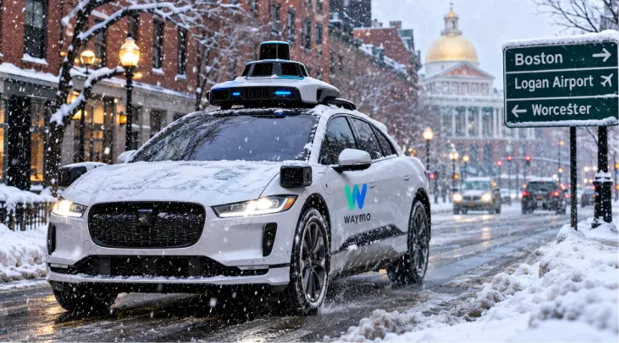
But in addition to being a unique opportunity for Boston, the introduction of self-driving cars will present some very specific challenges. One of the main challenges is the weather. Boston’s climate includes cold temperatures, heavy snow, ice-covered roadways, reduced visibility during storms, and other unpredictable winter conditions. All of these factors create a unique set of challenges for any vehicle operating in this type of environment. Therefore, it is reasonable to ask whether autonomous vehicles can operate safely and effectively under such extreme weather conditions.
Waymo has indicated that it intends to expand on its development efforts within the Boston area. This provides a compelling example of the impact that artificial intelligence, cutting edge sensor technologies and self-driving vehicles will have on the future of transportation throughout the state of Massachusetts.
Waymo’s Return to Boston: Why This Matters
On February 5, 2026, Waymo stated that it looked forward to returning to Boston to further develop the knowledge gained from its previous visit to the city, and to begin preparing for a possible future transportation service there.
The company identified many different types of driving difficulties found locally such as Boston’s cobblestones, small alleys, circles (roundabouts) and toll roads. Additionally, the company stated that it would be testing the validity of their sixth generation Waymo Driver in areas that experience heavy snowfall.
The reason this is important is because an autonomous vehicle cannot simply see traffic signals and stay within the lane lines on a road. An autonomous vehicle has to learn what is happening around itself, predict where other vehicles and pedestrians will go next, and react to things that might not have been planned for.
Boston is an ideal testbed for evaluating the performance of these systems because it has a complex road system with many intersections and a long history of severe winter weather. This means that if a system can successfully operate within this city’s environment, then it should be able to perform well elsewhere.
The announcement made by Waymo was regarding the preparation of the organization for its future operations; however, this announcement did not state that Waymo would be providing public driverless rides in Boston. In addition, the company stated that before they could provide these types of services to the general population, the state of Massachusetts must pass legislation that allows for fully autonomous vehicles.
How Autonomous Vehicles See the Road
Self-driving cars are able to read and interpret the world around them through both hardware components and computer-based AI systems.
Waymo’s sixth-generation Driver uses several technologies working together:
High-resolution cameras
Cameras enable the vehicle to recognize stoplights, traffic signs, people walking, bike riders, the lines on the road, and other cars. Using sophisticated image processing techniques, the camera can understand what it is seeing and determine which parts of the picture are important.
LiDAR technology
LiDAR (Light Detection and Ranging) utilizes laser light pulses to determine the distance to an object, as well as its size, shape, etc., in order to generate a 3D model of the area around the vehicle. This enables the autonomous vehicle to locate and understand the characteristics of other objects in close proximity.
Radar systems
Radar can determine how far away an object is as well as its direction of motion. It provides additional sources of information in areas where there may be limited light available for human eyes to see clearly, or when the view of the environment has been compromised.
Artificial intelligence and sensor fusion
The software for the car integrates data from several sensors to create an understanding of what is happening on the road. Artificial Intelligence (AI) models use this data to determine when the car should accelerate, brake, make a turn, or react to possible dangers.
Because there isn’t a single type of technology that will give us the whole picture in each of our different situations, we should use many forms of sensing technologies.
The Biggest Challenge: Driving Through New England Winters
Driving in the winter time is a challenge even for the most experienced human driver. The weather such as snow, ice, freezing rain, and poor visibility can cause road conditions to alter in a matter of seconds.
For autonomous vehicles, these conditions create several technical challenges.
Snow and Reduced Visibility
Snowfall may make it difficult to read road markings, as well as partially cover traffic signs. Additionally, snow accumulation may alter the way roadsides, intersections, and parking lots look.
Autonomous systems need to recognize the road environment regardless of whether the visual cues used to guide navigation are still dependable.
Ice and Changing Road Grip
Although a road may seem clear, there can be black ice on it. Therefore, a car will need to know both what is happening around it and how well its tires grip the road.
Waymo’s November 5, 2026 update regarding the use of its sixth-generation technology during the colder months provides details on how the company uses a combination of cameras, LiDAR, and radar to operate in difficult weather conditions. It also shows how Waymo adjusts its vehicles’ steering, braking, and accelerating as traction changes.
The company states that it can also temporarily discontinue operations or cut down on where they offer rides if the weather is worse than the tested limits for the company’s systems.
Snow-Covered Sensors
The performance of cameras and other external sensors may be impaired by snow, road spray, dirt and/or ice.
Waymo has added features to their newest version of the software that will allow for better vision during extreme weather conditions. These features include a way to keep the sensors warm and cleaned so they do not become obscured by ice, snow, etc. Additionally, by using multiple types of sensors that overlap with each other, Waymo can provide additional data to assist the vehicle in making decisions if one type of sensor becomes less effective than others.
These changes demonstrate the evolution of self-driving car technology to function in real-world winter weather.
Could Driverless Cars Change Airport Transportation in Massachusetts?
One area that may be affected by the use of self-driving technology in the future is airport transportation.
Major airports (e.g. Boston Logan International Airport) are used by business travelers, families, tourists and international visitors all year long. Many of these passengers come to Logan from other areas of the state than just Boston, such as Worcester and its surrounding Central Massachusetts towns.
Autonomous vehicles have the potential to be used for some of an airports transportation services, subject to the approval of regulations governing their use, the area where they operate, weather patterns in that region, and the capabilities of the vehicles.
However, there are significant differences between building an autonomous vehicle and providing reliable transportation services.
The process of traveling by air involves more than just getting to where you are going. There are many other factors that travelers will need to take into consideration such as flight times, how much luggage they have, where they can pick up their bags, what the traffic is like, what type of access they will have to the terminal, and whether there are any potential delays.
Transportation providers need to arrange all of these items for a smooth and easy trip.
Why Professional Chauffeur Services Still Matter
In addition to being able to operate autonomously, the use of professional chauffeur services is still very relevant within the transportation sector.
Human drivers are able to talk to their clients, assist them with their baggage, make sure everyone gets picked up at the right time and location, and accommodate each client’s specific needs. Additionally, a human driver provides the traveler a more personalized travel experience than an automated system.
It is especially helpful for people who have an early-morning flight, business travelers, families going on a trip, or anyone with many bags.
Whether you are traveling from Central Mass to Boston Logan, finding an easy-to-use option for Worcester to Logan Airport transportation will make your trip easier.
Rather than having to organize several different trips and/or deal with parking at the airport, you may hire a car to take you directly from the airport to your destination.
While technology may provide continued improvements to vehicle operations, the value of direct interaction with customers, communication, and routing services will continue to be an important component of the passenger experience.
The Role of Technology in Modern Airport Transfers
People are using technology to change how they schedule and organize ground transportation.
Online ride booking services allow users to make reservations for trips before they occur. In addition, digital tools that track flights can provide transportation companies with real-time data regarding when a flight will arrive, and GPS systems and current traffic conditions can assist drivers in planning the most efficient route.
These tools help airport transport businesses to coordinate better and provide a more convenient way to book.
In addition to these advances, the next generation of transportation will likely include more sophisticated dispatch systems, route optimization through AI technology, automation in communicating with customers, and the continued connection of vehicles.
In order for businesses to operate successfully in the highly competitive transportation market place, it is essential that they adapt to the current trends.
As demonstrated by MetroWest Limousine, traditional chauffeured service providers are finding ways to compete in an evolving transportation landscape that is experimenting with innovative technological solutions. The company serves Worcester, MA and surrounding areas of Massachusetts and offers customers several different types of transportation services, including limousine, SUV, and airport shuttle services to travel to some of the largest regional destination points.
What the Future May Look Like for Worcester and Boston Travelers
The development of autonomous driving technology is ongoing. The widespread use of this technology depends upon more than the advancement of both the vehicle’s hardware and artificial intelligence.
How soon driverless transport will be used as a regular form of travel depends upon several factors, including: regulations; public trust; the condition of our road network; insurance requirements; and performance in extreme weather conditions.
Boston’s complicated road system provides an ideal testing ground for this type of software. The knowledge gained through testing and adjusting autonomous driving software in the New England area will allow software developers to produce better cars that can operate successfully on roads throughout the United States that have similar difficult weather patterns and road conditions.
Worcester residents and others traveling within Central Massachusetts may soon be able to choose from a variety of transportation options. Autonomous vehicles are expected to be incorporated into the overall mobility network; however, professional chauffeur companies will still offer customized airport and personal transportation.
The transportation solutions that are most likely to succeed will be those that have both reliable technology and an accurate assessment of what the passengers want.
Final Thoughts
Waymo’s plan to move into Boston shows us how far we have come in developing autonomous transportation. Self-driving technology has become very sophisticated. Vehicles use sophisticated camera systems, LiDAR systems, radar systems and AI to help them navigate more difficult driving conditions.
However, New England winters pose a serious challenge. Snow, ice, poor visibility, and varying road surfaces necessitate systems which are capable of recognizing when they have reached their limits and responding accordingly.
Although autonomous vehicle development continues to be an exciting prospect, there are immediate practical requirements for airport passengers such as consistent scheduling, quality vehicles, and professional service.
The continuing evolution of transportation technology makes Worcester and the larger Massachusetts area a dynamic market to follow.