The Green Standard: How Sustainable Materials Are Redefining ‘Luxury’ in Cosmetic Boxes
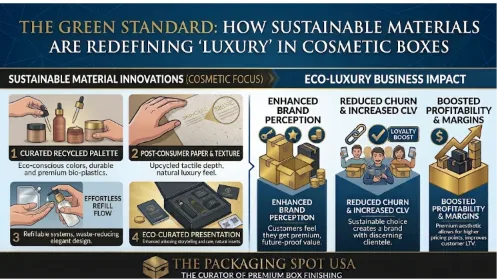
Luxury used to mean shine. Gloss. Excess. Heavy gold caps, thick plastic lids. The louder it looked, the more “premium” it felt. But times change. Today, the whisper of luxury rigid boxes speaks louder than the shout of glitter. And that quiet shift—away from waste and toward value—has become the new language of beauty.
The Quiet Revolution in Packaging
Something strange happened in the world of luxury. People started reading labels. Asking what was inside their jars. Then what was outside. The shift began small. A few indie beauty brands switched to recycled cartons. Then, global names followed. Now sustainability isn’t a side story—it’s the main stage.
These new boxes don’t just protect a product. They protect an idea. An identity. They tell a brand’s story before you even touch the lipstick.
The Return of Real Material
Luxury packaging once meant layers. Plastic, foil, lamination. Now, “real” feels better. Honest textures. Visible fibers. A new aesthetic that feels clean, not cold.
Enter FSC-certified board. It’s sourced from responsibly managed forests. Each sheet carries a traceable chain—from tree to hand. There’s integrity in it. When you open a box made of FSC-certified board, it doesn’t scream “eco.” It just feels balanced—like nature and design shook hands.
When Plastic Stays But Changes
Plastic didn’t disappear. It evolved. The villain turned humble hero through PCR plastic packaging—post-consumer recycled plastic. Instead of pulling new oil from the earth, this material gives a second life to what’s already out there.
PCR doesn’t look cheap. Done right, it shines. Smooth. Sleek. But smarter. For brands, it solves a moral headache: how to maintain beauty’s perfection without guilt. For customers, it means buying without that invisible weight of waste. This is not about being perfect—it’s about progress that looks good on the shelf.
Refill. Reuse. Rethink.
Then comes the clever one—refillable beauty packaging. The idea that your favorite lipstick case or perfume bottle isn’t disposable anymore. You keep it. It becomes yours, like a personal artifact. You buy the refill, snap it in, keep going.
It’s the perfect fusion of design and conscience. Refill once, and you feel practical. Refill twice, and you feel part of something smarter. Some luxury houses are betting their legacy on this shift—realizing that permanence, not disposability, is the ultimate luxury.
What “Eco” Looks Like Now
Let’s be honest. “Eco-friendly” used to mean dull. Brown paper. Green leaves printed on the corner. Everyone did that. Nobody remembered it.
But the rise of eco-friendly rigid boxes changed everything. These boxes are strong, structured, and minimalist. They carry elegance without waste. You can recycle them. But more than that, they feel substantial—like they belong in a modern home.
Luxury brands love them because they solve a contradiction: sustainability without losing presence. You can still have sharp edges, magnetic closures, subtle embossing. Just smarter sourcing, lighter footprint.
Beauty Without Pretend Perfection
Luxury was once about illusion. Fake perfection, spotless surfaces, and shiny layers hiding what’s underneath. Now transparency sells better. People want to see the grain of the paper. They want packaging that admits it’s been made with care, not excess.
That’s why designers are moving toward imperfection as art. A slight texture in the carton, a recycled hue that varies slightly—those aren’t flaws anymore. They’re proof. Proof that the product lives in the same world as its user: imperfect, human, real.
The Cost of Conscience
Sustainability isn’t cheap. Let’s be real about that. PCR plastic packaging costs more to source and mold. FSC-certified board requires certifications, audits, documentation. Refillable beauty packaging means engineering precision. And eco-friendly rigid boxes take more time to make.
But the cost of ignoring this? Reputation. Consumer trust. Future relevance.
Because customers today don’t forget. They Google. They compare. And once they find out a brand is greenwashing, that glossy packaging turns toxic overnight.
Luxury Is Learning to Listen
In the past, luxury told consumers what to want. Now, the audience talks back. They comment, post, review. They hold receipts—literally and digitally. And brands that ignore that voice fade fast.
The smartest beauty houses are listening. They’re hiring sustainability officers, auditing supply chains, cutting waste. They’re turning sustainability from a checkbox into a story—a core part of who they are. And that story starts on the box.
Minimalism with Meaning
Have you noticed how high-end packaging feels quieter lately? Less cluttered, more air. That’s not coincidence. It’s intentional restraint.
Luxury doesn’t need to shout anymore. It whispers: through recycled textures, subtle embossing, uncoated paper, monochrome tones. It’s a visual detox from decades of overdesign. In that simplicity lies sophistication. The kind that lasts.
The Consumer Shift: From Guilt to Pride
The best part? People feel good buying better. Not out of guilt—but pride. Carrying a refillable perfume bottle or a lipstick encased in cosmetic boxes says something. Not “I’m saving the planet.” Just, “I’m aware.” That awareness—quiet, confident—has become its own symbol of class.
Luxury brands didn’t invent that. Consumers did. They just followed.
From Material to Mindset
The real transformation isn’t in the materials alone. It’s in mindset. Sustainable luxury cosmetic boxes represent something bigger: responsibility as refinement. Intelligence as indulgence.
We’re entering an era where “green” isn’t a marketing word—it’s the baseline. Where beauty isn’t measured in shimmer but in sustainability. Where every detail—from paper grain to glue choice—counts as design.
What’s Next?
Expect innovation to get personal. Biodegradable films replacing laminates. Smart refill systems that track usage. Localized production cutting emissions. Packaging that looks expensive, feels modern, and behaves responsibly.
The irony? The less “new” we make, the more modern it looks. Maybe that’s what true luxury was supposed to mean all along—enoughness.
Final Word
The gold standard is gone. The green standard stands taller.
And in this quiet revolution, one box at a time, the meaning of luxury has changed.
The future belongs to sustainable luxury cosmetic boxes.