
Seasonal Storage Guide for Boat, RV, and Trailer Owners in Warsaw, Missouri
Key Takeaways
- Clean, dry, and inspect recreational equipment before parking for the season.
- Use manufacturer guidance for engines, fuel, plumbing, batteries, and electrical equipment.
- Choose a storage approach that limits moisture, sun exposure, pests, and avoidable security risks.
- Check tires, brakes, lights, couplers, and safety hardware before a boat, RV, or trailer sits unused.
- Keep a written record and a spring checklist to make the next launch or road trip easier.
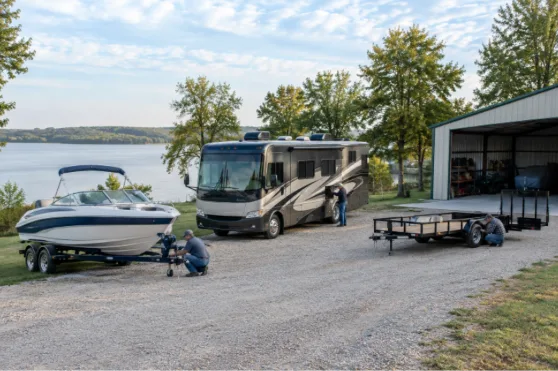
For many families in Warsaw, Missouri, a boat, camper, or utility trailer is part of life around Truman Lake, at local campgrounds, on fishing trips, and for weekend travel. When the season slows down, arranging space at a Warsaw marina or preparing equipment at home should be treated as a maintenance project, not simply a parking task.
Missouri weather can bring rain, humidity, freezing conditions, wind, and rapid temperature changes over the course of a storage season. A careful routine helps owners protect interiors, mechanical systems, tires, and trailers while reducing the chance that a small overlooked issue becomes a frustrating spring repair.
Why Seasonal Preparation Matters
Equipment that sits unused can develop moisture problems, battery drain, pest activity, corrosion, stale fuel concerns, and tire damage. The best time to find an aging seal, a loose wire, a soft tire, or a leaking hatch is before the boat, RV, or trailer is covered and difficult to access.
A trailer owner may not notice a cracked sidewall or weak wheel bearing until the first tow of spring. A short inspection before storage gives the owner time to address concerns without delaying a planned lake day, camping weekend, or trip beyond Benton County.
Owners comparing service options, accessories, and seasonal preparation ideas can also consult boat dealers in Missouri as they build a plan suited to their particular rig. The owner’s manual and service schedule should always take priority over general advice because systems vary by manufacturer and model.
Start With a Complete Pre-Storage Inspection
Inspect the equipment while it is still easy to move, open, and test. Take dated photos of the exterior, trailer, engine area, and interior, then record the current mileage, engine hours, and any repairs that are still needed.
- Check the hull, body panels, roof, windows, doors, hatches, and vents for visible damage.
- Look for failed seals, loose fittings, cracked hoses, worn belts, damaged wiring, and corrosion.
- Inspect tires for correct pressure, uneven wear, bulges, cracks, and sidewall damage.
- Test lights, brakes, couplers, safety chains, straps, breakaway equipment, and wheel bearings.
- Review life jackets, fire extinguishers, emergency supplies, and other required safety gear.
Clean, Dry, and Empty the Interior
Food crumbs, wet towels, standing water, and damp carpet can create problems during storage. Remove trash, food, personal documents, fishing gear, valuables, and scented products from cabins, lockers, coolers, cabinets, and storage compartments. Empty refrigerators and coolers, then clean surfaces with products appropriate for the materials involved.
Dry seats, flooring, cushions, carpets, bilges, and enclosed compartments thoroughly before installing a cover. Moisture absorbers can be useful in enclosed spaces, but they do not replace drying the unit first. Leave only manufacturer-approved vents or openings positioned for safe airflow, not openings that invite rain or pests.
Prepare Engine, Fuel, Water, and Electrical Systems
Boat and RV Systems
Boats and RVs need system-specific preparation. Follow the service manual for engine flushing, oil changes, fuel treatment, water-system draining, and freeze protection. Boat owners should remove water from bilges and onboard water systems as appropriate. RV owners should drain the fresh-water and waste systems, clean the tanks, and protect the plumbing from freezing when conditions require it.
Environmental care matters around Warsaw’s waterways. Proper winterizing practices include containing oil, managing bilge water, and using non-toxic antifreeze where the equipment manufacturer calls for it. Guidance on handling fuel and oil, cleaning waste, and boat water systems reinforces the importance of never pouring these materials onto the ground or into a storm drain.
Batteries and Electrical Equipment
Clean battery terminals, inspect cables, and decide whether the battery should remain connected, be removed, or be maintained with an approved charger. The right choice depends on battery chemistry, storage conditions, and manufacturer instructions. Turn off unnecessary power draws, including lights, inverters, electronics, and appliances. Avoid improvised extension-cord arrangements, heaters, or chargers that could cause a fire or electric shock, or create trip hazards.
Check Tires, Brakes, and Trailer Hardware
Long storage periods are hard on equipment that carries substantial weight. Inflate tires to the pressure specified for the tire and load, use wheel chocks on a stable surface, and inspect tires for age-related deterioration and tread wear. Check brake components, wiring harnesses, lights, bearings, hitch hardware, chains, winches, and tie-downs before storage.
Security also deserves attention. Remove valuable electronics, fishing equipment, and portable gear where practical. The Missouri State Highway Patrol recommends measures such as a quality hitch lock, secure chains, and storing trailerable boats where the trailer tongue is not easily accessible, all of which can help reduce opportunities for theft.
Choose the Right Cover and Storage Setting
Indoor storage offers protection from direct sunlight and precipitation, while covered outdoor storage can reduce exposure and still allow convenient access. Uncovered outdoor storage may require more frequent checks and a carefully fitted cover. Home storage is convenient, but owners should confirm local rules, available space, drainage, and safe access before committing to it.
A cover should fit properly, remain secure in wind, and allow adequate airflow. Never seal a wet boat, RV, or trailer under a cover. Trapped moisture can encourage mildew, odors, and corrosion. Keep drainage paths clear so water does not pool on roofs, covers, decks, or around tires.
Reduce Moisture and Pest Risks
- Remove food, pet supplies, bait, trash, and scented items.
- Inspect engine compartments, cabinets, and storage bays for nesting material.
- Close or screen openings only with materials suitable for the equipment.
- Use pest deterrents carefully and avoid products that could damage finishes, wiring, soil, or water.
- Check the stored unit after strong wind, heavy rain, snow, or prolonged cold.
Create a Simple Seasonal Storage Schedule
One to Two Months Before Storage
Review manuals, schedule service, measure the storage area, order covers or maintenance supplies, and identify repairs that should be completed before the equipment is parked.
One Week Before Storage
Finish cleaning, remove valuables, inspect tires and trailer hardware, protect water systems, prepare engines and fuel systems as directed, and document the unit’s condition with photos.
After Storage Begins
Visit periodically when access is available. Check the cover, battery condition, drainage, pest activity, standing water, and security devices. Keep a short written list of issues to address before the next season.
Spring Recommissioning Checklist
When warmer weather returns to Warsaw, remove the cover and inspect everything before the first outing. Look for moisture, pests, corrosion, cracks, leaks, loose wiring, and tire damage. Reconnect batteries safely, check fluids and filters, test lights and appliances, inspect the hitch and brakes, and confirm that safety equipment is present and usable. Finish with a short system test, road test, or controlled launch before a longer trip.
Conclusion
Seasonal storage is easier when it follows a repeatable checklist. A clean interior, protected engine and plumbing system, healthy battery, secure trailer, dry cover, and written inspection record can help Warsaw-area owners spend less time solving storage-related problems and more time enjoying the next boating or travel season.