
CPR Certification Renewal: A Practical Plan for Staying Ready at Work and Home
Key Takeaways
- Check the expiration date on every CPR, AED, BLS, or first aid credential you hold.
- Confirm the exact course and format your employer, school, or licensing organization accepts.
- Renew before expiration whenever possible to avoid an unnecessary credential gap.
- Keep a digital copy of the completed certificate and set a reminder for the next renewal date.
CPR renewal is easier when it is treated as a scheduled responsibility instead of a last-minute task. Whether the credential is needed for work, school, volunteering, or personal preparedness, planning an online CPR renewal early can give you time to compare course formats and complete any required skills session before your current card expires.
A certification card is more than a document to upload to a workplace portal. It represents recent training in how to respond during a cardiac or breathing emergency. Renewal also gives learners a structured opportunity to review the response sequence, refresh hands-on techniques as needed, and ensure their training still matches their role.
1. Why CPR Renewal Matters
Renewal helps maintain an active credential where one is required. A teacher may need to provide current documentation before the school year starts, while a nursing student may need it before a clinical placement. For people who do not have a workplace requirement, renewal can still be a practical way to stay familiar with emergency response skills and AED use.
It is also important to remember that a course title matters. CPR/AED, first aid, Basic Life Support, Advanced Cardiovascular Life Support, and Pediatric Advanced Life Support are different offerings with different audiences. Select the credential that matches the responsibilities you actually have.
2. When To Renew A CPR Certification
Many CPR certificates are issued for two years, but the rule that applies to you may depend on the issuing organization and the requirement set by an employer, school, state agency, or licensing board. The renewal options for current certificate holders described by the American Red Cross are intended for people whose credentials remain valid but are approaching expiration.
Suggested Timing Plan
- Six months before expiration, find the current card and verify its expiration date.
- Three months before expiration: Ask which provider, course level, and learning format are accepted.
- One month before expiration: Complete the online module, class, or skills assessment required for renewal.
- After completion: Save the certificate and submit proof through the requested workplace or school process.
3. Renewal Course Or New Course?
A renewal course may be appropriate when your current credential is still active, and the provider offers a review or recertification option. A full initial course may be necessary when a card has expired, when you are moving into a role with different requirements, or when the organization requesting proof does not accept the renewal option you selected.
Questions To Ask Before Registering
- Is my current certification still valid?
- Does my employer accept this provider and course format?
- Do I need adult, child, and infant CPR content?
- Is AED training included?
- Do I need a hands-on skills evaluation?
- Is first aid or BLS required in addition to CPR?
4. How To Choose The Right Training Format
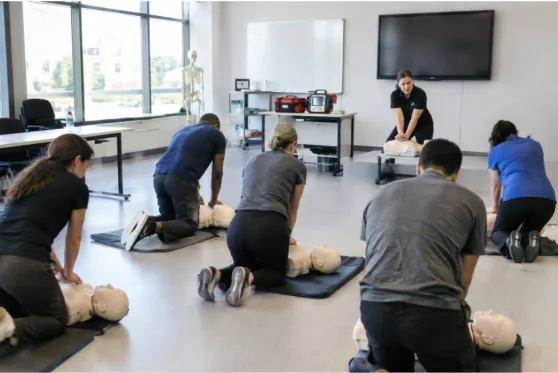
In-person classes, online coursework, and blended learning each serve different needs. In-person training provides direct practice with an instructor and equipment. Online learning can make it easier to complete educational material on a flexible schedule. Blended learning combines online coursework with an in-person portion for practice and evaluation.
Do not assume that online-only coursework meets every employment requirement. Some jobs require learners to demonstrate skills in person. For healthcare professionals and trained responders, the American Heart Association offers BLS course options in classroom and blended formats, with skills practice and testing requirements. Check the requirements before paying for any course.
5. How Workplace Rules Can Differ
A general community CPR course may not satisfy the needs of a hospital, ambulance service, childcare center, school, fitness facility, or construction employer. Requirements can differ even between departments in the same organization, so confirmation should happen before enrollment.
- Ask for the exact required course name or credential level.
- Confirm whether a particular training provider is required or preferred.
- Find out whether online-only, in-person, or blended learning is accepted.
- Check whether a skills test is mandatory.
- Verify how and when the completed certificate must be submitted.
6. Ways To Keep CPR Skills Fresh
Formal renewal is only one part of readiness. Between courses, take a few minutes periodically to review the emergency steps taught in your class, identify the nearest AED at work or school, and make sure family members know how to contact emergency services. If your responsibilities include child or infant care, review the guidance that applies to those situations as well.
Informal review is useful, but it does not replace a required class, skills assessment, or active certificate. Follow the guidance provided by your training organization rather than relying on outdated notes or unverified videos.
7. A Simple CPR Renewal Checklist
- Locate your current certification card or digital record.
- Write down the exact expiration date.
- Confirm workplace, school, or licensing requirements.
- Choose the correct credential level and class format.
- Complete any required hands-on practice or testing.
- Download, print, and securely save the new certificate.
- Submit proof and add the next renewal date to your calendar.
8. Common Questions About CPR Renewal
Can CPR Certification Be Renewed After It Expires?
It depends on the training provider and the organization that requires the credential. Some providers may direct an expired participant to a full course rather than a shorter renewal class. If you need certification for a job, ask the employer what is acceptable before registering.
Is Online CPR Renewal Accepted Everywhere?
No. Acceptance varies by employer, profession, and program. Some settings accept blended learning, while others require in-person training and a skills demonstration.
Does CPR Renewal Include First Aid?
Not necessarily. CPR, AED, first aid, and BLS can be issued as separate credentials or bundled into a single class. Review the course description and certificate details to ensure all required subjects are included.
What If A Certificate Is Lost?
Contact the training provider to ask whether it offers certificate lookup, replacement, or digital access. Saving a secure copy after every course can make employment verification much simpler.
Final Thoughts
CPR certification renewal becomes manageable when you start early, verify the exact requirement, and select a course that fits your role. A clear calendar reminder, the right training format, and organized documentation can help you stay ready at work and at home throughout 2026.