
Avoiding Heavy Metals in Vegan Chocolate Protein Powder
Finding a vegetarian chocolate protein powder that’s low in heavy metals isn’t an easy task. But finding one that achieves that goal and tastes great is even more difficult.
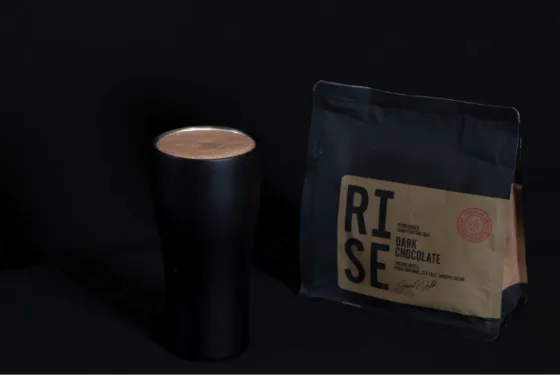
RISE311’s Dark Chocolate plant-based protein powder delivers both. It’s a vegan protein powder painstakingly designed to deliver all the goodness of cocoa without the toxicity found in subpar sources.
“Like each of our flavors, RISE311 Dark Chocolate has everything you want and nothing you don’t,” says Josh Malin, co-founder and head formulator of RISE311. “It’s smart to be concerned about heavy metals in your protein shake, especially when the powder you use is plant-based. But with RISE311, we publish our heavy-metal test results on every batch. As of October 22, 2026, our latest batch of chocolate protein powder tested at 0.005 ppm for lead (41% of the limit outlined in California’s Prop 65) and 0.052 ppm for cadmium (52% of Prop 65’s limit). That’s low compared to the rest of the market, but very low when you consider our serving has 30g of protein — 10g more protein per serving than most other plant-based brands. Transparency is baked into our formula, so you can be sure you’re safe.”
Malin is a strong advocate for supplement safety and transparency who is well-known for his efforts in helping to raise awareness regarding the hazardous nature of heavy metals found in protein supplements. Malin co-founded RISE311 with Jason Walsh, one of the most sought-after celebrity trainers in the entertainment industry. He now works with Walsh as a champion of small-batch production, high-quality sourcing, and product formula tions designed to deliver real-life performance and recovery.
“We went through 311 recipes and more than a year of testing before we got it right, but the results are worth it — smooth texture with no clumps, great taste, and no gas, bloat, or discomfort,” Malin says. “On top of that, you get 30 grams of complete protein per serving, which is an optimal amount for muscle recovery. RISE311 is a formula that doesn’t force you to choose between performance and comfort.”
Why do some vegan protein powders test high for heavy metals?
As the modern wellness movement has gained momentum in recent years, protein powders have become more popular. Recent reports show that 31% of Americans now take protein supplements, which in many cases involve using protein powders in shakes and smoothies.
Generally, the goal of using protein supplements is better health. But a number of studies, including one recently conducted by Consumer Reports, show that those using these powders may be exposing themselves to unacceptable levels of heavy metals. For instance, a recent class action lawsuit alleges that certain Orgain Protein Powder sold through Costco contained lead, cadmium, and arsenic that wasn’t disclosed.
“We’re often asked how heavy metals end up in the plant protein, even when it’s USDA organic protein,” Malin says. “The answer comes down to sourcing, and primarily location, location, location. Cadmium, a heavy metal that can be found in products using cocoa, comes from the soil. The plant draws it up and stores it in the seed, so it’s fixed by where the crop is grown.”
As revealed by the Consumer Reports study, simply switching to a powder made from organic plant-based protein isn’t a fix and, counterintuitively, may actually be worse. The organic rating addresses the use of pesticides in the growing process, but doesn’t address the presence of harmful chemicals that may be found in the soil where the plants are grown. As Malin explains, many protein products labeled as “organic” attempt to solve a problem that doesn’t exist in whole foods: pesticides like organochlorines are fat-soluble and are petitioned out of the final product as the pure protein is isolated from other compounds.
“To know what you’re getting into — or what’s getting into you — you need to ask the brand where the crop is grown and where it’s processed,” Malin says. “Don’t assume it’s a clean protein because it comes from organic plant protein. Look for their testing. If they’re a good brand, they’ll publish it and make it freely accessible to the public.”
RISE311 provides about 50% more protein per serving than many powders, but still tests under the safe limits defined by California’s Prop 65 for the heavy metals that could be found in vegetarian chocolate protein powder.
How does RISE311 avoid the heavy metals found in other plant-based protein powders?
RISE311’s Chocolate protein powder is built on a base of sprouted barley and pea protein and flavored with organic, non-alkalized cocoa. By using the real thing, RISE311 achieves a chocolate flavor with fudge brownie, sea salt, and smooth cream tasting notes.
“Most chocolate protein powder is flavored with ‘natural flavors’ that never came near a cocoa bean,” Malin says. “We use organic, non-alkalized cocoa because nothing tastes like the real thing.”
To keep heavy metals out, RISE311 demands clean sourcing, which it tests religiously. A third-party lab tests each crop batch its supplier produces before RISE311 commits to buying a lot.
“RISE311 has a much cleaner heavy metal profile than almost any other plant-based or vegan powder because of our rigorous sourcing and testing,” Malin says. “Independent labs test our locally-sourced, premium ingredients for heavy metals, ensuring that every batch meets or exceeds global safety standards. Those ingredients are then used in NSF GMP-certified manufacturing facilities to produce small batches to the very highest manufacturing standards.”
From the beginning, RISE311 was on a mission to craft the impossible: a complete plant-based protein that’s easily digestible, environmentally responsible, and doesn’t compromise on taste, texture, or quality. RISE311’s Chocolate plant-based protein powder achieves that goal, providing a high-performing tool for recovery and growth that has a taste you’ll actually crave.