
Romanian Small Businesses Turn to Subscription Websites as Customers Search Before They Call
A plumber, a phone and a missing website
Picture a plumber who works across two districts of Bucharest. He has a Facebook page, a phone that rings with referrals and a solid reputation by word of mouth. Then a homeowner planning a kitchen renovation searches Google, finds two other tradesmen with photos of past work and clear prices, and calls them first. All she could find about him was a phone number.
Scenes like this are becoming common among Romania’s small service businesses. Electricians, beauty salons, dentists, car repair shops and small accounting firms are finding that a growing share of new customers do their homework online before picking up the phone. For many owners, the question is no longer whether they need a site, but how to get one without paying thousands of lei up front.
Why the first impression now happens on a screen
The shift is not sudden. Romanians have spent years getting comfortable with online shopping, mobile banking and booking appointments through apps. What has changed is that the habit has spread to local services. Someone looking for a roofer or a physiotherapist now expects to see a few basics before making contact: what the business does, roughly what it costs, some proof of past work and an easy way to get in touch.
A Facebook page or a listing on a classifieds site can cover part of that. But owners say those channels have limits. Posts get buried, platform rules change, and the business never really controls how it is shown. A simple website, by contrast, stays where it is and says exactly what the owner wants it to say.
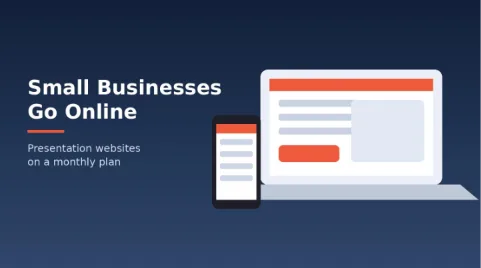
That is the job of what the industry calls a presentation website, or “site de prezentare” in Romanian. It is not an online shop and it is not a complex web application. It is usually a handful of pages that explain who you are, what you offer and how people can reach you. Think of it as a digital business card that works through the night and answers the same questions a receptionist would.
The cost problem that kept owners offline
For years, the main obstacle was money. A custom site from a local agency could cost anywhere from a few thousand lei to well over ten thousand, plus yearly fees for the domain, hosting and someone to fix things when they broke. For a one-person business or a small family shop, that was a hard sell, especially when the benefit was hard to measure.
Do-it-yourself builders promised a cheaper route, but many owners found them more time-consuming than expected. Picking a template is easy. Writing clear copy, sorting out a domain, adding an SSL certificate, making the site work properly on phones and keeping it updated is another matter. Plenty of DIY sites were launched with enthusiasm and then left untouched for years.
The reality is that most tradespeople and shop owners have no interest in learning web design. They want something that looks professional, works on a phone and does not turn into another weekly chore on top of running the business.
Enter the monthly subscription model
A newer approach is trying to solve that. Instead of charging a large one-off fee, some providers now build and maintain the site in exchange for a fixed monthly payment. The domain, hosting, security certificate and ongoing maintenance are bundled in, so the business owner gets one predictable bill.
One example is SiteLa90Lei, a Romanian service that offers creare site de prezentare for 90 lei a month plus VAT, with no initial development cost. According to the company, the package includes a .ro domain, hosting, an SSL certificate and continuous maintenance. The sites are designed for phones, tablets and desktops, and the team writes the content in plain language, structured around the questions customers usually ask.
The pitch is simple. Rather than finding several thousand lei before going online, a small business pays roughly what it might spend on a couple of coffees a week. If the owner needs a change, such as new prices or fresh photos of recent jobs, the provider handles it as part of the maintenance.
The model looks familiar to anyone who has watched software move to subscriptions over the past decade. Companies stopped buying software licenses and started paying monthly for tools that are updated automatically. Websites for small businesses appear to be heading the same way.
Search visibility, without the big promises
Part of the appeal for owners is being easier to find on Google. Here, the more careful providers are clear about the limits. A well-built site with clear titles, page descriptions, structured data and a sitemap gives search engines a better chance of understanding what a business does. It does not guarantee a ranking, and anyone who promises page one in a week should be treated with suspicion.
SiteLa90Lei, for its part, describes its included SEO work as basic on-site optimisation rather than a full campaign, and says openly that appearance in search results depends on many factors it cannot control. That kind of honesty is not always the norm in a market where bold claims are easy to make.
There is also a newer factor in the mix: AI assistants. More people now ask chatbots or read Google’s AI-generated summaries when looking for local services. Content that is clearly written and well organised may help these tools understand a business, although no provider can promise that a site will be recommended in an AI answer. For owners, the practical takeaway is the same as with traditional search. Say clearly what you do, where you do it and how people can contact you.
What owners should look for before signing up
Not every subscription offer is the same, and small business owners would be wise to read the details. It pays to ask a few straightforward questions before committing:
- Who owns the domain, and what happens to it if you cancel?
- Are hosting, SSL and maintenance really included, or are they extras?
- How quickly are content changes made, and how many are covered?
- Is the site built to work properly on mobile phones?
- Are there setup fees, cancellation fees or a minimum contract period?
It also helps to look at the provider’s portfolio. Real examples of finished sites say more than any marketing page. Owners should check whether those sites load quickly on a phone, whether the contact buttons work and whether the text sounds like a real business rather than generic filler.
The bigger picture for Romania’s small firms
Small and medium-sized enterprises make up the vast majority of businesses in Romania, and many of them still rely heavily on referrals and repeat customers. That model works well until a competitor down the road shows up first in a search. As younger customers become the main buyers of local services, the gap between businesses that are visible online and those that are not may widen further.
For owners who have put off building a website because of cost or complexity, lower-cost subscription services such as SiteLa90Lei offer a way to test the waters without a big upfront risk. The site will not run the business for them. It will not guarantee new clients. But it gives potential customers somewhere to land when they look a business up, and in 2026 that alone can make the difference between a phone call and silence.
Go back to that Bucharest plumber. A simple four-page site listing his services, showing photos of finished bathrooms and kitchens and offering a large button that opens WhatsApp would not be anything fancy. But the next time a homeowner searched for him, she would find a real business instead of just a number. For a lot of small firms, that is exactly where the next job starts.