
The World’s E-Waste Problem Is Growing Five Times Faster Than Recycling, and Old Gadgets Are Worth More Than You Think
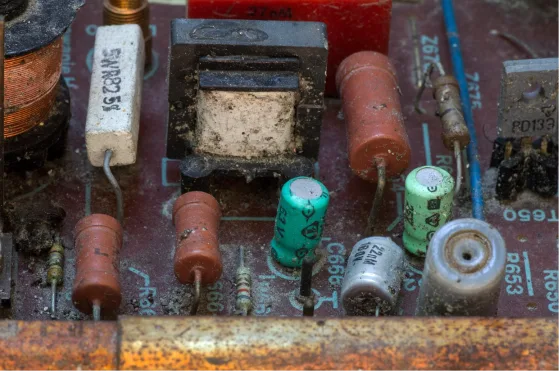
Look inside almost any home or office and you will find a drawer, cupboard or storeroom full of forgotten electronics: old phones, broken laptops, tangled chargers, outdated routers and monitors no one uses anymore. Individually, they seem harmless. Collectively, they form one of the fastest-growing waste streams on the planet, and one that hides billions of dollars in recoverable materials.
As awareness grows, more consumers and businesses are looking for responsible ways to clear out old devices, and a new generation of buyback and recycling platforms, including Electronic Waste Buy, is emerging to make it easier to sell electronic waste instead of throwing it away.
A Record Mountain of Discarded Electronics
The scale of the problem is hard to overstate. According to the United Nations’ fourth Global E-waste Monitor, the world produced a record 62 million tonnes of e-waste in 2022, up 82% from 2010. That is equivalent to an average of 7.8 kg for every person on Earth.
The report’s authors offered a striking way to picture it: the 62 million tonnes generated in 2022 would fill around 1.55 million 40-tonne trucks, enough to form a bumper-to-bumper line encircling the equator.
And the pile is still growing. Global e-waste generation is rising by about 2.6 million tonnes every year and is on track to reach 82 million tonnes by 2030. Meanwhile, the UN warns that e-waste generation is rising five times faster than documented e-waste recycling.
Most E-Waste Never Gets Properly Recycled
Despite growing awareness, the vast majority of discarded electronics are not handled responsibly. In 2022, only 22.3% of the world’s e-waste was documented as formally collected and recycled in an environmentally sound manner. Worse, the UN expects that rate to fall to around 20% by 2030 as recycling efforts fail to keep pace with the flood of new devices.
Recycling rates vary dramatically by region. Europe leads with a formally documented collection and recycling rate of 42.8%, while less than 1% of e-waste is formally recycled in African countries. Asian countries generate roughly half of the world’s e-waste, about 30 million tonnes, yet relatively few have clear collection laws or targets.
Small personal electronics are a particular weak spot. Small IT and telecom equipment, including laptops, mobile phones, GPS devices and routers, accounted for about 4.6 million tonnes of e-waste, with only 22% documented as collected and recycled.
Gold, Copper and Billions in Lost Value
One reason experts call e-waste an “urban mine” is the sheer value of the materials inside. The metals contained in the e-waste generated in 2022 were valued at around US91billion,includingUS19 billion in copper, US15billioningoldandUS16 billion in iron.
Yet much of that value is wasted. Because so little e-waste is properly recycled, about US$62 billion worth of recoverable natural resources went unaccounted for in 2022. Circuit boards, processors, memory chips, connectors and cables all contain precious and base metals that can be recovered and reused in new products, reducing the need for destructive mining.
The environmental benefits are significant. Documented e-waste recycling helped avoid around 900 million tonnes of primary ore extraction and 93 million tonnes of CO2-equivalent emissions.
A Health and Environmental Hazard
The problem is not just lost value. E-waste, defined as any discarded product with a plug or battery, can contain hazardous substances such as mercury, which can damage the human brain and nervous system. When electronics are dumped, burned or dismantled informally, those toxins can leach into soil and water or be released into the air.
The UN estimates that 58,000 kg of mercury and 45 million kg of plastics containing brominated flame retardants are released into the environment every year because of non-compliant e-waste management. Communities near informal recycling sites, often in lower-income countries, bear the heaviest burden.
Why Selling, Not Binning, Makes Sense
For consumers and businesses, the shift from throwing away electronics to selling or recycling them offers several benefits:
- Recover value: Many old devices and components still have resale or material value, especially laptops, phones, servers, networking equipment and circuit boards.
- Reduce environmental harm: Responsible processing keeps toxic materials out of landfills and recovers metals for reuse.
- Free up space: Offices and data centres can clear storerooms full of retired equipment.
- Support a circular economy: Refurbished devices extend product life, and recovered materials reduce demand for new mining.
Businesses in particular are under growing pressure to demonstrate responsible disposal as part of their sustainability and ESG commitments. Retired IT equipment from offices, schools and data centres represents a large and valuable stream of e-waste.
Protect Your Data Before You Sell
One concern often stops people from passing on old devices: data security. Phones, laptops, hard drives and servers can hold personal photos, passwords, financial details and sensitive company information. Experts recommend a few simple steps before selling or recycling any device:
- Back up anything you want to keep.
- Sign out of all accounts and disable features such as device tracking or activation locks.
- Perform a full factory reset on phones and tablets.
- Use secure data-wiping software on computers, or remove and keep storage drives.
- For businesses, ask buyers or recyclers about certified data destruction and documentation.
How to Choose an E-Waste Buyer or Recycler
As the market grows, not all buyers are equal. Before handing over your electronics, it is worth checking a few basics:
- Transparency: A clear explanation of what items are accepted and how prices are calculated.
- Responsible processing: Information about how devices are refurbished, recycled or disposed of, and whether recognised standards are followed.
- Data security: Clear policies on data wiping or physical destruction.
- Convenience: Options such as collection, mail-in services or bulk pickups for businesses.
- Fair payment: Prompt, clearly documented payment for accepted items.
Policy Is Slowly Catching Up
Governments are gradually tightening e-waste rules, but progress is uneven. Only 81 countries, or 42% of the world, currently have an e-waste policy, legislation or regulation, short of the ITU target of 50%. Industry experts expect more regions to introduce extended producer responsibility schemes, collection targets and stricter export controls in the coming years.
The UN report also highlights the potential upside of acting quickly. If countries could raise e-waste collection and recycling rates to 60% by 2030, the benefits would exceed the costs by more than US$38 billion.
The Bottom Line
E-waste is growing faster than the world’s ability to recycle it, and every unused device sitting in a drawer is part of that challenge. By choosing to sell or responsibly recycle old electronics instead of discarding them, consumers and businesses can recover value, protect their data, reduce pollution and help keep precious materials in circulation. As buyback and recycling platforms become more accessible, turning yesterday’s gadgets into tomorrow’s resources is becoming easier than ever.