
Is London Safe for Solo Female Travellers? A Practical, Street-Wise Guide for 2026
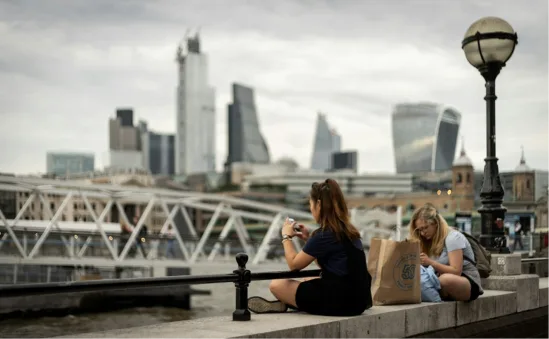
Yes, London is a city where millions of women travel, study and work alone every year, and most visits pass without incident. It is also a big, busy capital with real risks, and some of them are specific to women: street harassment, unwanted attention on public transport and drink spiking on nights out. The sensible position is neither alarm nor complacency. Know where the risks concentrate, use the city’s safety schemes and trust your instincts.
What the numbers say
Street crime is falling, but phone theft is still the headline risk. The Metropolitan Police said that neighbourhood crime, a category that includes theft, personal robbery and vehicle crime, fell 14% in the 12 months to June 2026, according to The Independent. In an October 2026 update, the Met reported that recorded phone theft and robbery offences had fallen from 81,439 in 2024 to 71,867 in 2025. The same report noted that only 0.9% of thefts from the person ended with a suspect identified and dealt with, so prevention matters more than recourse.
Harassment is an important concern. Research published by FORWARD in 2024, based on a survey conducted in 2023 among 1,314 women aged 16–34 living in Greater London, found that 83% reported experiencing at least one form of sexual harassment or assault in a London public space during the previous two years.
Public transport deserves honest treatment. A London Assembly Police and Crime Committee report published in March 2026 said 4,593 violence against women and girls offences were recorded on Transport for London’s network in 2025. Only around 3% resulted in a charge or summons, and about 58% identified no suspect. The Mayor, TfL and the Met launched a joint taskforce on the issue in October 2025. This is not a reason to avoid the Tube, which carries millions of passengers daily, but it explains why many women use the habits below.
Walking after dark
- Stay on lit, busy streets even if a cut-through is faster. Main roads also tend to have more bus stops, shops and CCTV.
- Keep one ear free. Headphones in both ears reduce your awareness, including of mopeds and e-bikes, which are used in phone snatches.
- Hold your phone away from the kerb side and check directions in a shop doorway rather than at the roadside.
- Walk with purpose. If you are lost, step into a café or station and look at your map there.
- Know the exits. If someone follows you, cross the road, enter a lit shop or pub, and ask staff for help.
Public transport
- Tube: carriages with other passengers are generally safer than empty ones. If someone makes you uncomfortable, move to another carriage or leave at the next stop. Station staff and platform help points are there for this.
- Reporting: British Transport Police take reports by text on 61016, and 999 is for emergencies. Reporting helps targeting, even though outcomes are modest.
- Night travel: the Night Tube runs on selected lines on Fridays and Saturdays, and night buses cover most of London. Check TfL Go for your route.
- Taxis and minicabs: use black cabs or licensed private hire vehicles booked through an app or a licensed operator. Never accept a lift from a tout outside a venue. Check the plate and driver before you get in, and share your journey with a friend.
Nightlife and drink spiking
- Watch your drink. If you leave it unattended, do not resume drinking it.
- Use Ask for Angela. At participating venues, ask a member of staff for “Angela” to signal that you need help. Trained staff should offer support appropriate to the situation.
- Plan the exit. Know how you will get home, and tell someone when you will arrive.
- If you feel unwell or suddenly very drunk, ask staff for help and go to a hospital if needed. Say you suspect spiking so staff and police can act.
Choosing where to stay, and getting there safely
Location matters more than a “safe area” label. Pick a hotel or hostel near a well-served Tube or Elizabeth line station with a short, well-lit walk. Read recent reviews specifically for comments on entry security and night staffing.
Look for 24-hour reception, secure key-card entry and rooms that lock from inside.
Short-term lets: read the host’s reviews, avoid arrangements that involve handing over money outside the platform, and check how you get in and out late at night.
Do not announce your room number, and avoid sharing your itinerary on public posts in real time.
For rentals and Airbnb properties, security checks should also cover the property’s external doors and accessible windows. A case outside London illustrates why entry security deserves attention: in November 2026, a Cardiff court jailed a Palestinian asylum seeker for six years after he entered a family home at night and exposed himself to children. This involved a private home, not a holiday rental, but it illustrates the relevance of checking how a house or flat is secured, rather than relying solely on its location. Lock doors and windows at night, and call 999 as soon as it is safe to do so if someone breaks in.
Hotels raise a different question: how staff control access to individual guest rooms. Reported cases illustrate how those safeguards can fail. In April 2025 the Metropolitan Police announced that a London hotel worker had been jailed for 13 years for raping one woman and sexually assaulting three others. Detectives said he abused his position to get into guest rooms. In one case, after a guest who had lost her room key returned to the hotel without her friends, he coerced her into sharing his room. In another case reported by the trade magazine The Caterer, a man told hotel staff he was a guest’s boyfriend and was given a key card to her room, where he sexually assaulted her
These cases illustrate why it is worth asking about room-access procedures and taking the following precautions:
- Tell reception that nobody, including someone claiming to be a friend or partner, may be given access to your room or told your room number.
- If you lose your key, ask the front desk for a replacement after showing ID, and never accept an offer to share a staff member’s room.
- Use the door chain or latch, and phone reception to verify anyone who knocks unexpectedly.
The journey to your accommodation carries its own risks. The Met has prosecuted men who posed as minicab drivers in London. One stopped beside a woman walking on Euston Road and offered her a lift, then kidnapped her, and was jailed for nine years. In another case, a woman got into a car she took to be her pre-booked minicab and was raped by the driver, who was jailed for seven years. A Met spokesman has previously said no one should approach a minicab on the street, because only black cabs can legally take a fare without a booking.
- Book through an app or a licensed operator, and check the registration and driver photo before you get in.
- Let the driver say your name first, rather than offering it, and do not get in if it does not match.
- Share your trip with someone you trust, and never accept a lift from a tout outside a venue or station.
Neighbourhood awareness without stereotypes
London’s crime is not neatly divided into safe and unsafe boroughs. Busy areas with heavy footfall, such as the West End, major stations and nightlife strips, record more thefts because there are more people and more phones. Quiet streets late at night bring different risks. A better question than “is this a dangerous area?” is “how crowded, lit and well connected is the stretch I will actually walk?” The Met’s online crime map shows recent figures by street.
Big events and crowded days
London’s busiest days, from major concerts and football matches to New Year’s Eve and large public ceremonies, change the risk picture for a woman on her own. Crowds raise the chance of pickpocketing and unwanted touching, and stations can be managed with temporary entry limits or closures for crowd safety.
- Check TfL Go and the Met Police news page before you travel to see which roads and stations are affected.
- Leave a little earlier or later than the main surge, rather than moving with the densest crowd.
- Keep bags zipped and in front of you, and phones in an inside pocket.
- Agree a meeting point if you are joining friends, in case phone networks are congested.
- Move towards staff or officers if a crowd becomes uncomfortable, rather than trying to push through.
Quick-reference checklist
- Share your live location or itinerary with someone you trust.
- Keep your phone secure and your battery charged. Carry a power bank.
- Use licensed taxis; check the plate before you get in.
- Know the number: 999 for emergencies, 101 for non-urgent police matters.
- Use Ask for Angela on nights out.
- Trust your discomfort; you do not need to stay or be polite if you feel unsafe.
- Check TfL and Met updates on busy event days.
What gives London its feeling of safety for women travelling alone
London feels safe when you combine three things: a city with visible policing, dense public life and good transport at most hours; a falling trend in street theft; and a growing set of schemes, from Ask for Angela to TfL’s taskforce, that give women practical routes to help. It feels less safe where unwanted attention is routine, particularly on crowded or empty transport and in nightlife settings, and where the chance of catching an offender is low. The honest conclusion is that London is manageable and rewarding for solo women who plan their evenings, choose their routes and use the support on offer, while accepting that harassment remains a real problem that the city has not yet solved.