
Mincong Mould Highlights Its Precision Injection Mold Manufacturing Capabilities for Global Packaging Producers
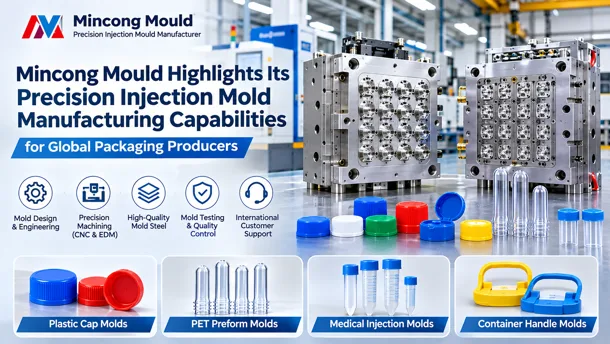
The demand for reliable, high-quality plastic packaging continues to grow across the beverage, food, personal care, household, and medical industries. As manufacturers look for better production efficiency and consistent product quality, choosing an experienced plastic injection mold manufacturer has become increasingly important. Mincong Mould, based in Huangyan, Taizhou, Zhejiang, China, highlights its capabilities in custom injection mold design, precision machining, and tooling solutions for packaging producers seeking dependable manufacturing support.
Established in 2004, Mincong Mould has developed its manufacturing activities around plastic caps, closures, PET preforms, container handles, and medical packaging components. Its approach connects product requirements with mold engineering, machining, assembly, and production trials, helping customers evaluate tooling solutions according to their specific products and injection molding equipment.
Supporting Global Packaging Manufacturers with Custom Mold Solutions
Packaging manufacturers operate in different production environments, with varying requirements for product dimensions, materials, cavity configurations, and output capacity. A mold designed for one application may not be suitable for another without careful engineering adjustments.
Mincong Mould focuses on developing customized tooling based on customer drawings, physical samples, material specifications, and machine requirements. This approach helps manufacturers consider important production factors before committing to a mold design.
The company’s product portfolio includes several specialized mold categories:
- Water and beverage cap molds.
- Flip-top cap molds.
- Oil and functional closure molds.
- PET preform molds.
- Container handle molds.
- Medical packaging injection molds.
These product categories serve different packaging applications and require specific engineering considerations. By offering multiple tooling solutions, Mincong Mould supports manufacturers looking for customized molds for both conventional packaging and specialized plastic components.
Precision Mold Design and Engineering
Mold design is one of the most important stages in injection mold manufacturing. Decisions made during the design process influence material flow, cooling performance, product dimensions, ejection, and overall production efficiency.
Mincong Mould evaluates several engineering factors when developing custom tooling.
- Product geometry: The mold structure must accurately reproduce the required product dimensions, threads, sealing surfaces, hinges, and other functional features.
- Cavity configuration: The number and arrangement of cavities should match the production target, injection machine capacity, and component design.
- Runner system: Hot runner or cold runner configurations are considered according to material requirements, product geometry, and production conditions.
- Cooling design: Cooling channels must support balanced heat removal and dimensional consistency across the mold.
- Ejection mechanism: The mold should release finished products reliably without damaging important functional or cosmetic surfaces.
This engineering approach is particularly important for high-volume packaging production, where small variations between cavities can affect thousands of finished components.
Advanced Machining and Manufacturing Processes
Precision machining plays an essential role in producing reliable injection molds. Core components, cavities, mold plates, and other tooling elements must meet their specified dimensions to support consistent product manufacturing.
Mincong Mould’s manufacturing capabilities include CNC machining, EDM processing, slow wire cutting, precision grinding, fitting, and mold assembly.
The company identifies MAZAK CNC and high-speed machining equipment among the resources supporting its manufacturing operations.
These processes contribute to different stages of mold production:
- CNC machining: Used to manufacture mold plates, cores, cavities, and other precision components.
- EDM processing: Helps create detailed geometries and complex features.
- Slow wire cutting: Supports accurate cutting of specific mold components.
- Precision grinding: Helps achieve dimensional accuracy and suitable surface finishes.
- Mold fitting and assembly: Ensures that components align and operate according to the intended design.
Combining these manufacturing processes helps support accurate tooling production and provides a foundation for evaluating mold performance during testing.
Product Portfolio for Different Packaging Applications
One of the important aspects of a packaging mold manufacturer is its ability to understand the requirements of different industries. Plastic caps, PET preforms, medical consumables, and container handles all involve different product structures and manufacturing challenges.
Mincong Mould’s product portfolio addresses several of these applications.
Plastic Cap and Closure Molds
Plastic caps are essential components in beverage, food, household, personal care, and industrial packaging.
Their performance depends on accurate dimensions, thread geometry, sealing surfaces, and reliable opening and closing mechanisms.
Mincong Mould develops water and beverage cap molds, flip-top cap molds, and oil and functional closure molds. These solutions are designed around specific closure requirements, including tamper-evident features, living hinges, pull rings, and dispensing structures.
PET Preform Molds
PET preforms are used in the production of plastic bottles and containers. Their dimensions, neck finishes, weight distribution, and cooling characteristics influence the quality of the final bottle.
Mincong Mould’s PET preform molds are developed around the intended container design, preform specifications, injection machine, and downstream stretch blow molding process.
Important design considerations include cavity balance, neck finish accuracy, cooling efficiency, and material distribution.
The company can also review bottle blow mold requirements alongside preform tooling for coordinated bottle production projects.
Medical Injection Molds
Medical packaging and laboratory products require careful attention to component geometry, dimensional accuracy, material compatibility, and inspection requirements.
Mincong Mould’s medical packaging tooling portfolio includes solutions for centrifuge tubes, pipette tips, collection tubes, syringe-related components, and medical packaging closures.
Each application requires its own tooling and inspection considerations. Product validation, cleanliness requirements, and regulatory approvals should be defined according to the customer’s intended application and specifications.
Container Handle Molds
Container handles are used in bottles, jerrycans, and other rigid plastic packaging products.
Their mold design must account for product geometry, attachment points, material distribution, strength requirements, and reliable ejection.
Customized handle tooling helps manufacturers develop components suited to their specific container designs and production equipment.
Quality Control and Mold Testing
Quality control is an essential part of reliable injection mold manufacturing. A mold may appear accurate during initial inspection, but its performance must also be evaluated under actual production conditions.
Mincong Mould incorporates fitting, inspection, and mold trial activities into its manufacturing approach. These stages help identify potential issues before tooling is approved for regular production.
Important inspection and testing considerations include:
- Dimensional accuracy: Checking finished samples against approved product drawings and dimensional requirements.
- Cavity consistency: Comparing samples from different cavities to identify variations in dimensions, weight, and appearance.
- Injection performance: Evaluating material filling, pressure requirements, and runner performance.
- Cooling efficiency: Checking whether the mold provides suitable and balanced cooling.
- Ejection performance: Confirming that finished components release without damage or deformation.
- Product functionality: Evaluating features such as cap threads, sealing surfaces, tamper-evident bands, and flip-top hinges.
Production trials provide valuable feedback about how the mold performs with the intended material and injection machine. Any required adjustments can then be discussed against the agreed technical specifications.
This process is particularly important for high-cavity tooling, where consistency across all cavities is essential for stable production.
A Practical Approach to Hot Runner and Cooling Systems
Runner selection and cooling design can significantly influence production efficiency, material consumption, and product consistency.
For packaging manufacturers producing large quantities of plastic components, a suitable hot runner system can reduce conventional runner waste and help maintain consistent material delivery to the cavities.
However, hot runner systems must be selected according to the product design, resin, cavity arrangement, and operating conditions.
Cooling is equally important. Poorly balanced cooling can contribute to uneven shrinkage, dimensional variation, and longer production cycles.
Mincong Mould considers runner layout, cooling channels, ejection arrangements, and maintenance access as connected parts of the overall tooling design.
Rather than selecting components independently, these engineering decisions should be evaluated together to support the intended production process.
Working with Customers from Design Review to Mold Trials
Successful mold manufacturing requires clear communication between the customer and the engineering team.
International packaging producers may have different machine specifications, material requirements, product drawings, and output targets. Providing accurate technical information at the beginning of a project helps reduce misunderstandings and unnecessary design changes.
Mincong Mould follows a coordinated tooling process that covers four important stages.
- Product and machine review
The process begins with reviewing the product drawing or physical sample, resin specifications, target production volume, and injection machine details.
- Mold engineering and design
The engineering team evaluates cavity configuration, runner selection, steel, cooling, ejection, and maintenance requirements.
- Manufacturing and assembly
The approved design moves into machining, precision processing, fitting, and mold assembly.
- Mold testing and production feedback
Trial samples are evaluated against agreed requirements. Testing feedback helps identify necessary adjustments before the tooling moves into regular production.
This structured approach gives customers a clearer understanding of the manufacturing process and the technical decisions involved in developing custom injection molds.
Serving International Packaging Producers
Huangyan, Taizhou, Zhejiang, is an established center for mold manufacturing in China. Its manufacturing ecosystem provides access to specialized tooling knowledge, machining capabilities, and supporting industrial services.
For international buyers, selecting a supplier involves more than finding a manufacturer with suitable machinery. Clear technical communication, accurate quotations, project coordination, and after-sales support are also important.
Mincong Mould works with customer requirements covering product drawings, resin selection, machine compatibility, tooling configuration, and production expectations.
For international projects, customers can begin by sharing their product drawings or samples along with the following information:
- Product dimensions and technical specifications.
- Intended plastic material or resin grade.
- Target production volume.
- Preferred cavity configuration, if known.
- Injection machine specifications.
- Special functional or quality requirements.
These details provide a practical starting point for discussing mold design, manufacturing feasibility, and project requirements.
Supporting Long-Term Production Efficiency
A high-quality injection mold should be evaluated according to its long-term production performance, not simply its initial purchase price.
Factors such as maintenance accessibility, replaceable components, cooling performance, cavity consistency, and spare parts availability can influence the total cost of ownership.
For packaging producers, reliable tooling can help reduce unexpected downtime, minimize rejected products, and maintain consistent manufacturing output.
Mincong Mould considers maintenance access and production conditions during its tooling design process. This helps customers evaluate how a mold will operate beyond its initial manufacturing and testing stages.
Long-term cooperation between mold manufacturers and packaging producers can also support future product development, tooling improvements, and changes in production requirements.
Conclusion
As global packaging manufacturers continue to demand customized products and reliable production systems, precision injection mold manufacturing remains an important part of the packaging supply chain.
Mincong Mould brings together mold design, CNC machining, EDM processing, precision manufacturing, assembly, and mold testing to develop tooling solutions for plastic caps, closures, PET preforms, container handles, and medical packaging components.
Based in Huangyan, Taizhou, China, the company focuses on connecting customer product requirements with practical engineering and production considerations.
For packaging producers evaluating a plastic injection mold manufacturer, understanding the supplier’s product experience, machining capabilities, quality inspection procedures, and technical support is essential.
By reviewing these factors before starting a project, manufacturers can make better tooling decisions and establish a stronger foundation for consistent, efficient, and long-term production.