
OEM vs Aftermarket: Why Catalytic Converter Prices Differ
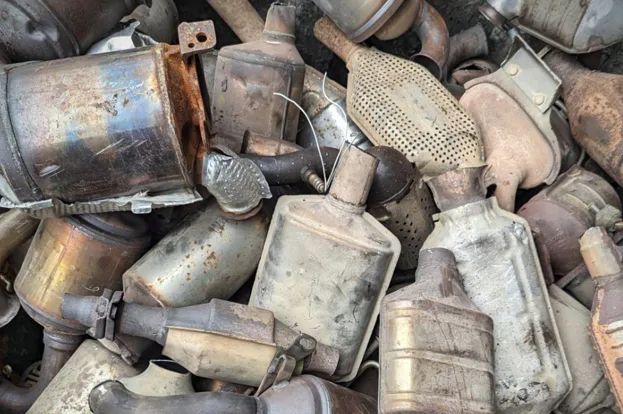
Two catalytic converters may look similar, fit the same type of vehicle, and perform the same basic function, yet have dramatically different recycling values. The reason often comes down to one important distinction: whether the converter is an original equipment manufacturer (OEM) unit or an aftermarket replacement.
Understanding this difference can help vehicle owners, repair shops, dismantlers, and scrap-metal businesses avoid inaccurate assumptions and make better selling decisions. A converter’s size or appearance alone rarely reveals what it is worth. Its identification, precious-metal content, condition, and current commodity markets all matter.
What Is an OEM Catalytic Converter?
An OEM catalytic converter is installed by the vehicle manufacturer during production or supplied as an approved original replacement. It is engineered to meet the emission requirements of a particular vehicle, engine, and market.
To achieve reliable emissions performance over a long service life, OEM converters commonly contain meaningful concentrations of platinum, palladium, and rhodium. These metals act as catalysts, helping transform carbon monoxide, nitrogen oxides, and unburned hydrocarbons into less harmful gases.
OEM units usually carry recognizable serial numbers, manufacturer markings, or stamped codes. These identifiers can be checked against specialized databases and laboratory records to estimate the recoverable precious-metal content. Because different models use different formulations, two genuine OEM converters can still have significantly different values.
How Aftermarket Converters Are Different
An aftermarket catalytic converter is produced by a company other than the original vehicle manufacturer. These products can be practical, legally compliant replacement options, especially when repairing an older vehicle for which a new OEM component would be uneconomical.
However, aftermarket units are generally designed to reduce the cost of replacement while meeting applicable emissions standards. Depending on the manufacturer, certification category, vehicle application, and market, they may contain lower quantities of valuable precious metals than the original unit. That difference often makes their recycling value substantially lower.
This does not mean every aftermarket converter is poorly made. A reputable certified replacement may perform its intended job effectively. It simply means that retail usefulness and recycling value are different concepts. A functional replacement part can be valuable to a motorist while yielding less platinum, palladium, or rhodium at the end of its service life.
The Main Factors Behind the Price Gap
1. Precious-Metal Loading
Precious-metal content is the biggest driver of catalytic converter recycling value. OEM manufacturers must account for cold starts, engine behavior, durability targets, and strict emission limits. As a result, an original converter may contain a more valuable metal loading than a lower-cost universal replacement.
Importantly, weight is not the same as value. A large converter with low metal concentrations may be worth less than a smaller unit with a richer ceramic substrate. Professional assessment therefore goes beyond weighing the casing.
2. Vehicle and Engine Requirements
Converter formulations vary according to engine size, fuel type, emissions classification, model year, and regional regulation. Certain vehicles require more sophisticated emissions treatment, while others use multiple converters in different positions along the exhaust system.
This is why price lists based only on broad categories such as “large,” “small,” or “diesel” can be misleading. Exact part identification provides a much stronger basis for valuation.
3. Traceable Part Numbers
A clear OEM code can connect a converter to historical analyses and known precious-metal profiles. Damaged, corroded, or incomplete markings create more uncertainty. Generic aftermarket units may also lack identifiers that correspond to a reliable analytical history.
Specialists reduce that uncertainty by combining visual inspection, serial-number research, database comparisons, and laboratory techniques. Metalbee, for example, describes an up-to-date database containing more than 30,000 chemically analyzed converters, supported by laboratory assessment and skilled technicians. This evidence-based process can produce a more defensible quote than appearance-based grading alone.
4. Commodity Market Movements
Platinum-group metals trade in international markets, and their prices can move in response to mining output, industrial demand, automotive production, investment activity, and geopolitical events. A valuation from several months ago may therefore no longer reflect current market conditions.
Anyone monitoring catalytic converter prices (katalizatoru cenas) should remember that the number attached to a part is not permanently fixed. A reliable buyer considers both the expected metal recovery and relevant market rates at the time of assessment.
5. Condition and Completeness
A converter is most straightforward to evaluate when it is intact, identifiable, and still contains its original internal substrate. Units that have been opened, emptied, mixed with loose material, or severely damaged may require different testing and handling.
Ordinary exterior rust does not automatically eliminate value, but missing internal material clearly affects recoverable content. Keeping each converter intact and preserving its identifying marks can make the evaluation process faster and more transparent.
Why Online Estimates Often Disagree
Online discussions frequently quote a single “average” converter price. Such figures may be based on an unusually valuable model, outdated metal prices, incomplete part identification, or retail replacement cost rather than recycling value. They can create unrealistic expectations.
Retail price includes manufacturing, certification, distribution, warranties, and other commercial costs. Recycling value, by contrast, is based primarily on recoverable materials minus processing and refining considerations. A converter that was expensive to purchase is not automatically worth a similar amount as scrap.
For a meaningful comparison, sellers should ask whether a quote is based on the exact serial number, whether the unit is OEM or aftermarket, when the pricing data was updated, and whether later deductions may apply. A documented net offer is generally more useful than an impressive headline estimate with unclear terms.
How Sellers Can Obtain a Fairer Valuation
A few simple steps can improve both accuracy and efficiency:
- Do not remove identifying sections. Preserve stamped codes, labels, shields, and manufacturer markings whenever possible.
- Take clear photographs. Capture the complete unit, the code, both ends, and any visible damage in good light.
- Separate OEM and aftermarket units. Sorting them in advance prevents lower-value replacements from being confused with identifiable originals.
- Record vehicle details. Make, model, engine, year, and fuel type can support identification when a code is difficult to read.
- Request transparent terms. Confirm how the price is established, how quickly payment is made, and whether the assessment is final.
- Use an experienced specialist. A buyer with analytical data, market awareness, and refinery relationships is better positioned to explain a valuation.
For businesses handling regular volumes, consistent documentation is especially valuable. Maintaining an inventory with photographs, part codes, quantities, and previous results makes it easier to compare offers and identify recurring high-value units.
Responsible Recycling Adds Value Beyond the Payment
Used catalytic converters are not ordinary waste. Recovering platinum-group metals reduces the need for additional primary extraction and returns scarce resources to productive use. Professional processing also helps ensure that materials enter controlled recycling channels rather than being discarded or handled improperly.
Trust and traceability are equally important because catalytic converters can be associated with theft and questionable supply chains. Legitimate sellers should retain proof of ownership or business-origin records where appropriate and choose buyers that prioritize secure, professional transactions.
Metalbee positions its service around accurate identification, advanced assessment methods, refinery partnerships, current market awareness, and prompt settlement. Vehicle owners, workshops, dismantlers, and scrap dealers seeking a clearer route for catalytic converter purchasing (katalizatoru uzpirkšana) can prepare photographs and readable codes, then request an evaluation rather than relying on a generic estimate.
The Bottom Line
OEM converters usually command higher recycling prices because they often contain greater or more precisely engineered quantities of platinum, palladium, and rhodium. Aftermarket converters serve an important repair-market purpose, but their lower-cost construction commonly results in less recoverable precious-metal value.
Still, the OEM label alone does not determine the final figure. Exact part identification, vehicle application, internal condition, analytical history, and live commodity markets all influence the outcome. Sellers who preserve identifying details and work with a database-driven, transparent recycling specialist are more likely to receive an accurate assessment—and to turn an end-of-life component into a responsibly recovered resource.