
Fast Food Restaurant Property: The Appeal of QSR Net Lease Properties to Individual Investors
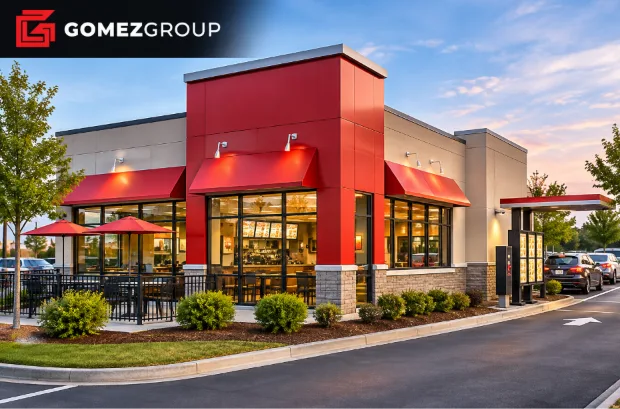
Just drive by any busy street corner and you can spot the same scene: a coffee shop with cars waiting in line, a hamburger place with a long line of cars in the drive-thru, and a fried chicken joint that is almost always full. For many private investors, those buildings are not only restaurant establishments, but they are also types of investment they want to own.
Properties leased to quick service restaurants (or QSR) have grown to be one of the top choices individual investors rely on when investing in commercial real estate. This popularity can be attributed to a very simple fact. It is a small building, a single tenant, a long lease and a rental payment received regularly. Nevertheless, it is important to comprehend how those details fit into the overall picture. Please read the following explanation of the reasons for such popularity of QSR net lease properties and the criteria that should make a great deal.
Key takeaways
- QSR net lease properties became popular owing to their simplicity: one tenant, small building, and a long lease.
- The company behind the lease is very significant. It is important to differentiate between the corporate guarantee from the franchise guarantee.
- In an absolute NNN lease, almost all responsibilities fall on the tenant.
- A really good drive-thru location takes into account traffic patterns, access to that location, and lot layout, rather than a big name of the brand.
- High cap rate means potential issues with credit or site.
- QSR is not necessarily safer than other forms of net leases. What matters is the tenant, the lease, and the location.
What makes QSR net leases favorable?
We can start with the investor’s actual asset ownership. Typically, single-tenant QSRs are small buildings located on an independent plot of land, often with a drive-through lane. This type of asset is straightforward to comprehend, easy to drive past, and simple to relay to a spouse or accountant. That clarity is one of the advantages.
When considering the lease structure, it also makes these properties appealing. Most of the QSR net lease transactions are of the net lease category. In addition to rent payments, the tenant is responsible for paying property tax, due diligence, and maintenance costs. In the absolute NNN type of lease, the tenant even takes care of roof repairs.
Then there is the tenant aspect of things. Restaurants that serve food that people eat multiple times every week tend to be an integral part of everyday life. Old names come with their systems and supply chain and track record that local businesses cannot have. This doesn’t eliminate risk but makes it easier to gauge.
And finally, deals here are well within the means of many private buyers. A single-tenant restaurant can cost much less than a big shopping center, allowing investing in this area. A smaller check coupled with an uncomplicated lease is the reason behind constant presence of such properties in private portfolios.
Franchise and corporate guarantees.
This is a detail that many first-time buyers overlook. Two restaurants can be part of the same brand and still have very different investment characteristics depending on who has signed the lease.
Corporate leases. In this situation, the company guarantees the payment of rent. In the case of financial troubles for the restaurant, the investor relies on the balance sheet of the corporation. Many investors consider this to be safer than the other option and hence they have to pay lower cap rates.
Franchised leases. Unlike corporate guarantees, this time a franchisee has signed a lease. The franchisee can be a single restaurant owner or someone who operates many outlets of the franchised brand. Although both of the operators use the same brand of restaurants, the rent differs because of the financial strength of the franchisee.
This is the comparison of the two in practice:
| Corporate Guarantee | Franchisee Lease | |
| Who pays the rent | Parent Company | Operator |
| Credit dependant upon | Company Financial Information | Operator’s Financials |
| Normal Pricing | Usually lower cap rate | Usually higher cap rate |
| What to check | Track record of the parent company | Number of locations, experience, financial statements |
Whenever you come across a franchisee lease, ask for the operator’s financial statements, as well as the number of locations. The guarantee from a bigger operating company is much more valuable than the signature of a one-location company. It is also important to read very carefully the comparison with other deals and sales. Checking closed net lease sales will be very helpful, as you will see how much different tenants and lease types were renting for.
What to evaluate on a drive-thru site
A good logo/poster can’t compensate for a bad location. Before buying the property, examine the lot itself carefully and consider it just as important as the lease itself.
Traffic and visibility. How many cars are constantly passing through, and do drivers notice the drive-thru quickly enough to make a turn into it? There are busy roads, but this doesn’t matter if the entrance is hard to reach.
Accessibility. Analyze the turn lanes, medians, and entry points. If the driver encounters difficulties making the turn, he/she might decide to skip.
The drive-thru lane. Can many cars fit without blocking the streets? It is a problem to have a small drive-thru lane when business is busy.
Parking. Is the property comfortable to enter and leave?
Lease terms. Be sure to review how many years are left in the term of the lease; how much the rent will increase; are there options to renew.
Reuse. If the current tenant were to vacate, is there potential to get another restaurant or retailer into the space?
When underwriting a QSR deal, the key question to ask yourself is this: if the tenant disappears, would I want to own this property regardless?
Before you buy
A single-tenant restaurant is an easy way to get into commercial real estate, as long as you can see beyond the name. You have to know who will sign the lease and check to see if the lease has a repair provision, visit the site, and consider possibilities if the tenant leaves.
In case you are interested in buying a QSR or you want to know how much your QSR can go for, please contact Gomez Group of Cushman & Wakefield.
Common inquiries
1. Is investment in restaurants in quick service restaurant properties safer than investing in regular net lease properties?
Not necessarily. While a good tenant on an excellent location with an extended lease is bound to lead to a fruitful deal, “safe” will depend on lots of factors, including tenant credit rating, lease conditions and location. An average property with a great restaurant brand might lead to a problematic investment.
2. What does “absolute NNN” refer to in case of a restaurant property?
The tenant pays rent plus taxes and insurance, as well as the major maintenance costs, including roof repair and construction. All the landlord does is collecting rent. It is crucial to read the lease carefully since not every agreement interprets the term in the same way.
3. What is the difference between a franchisee lease and a corporate lease?
The corporate lease is the one backed by the parent company. The franchise lease is the one guaranteed by the operator that runs the restaurant. Since the first lease is guaranteed by the company’s financial capacities while the second depends solely on the operator’s finances, the level of risk is drastically different and the price varies too.
4. What is the relevance of the sites for drive-thrus?
Many fast food restaurants achieve a significant portion of their sales through drive-thrus and the facility with good access as well as a well-designed lane can perform better, hence underlining the importance of the site and the long-term value of the property.
5. Is there a need for considerable funds to buy a restaurant occupied by a single tenant?
The size of deals can vary considerably. Compared to multi-tenanted sites, single-tenant restaurants usually cost less, making it a good opportunity for private investors, yet price is dependent on the place, the lease and the tenant.