
The Clarity Question: Why Diamond Grades Matter More as the Stone Gets Bigger
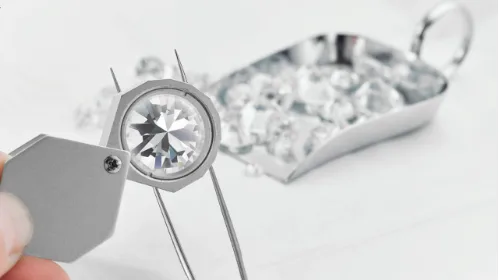
Major diamond grading labs use an 11-grade clarity scale, and the same grade can look different in a small stone and a large one. A mark that is difficult to notice in a modest center stone may be easier to spot in a larger one, where more of its surface and internal features are visible.
That difference matters because a grade describes characteristics seen under magnification, not a guarantee that every stone with the same label will look alike to the naked eye. The location, type and visibility of an inclusion all play a part. So do the stone’s size and cut style. Buyers who focus on the grade alone can miss details that affect the appearance in a setting.
The scale helps organize a broad range of clarity, from stones with no visible internal or external features under grading conditions to those with inclusions that are easy to see. A direct fine jewelry retailer such as Rare Carat is one place shoppers may browse a range of diamond engagement rings, but an individual stone still needs a closer look.
What the clarity scale records
Clarity grading considers internal features, known as inclusions, and surface features, often called blemishes. Graders assess how noticeable those characteristics are, along with their number, size, position and nature. Two stones can receive the same grade while having different inclusions in different places.
The scale used by major labs runs through 11 grades:
- FL, IF, VVS1, VVS2, VS1, VS2, SI1, SI2, I1, I2, I3
At the top are Flawless and Internally Flawless. The VVS grades have very slight inclusions, while VS grades have very slight or slight inclusions. SI means slightly included, and I refers to included stones. The numbered levels distinguish degrees within those broad groups.
These labels are useful shorthand, not a full description of how a stone will appear. An inclusion near the center may attract more attention than one near the edge. A dark feature can stand out more than a pale one. The grading report gives a consistent assessment, while images and inspection help buyers understand the particular stone.
Why size changes what the eye sees
Larger stones have larger facets, the flat surfaces that return light to the eye. Those facets act like windows into the stone. As the stone grows, a feature can occupy more visible space, and its position may become easier to notice. The grade has not changed, but the visual context has.
At around 1 carat, many SI1 stones and some SI2 stones look clean to the naked eye. That does not make every stone at those grades a safe choice. Inclusions vary, and a buyer should check whether one is visible from normal viewing distance without magnification. That is the practical meaning of “eye clean.”
A 1 carat size is a common starting point for shoppers weighing appearance against other preferences. Those starting there can browse Rare Carat 1 carat diamond engagement rings to see how stones of that weight look once they are set. A lower grade may still look clean, but the stone’s actual images and inclusion placement matter more than a broad assumption about the label.
At around 3 carats, many buyers treat VS2 or VS1 as a safer floor and examine magnified images. It is still possible for a stone below those grades to look pleasing, but the larger facets make careful screening more important. Someone researching the best clarity grade for a 3 carat diamond engagement ring should consider the specific inclusion pattern, not just a target grade.
Cut style changes what stands out
Cut style affects how a viewer sees clarity. Brilliant cuts, including round and oval shapes, use many facets arranged to return light. Their pattern of light and dark areas can make some inclusions less conspicuous, though it cannot guarantee that a feature will disappear.
Step cuts, such as emerald and asscher shapes, have broad, open facets arranged in a more linear pattern. The facets can make inclusions easier to see, particularly when they sit in a prominent part of the stone. For that reason, a step cut may call for closer attention to clarity than a brilliant cut of similar size.
Neither style is automatically better. A buyer who prefers the clean geometry of a step cut may value a higher grade or a stone with inclusions placed away from the center. Someone drawn to a brilliant shape may find a lower grade acceptable if the stone looks clean in ordinary viewing. Shape, lighting and inclusion placement all influence the result.
How shoppers can judge a stone
The grading report is the place to start, followed by the stone itself. Magnified images can reveal the position and character of inclusions, while a normal-scale view helps show whether they catch the eye without magnification. Images should be reviewed from more than one angle when available, since a feature can appear differently as the stone turns.
Shoppers can also consider how the stone will sit in the finished engagement ring. A setting may cover part of the edge, but it should not be treated as a way to hide an inclusion without checking the full stone. The center and other open areas remain visible. A jeweler can explain how a particular feature may appear after setting, but the buyer should base the decision on the stone’s own evidence.
Rare Carat verifies every diamond in its own New York and New Jersey facilities before setting. That is one part of the review; the buyer still needs to judge the actual appearance, shape and grade together. The report provides a useful common standard, while clear images and an eye-clean assessment address the question that matters in daily wear: whether the inclusions are noticeable at normal viewing distance.
There is no single grade that suits every size and cut. A smaller brilliant stone may look clean at a lower grade, while a larger step cut can make similar features more apparent. The most informed choice balances the lab assessment with the stone’s visible characteristics, rather than treating one letter-and-number label as the whole story.
Disclaimer: This article is for informational purposes only and explains the importance of diamond clarity grades, helping readers understand how stone size can influence the visibility of inclusions and overall appearance.