
What to Consider Before Buying a Cruising Boat
Before You Start Shopping
- Start with how you plan to cruise, since the number of nights and people aboard points you toward the right size and layout.
- Decide early whether you’ll trailer the boat or keep it at a marina, because towing anything wider than 2.6 m in BC generally needs a permit.
- Compare outboard and diesel inboard power based on where you’ll cruise and who can service the engines nearby.
- Leave time for the Pleasure Craft Licence, the operator card, and the safety gear your boat’s length calls for.
A cruising boat is a powerboat with a cabin, berths, a galley, and a head, so you can stay aboard overnight or for a week at a time. Before you buy one, the decisions that tend to matter most are how you’ll use it, where you’ll keep it, what powers it, and the cockpit and galley features that come with it.
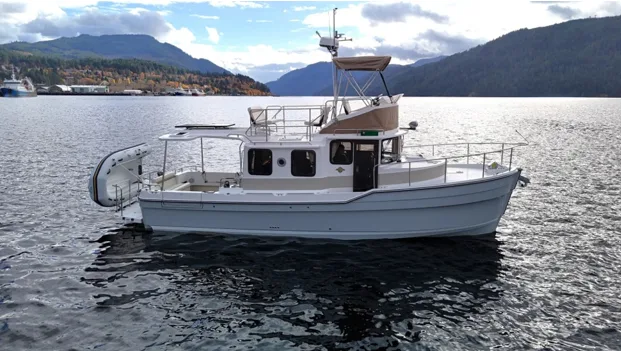
Many West Coast buyers start with trailerable cruisers, which let you tow to a new launch instead of running up the coast for days. A search for Ranger Tugs for sale BC will bring up models from the R-23 to the R-43 at Port Boat House in Port Alberni. That range gives you a useful spread of sizes to compare before you settle on one.
How Will You Use the Boat?
It helps to picture a typical trip rather than the dream trip. If most of your outings are weekends for two, a compact cruiser with a V-berth, a small galley, and an enclosed head may cover everything you need. For family trips through the Gulf Islands with four or more people aboard, you’ll likely want a second sleeping area and more fresh water and holding tank capacity. You may also want a cockpit big enough for everyone to sit together at anchor.
When you walk through boats at the dock, think about where wet gear will go and how easily you can step out to the side deck when docking. You can also sit at the helm and check whether you’d have a clear view in the rain.
Trailering Versus Keeping the Boat at a Marina
Where the boat is kept shapes both your costs and your cruising range. A trailerable cruiser can spend the winter in your driveway or in storage. In spring, you can tow it to a launch near wherever you want to explore, including lakes and inlets that would take days to reach by water.
In British Columbia, a vehicle and its load can be up to 2.6 m (8’6”) wide without a permit. A trailer that weighs more than 1,400 kg (3,086 lb) with the boat aboard also needs brakes on all wheels. The Ranger Tugs R-23, R-25, and R-27 have an 8’6” beam, while the R-29 and R-31 are 10’ wide and generally need an oversize permit or a permanent slip. Before you choose a model, check BC’s towing rules against the boat’s beam, the loaded trailer weight, and your tow vehicle’s rated capacity.
If you’d rather keep your boat in the water all season, a marina slip means you won’t need to launch it each time you head out. You’ll pay monthly moorage fees, and some coastal marinas have waitlists for slips.
Which Engine Setup Suits Your Cruising?
Most cruisers in this size range run on either outboards or a diesel inboard. Outboards, like the Yamaha F250 and F300 on several smaller Ranger Tugs models, can tilt clear of the water when you’re moored. They can also be serviced or replaced without pulling anything out of the hull. A diesel inboard, such as the Volvo Penta D4 on the R-29 and R-31, is often chosen for longer passages because of its low-speed torque and steady fuel use at cruising speed.
Whichever setup you prefer, ask who will service it near the waters where you plan to cruise. A dealer with factory-certified technicians for your engine brand can make routine maintenance and warranty work much simpler.
Licences, Operator Cards, and Safety Gear
A pleasure craft with engines totalling 10 horsepower or more needs a Pleasure Craft Licence, which is now valid for five years. You can apply for your Pleasure Craft Licence online through Transport Canada. Boating without a valid license can can result in a $250 federal fine, plus possible administrative/court surcharges. If your lender needs to register a marine mortgage, the boat has to be registered with Transport Canada instead of licensed, so it’s worth asking before the paperwork starts.
Whoever drives the boat also needs proof of competency, which for most people means a Pleasure Craft Operator Card. Anyone in your crew who will take the helm can get their Pleasure Craft Operator Card by passing a boating safety test, and the card is valid for life. Required safety equipment depends on the boat’s length, so confirm the safety gear your boat needs in Transport Canada’s Safe Boating Guide before your first trip.
Why Support After the Sale Matters
A cruising boat has systems that take some time to learn, such as the cabin heater, the anchor windlass, and the navigation electronics. Some dealers build hands-on training into delivery to help with this. Port Boat House, for example, offers a two-day orientation with its captains that covers vessel systems, navigation, docking, anchoring, and safety.
When you know how you’ll use the boat, where it will live, and who will look after it, you can compare models on the details that matter to you. That makes it easier to choose a boat you’ll enjoy for many seasons.