
Low Water Pressure, Rusty Water, Banging Pipes: What the Old Pipes in a Brooklyn House Are Telling You
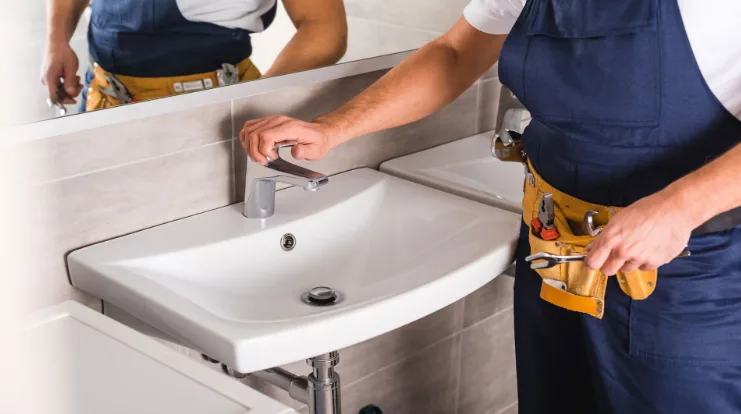
The shower on the third floor of a Bed-Stuy brownstone runs at a trickle when the kitchen faucet is on. The first water out of the tap in the morning runs brown. The pipes bang when the washing machine valve closes. Three complaints, one cause, which is a century of galvanized steel and brass pipe doing what it was always going to do. Brooklyn Plumber Co, 2361 Nostrand Ave, Brooklyn, NY 11210, (929) 605-5967, works on houses like that every week, and the Plumber Brooklyn owners call for a pressure problem usually ends up explaining the whole water system from the street to the roof.
Low Water Pressure in Brooklyn Houses
NYC water arrives at the house by gravity from the upstate reservoirs at 40 to 60 psi on most Brooklyn blocks. That is enough for a three-story house if the pipes are open. Galvanized steel pipe, standard in Brooklyn houses built from the 1920s into the 1960s, rusts from the inside. A 3/4-inch pipe closes down to the diameter of a pencil over 60 years. Pressure at the meter reads fine. Flow at the third floor shower is a trickle. The test is a pressure gauge on a hose bib and a bucket test at the far fixture.
Other causes get ruled out first. A main valve that was never fully reopened after the last repair. A pressure reducing valve that failed, in the few houses that have one. A clogged aerator. DEP work on the block. A lead service line from the street, 3/4-inch or smaller, feeding a house with four bathrooms.
Rusty Water and Galvanized Pipe
Brown water first thing in the morning that clears after a minute is rust from galvanized pipe sitting overnight. Brown water from the hot side only is the water heater. Brown water from every tap all day is DEP flushing hydrants or working on the main, and it clears in a day. The first one is a repiping conversation. Galvanized pipe at the end of its life also leaks at the threaded joints, and the rust flakes clog faucet cartridges, washing machine screens and the fill valve on every toilet in the house.
Old brass pipe, common in brownstones from 1900 to 1930, lasts longer than galvanized and fails differently, with pinholes along the pipe where the zinc leached out. Both get replaced with copper or PEX.
Banging Pipes and Water Hammer
A bang when a faucet shuts or the washing machine valve closes is water hammer. Fast-closing valves on dishwashers, washers and single-lever faucets stop a moving column of water in an instant and the pipe takes the hit. Water hammer arrestors at the appliance, and on the branch lines, absorb it. Loose pipe straps in a basement ceiling make it louder. Ticking pipes when the hot water runs are copper expanding against a joist, which is annoying and harmless. Banging radiators are a steam heating issue and a different trade.
Lead Service Lines and the Water Main Connection
The pipe from the city main under the street to the house belongs to the homeowner in NYC, and in Brooklyn houses built before the 1960s it is often lead. DEP has records by address and offers free lead testing kits, and the city has been replacing lead service lines block by block, with the homeowner’s side sometimes covered and sometimes not. A lead service line is a health issue and a flow issue at the same time, since it is usually undersized. Replacement means a DOT street opening permit, a DEP tap connection, a trench across the sidewalk, and a new copper service into the basement.
Repiping a Brooklyn House
A full repipe replaces every supply line from the main valve to each fixture. Copper type L or PEX, with new shutoff valves at every fixture, new stops, and the water heater connections redone. In a brownstone the risers run up through the kitchens and bathrooms stacked on each floor, which keeps the wall opening to a few chases. In a Victorian frame house in Ditmas Park the pipes wander, and the openings follow them. Plaster patching after is the owner’s cost or the plumber’s, and the quote should say which.
Partial repipes are common. The riser to the third floor bathroom this year, the kitchen next year, the basement runs whenever the boiler gets replaced. Each piece needs a DOB plumbing permit filed by a Licensed Master Plumber.
Booster Pumps for Top Floors
A four-story house with new pipe that still runs weak on the top floor can get a booster pump, a small variable-speed pump and a tank at the main that raises the house pressure to 60 or 70 psi. Common in Brooklyn townhouses converted to three or four apartments. The pump needs a check valve, an electrician for the circuit, and a pressure setting that does not blow out the old fixtures on the first floor.
Hot Water That Takes Forever to Arrive
A third floor bathroom in a brownstone waits two minutes for hot water because the heater sits in the basement and 60 feet of pipe has to clear first. A recirculation pump on a timer, or a demand pump under the far sink, brings the hot water to the fixture before the tap opens. It is a half day of work on a repipe and a bigger job on old pipe, since the return line needs a path. On a house with a tankless heater the pump has to be one the heater is designed to work with.
Repiping Cost in Brooklyn
A single riser replacement is a day or two. A full repipe of a two-family brownstone with three bathrooms and two kitchens runs a week with patching. A lead service line replacement with the street opening is its own project, with the city permits and the sidewalk restoration on top. A booster pump is a day plus the electrical. Every one of them costs less than the ceiling that comes down when the galvanized riser finally splits at a joint behind the plaster.
Brooklyn Plumber Co at 2361 Nostrand Ave repipes and repairs water lines across Bed-Stuy, Crown Heights, Ditmas Park, Flatbush and Park Slope. (929) 605-5967.
Brooklyn Plumber Co
2361 Nostrand Ave, Brooklyn, NY 11210
(929) 605-5967
https://brooklynplumberco.com